
Many fabricators still pick filler metal based on what's on the shelf, not what the base metal and service environment actually require. That mistake gets expensive fast with exotic or dissimilar metals: cracking, corrosion, brittle joints, and outright weld failure are common outcomes.
This guide ranks the best welding alloys by weldability and application fit, walks through how to choose correctly, and flags where compliance standards like AWS and ASME Section IX come into play.
TL;DR
- Welding alloys (filler metals) melt into a joint to fuse two base metals together
- Alloy-base metal compatibility determines weld strength, corrosion resistance, and code compliance
- Top categories: stainless steel, aluminum, nickel-based superalloys, titanium, and carbon/low-alloy steel
- Selection hinges on: base metal chemistry, service environment, process (TIG/MIG/Stick), and governing code
- Certified partners such as Alloy Metalworks handle exotic alloys under ASME and AWS codes for regulated industries
Overview of Welding Alloys in Industrial Fabrication
Welding alloys, or filler metals, are consumables (rods, wire, or electrodes) that melt into a joint to fuse base metals together. They're not interchangeable across projects.
Alloy choice depends on three things:
- Base metal composition: the filler needs compatible chemistry, not just a similar appearance
- Welding process: TIG (GTAW), MIG (GMAW), and Stick (SMAW) each suit different alloys and joint types
- Applicable codes: AWS D-codes cover structural, aluminum, sanitary, and aerospace work; ASME Section IX sets procedure and personnel qualification rules used with them
Get the base metal or the code wrong, and even a technically sound weld can fail inspection. The next section ranks the alloys that matter most across US industrial sectors, based on weldability, mechanical performance, corrosion resistance, and adoption.
Best Welding Alloys for Industrial and Precision Applications
Rankings below reflect weldability, mechanical performance, corrosion resistance, and how widely each alloy family is adopted across industry.
Stainless Steel Alloys
Stainless steel, an iron-chromium-nickel alloy, dominates food, pharma, energy, and structural applications. It welds well with TIG, MIG, or Stick, and offers hygienic-grade options relevant to sanitary systems.
Filler selection is chemistry-specific, not interchangeable:
- E308/E308L matches 304/304L stainless
- E316/E316L retains molybdenum, critical for 316/316L's corrosion resistance in harsher environments
- E309/E309L often bridges 304 to carbon steel, though dissimilar combinations should always be verified with a design engineer
| Weldability | Common Uses | Key Standard |
|---|---|---|
| Excellent with matched filler (E308/E316) | Piping, tanks, sanitary systems, structural work | AWS D18.1, ASME Section IX |

Sanitary stainless welding under AWS D18.1 and USDA 3-A standards is a good example of where "excellent weldability" still requires certified procedures. This is exactly the work Alloy Metalworks performs for food, beverage, and pharmaceutical clients.
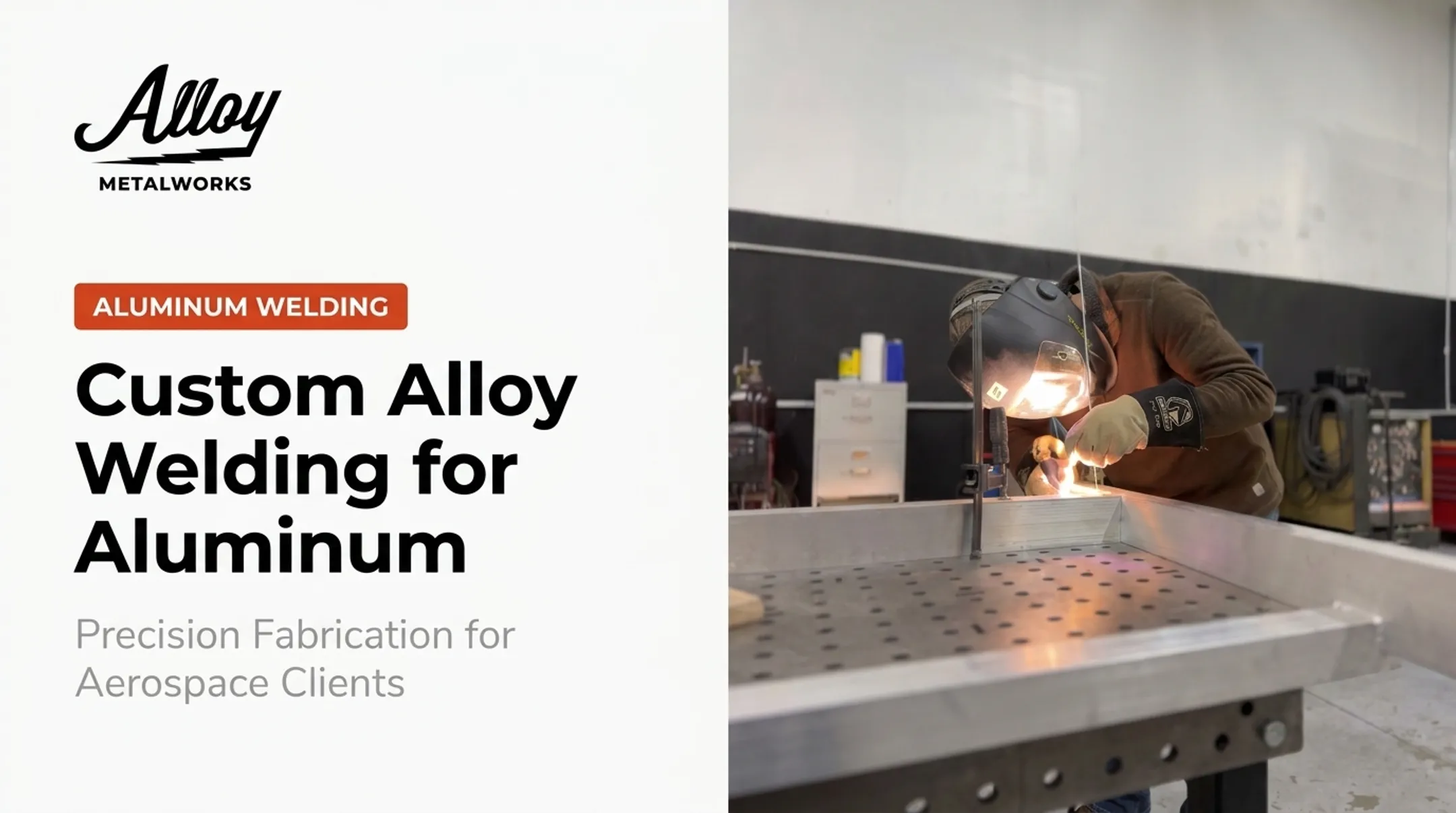
Aluminum Alloys
Aluminum's low weight and corrosion resistance make it a go-to for aerospace and transportation. Not every grade welds equally well, though.
The 1XXX, 3XXX, 5XXX, and most 6XXX series are readily weldable with fillers like 4043 or 5356. Most 2XXX and 7XXX alloys, including 7075 and 2024, are poor candidates for arc welding due to hot cracking.
GTAW (TIG) is the preferred aerospace method. It gives welders tighter control over filler addition, better oxide removal, and fewer porosity defects, even though it's slower than MIG.
| Weldability | Common Uses | Key Standard |
|---|---|---|
| Varies significantly by series | Aerospace, transportation, structural aluminum | AWS D1.2 |

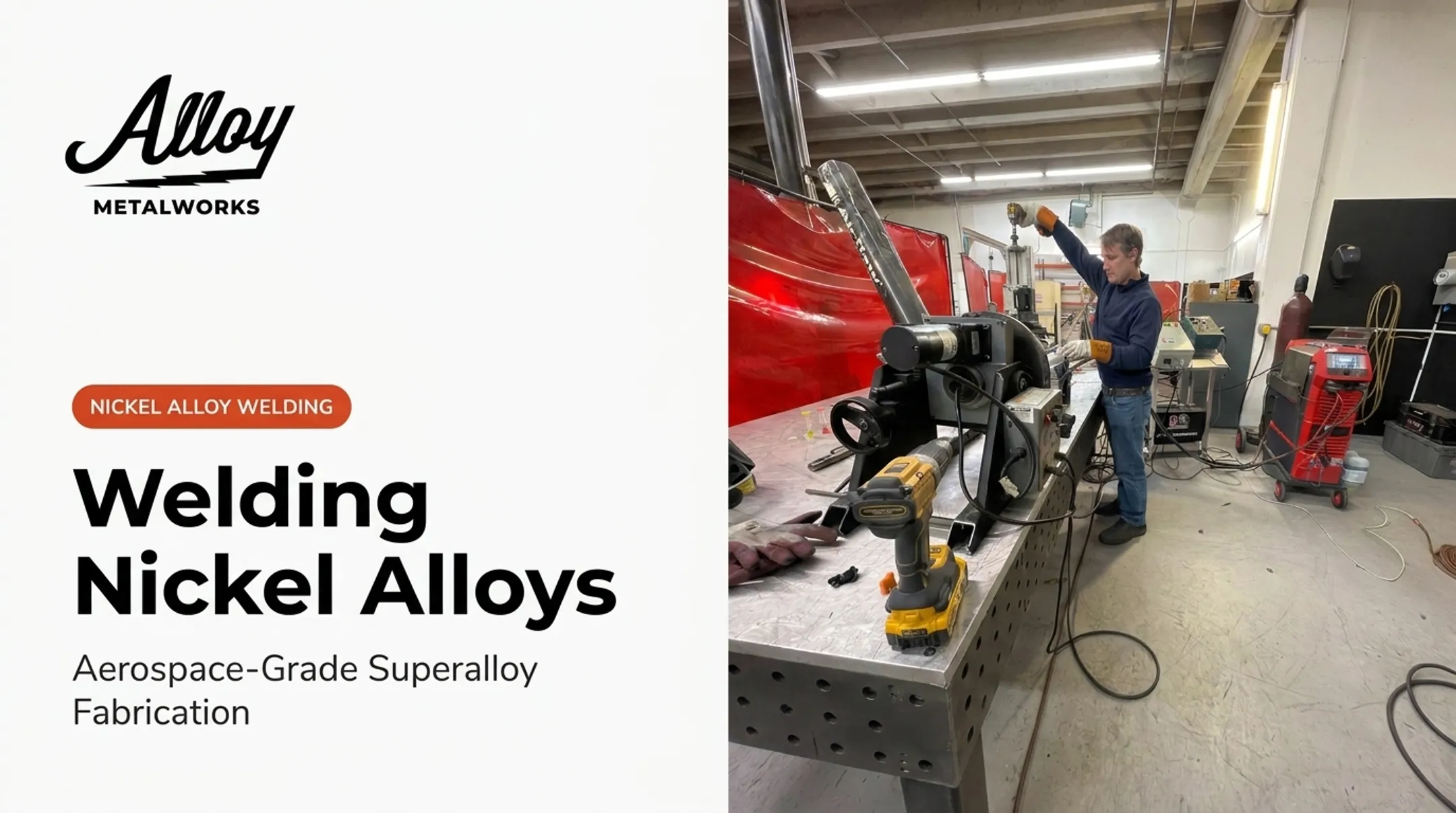
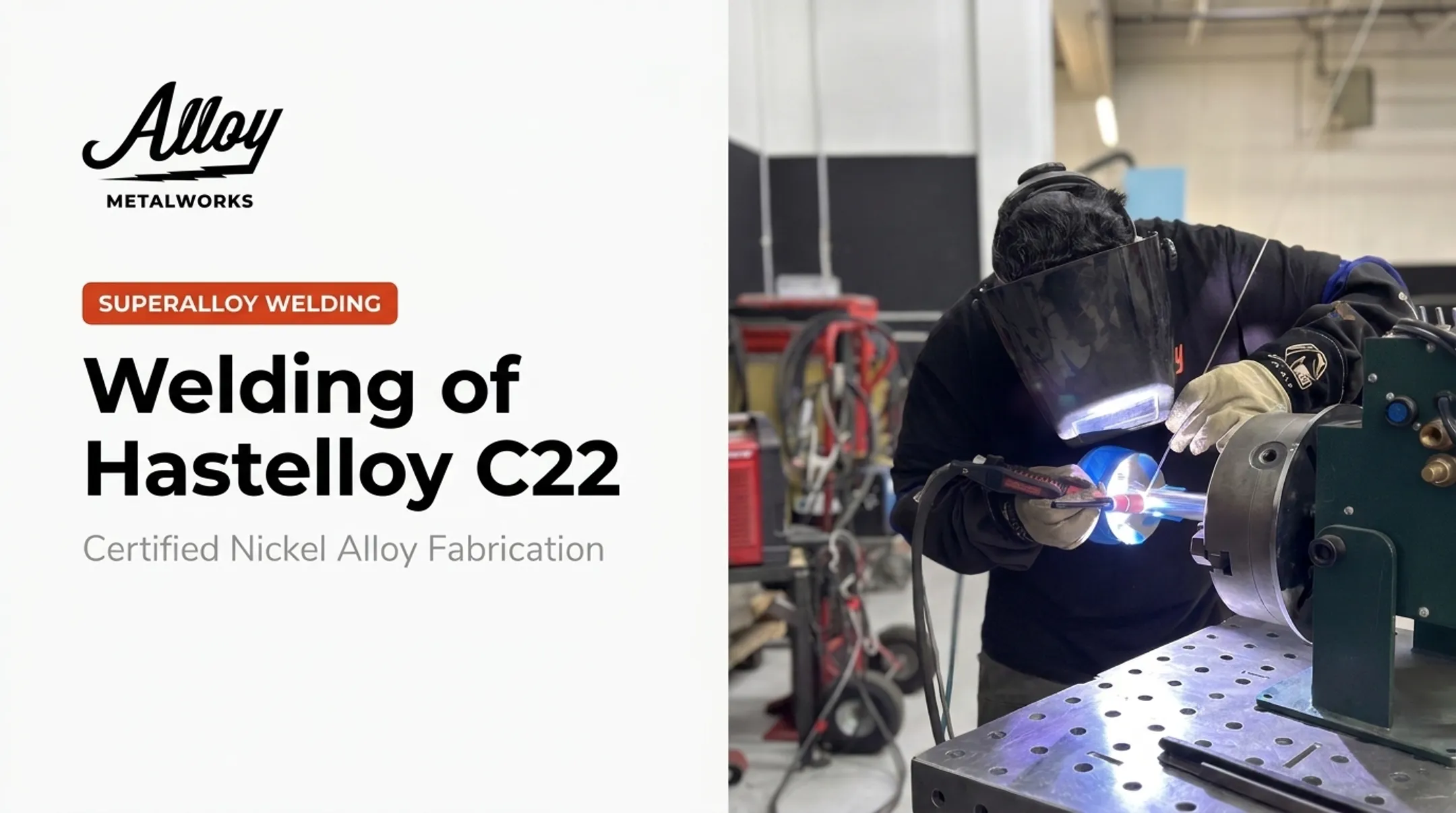
Nickel-Based Alloys (Inconel, Incoloy, Hastelloy)
Nickel-based superalloys hold their strength where other metals give up. INCONEL 718, for example, is rated for service from -423°F to 1300°F, covering aircraft components, gas turbines, rocket hardware, and cryogenic tankage.
These alloys demand precise process control:
- Certified welders and documented procedures are standard practice, not optional
- ASME Section IX and AWS D17.1 govern most flight-critical and pressure-related applications
- Some alloys, like Alloy 693 and Alloy 725, are chosen specifically for hydrogen-reforming or hydrogen-embrittlement resistance, a distinction that matters for anyone building hydrogen infrastructure
| Weldability | Common Uses | Key Standard |
|---|---|---|
| Specialized, requires certified welders | Jet engines, chemical reactors, hydrogen systems | AWS D17.1, ASME Section IX |

Alloy Metalworks has direct experience here. The shop fabricated an Alloy 800HT component for a National Renewable Energy Laboratory thermochemical reactor running above 700°C, using ISO 9001-controlled processes throughout.
Titanium Alloys
Titanium's strength-to-weight ratio makes it indispensable for aerospace and medical work. But it's chemically reactive when molten. It reacts with oxygen, nitrogen, hydrogen, and carbon, so welding is largely about excluding contamination.
That means:
- Inert gas shielding on the front and back of the weld
- Purge chambers when feasible
- Tight control over joint cleanliness, torch angle, and travel speed
| Weldability | Common Uses | Key Standard |
|---|---|---|
| Good with proper shielding | Aerospace, spaceflight structures | AWS D17.1 |

Custom inert-gas chambers and purge setups are what separate a clean titanium weld from a contaminated one. Alloy Metalworks treats those setups as standard practice when welding titanium Grade 2 or Grade 7 for flight hardware.
Carbon and Low-Alloy Steel
Carbon and low-alloy steel remains the workhorse of structural fabrication. It's versatile, cost-effective, and weldable with nearly any process. The U.S. welding consumables market was valued at $2.50 billion in 2022, a useful proxy for how heavily industry relies on steel and related filler metals.
| Weldability | Common Uses | Key Standard |
|---|---|---|
| Excellent | Structural steel, machinery, general fabrication | AWS D1.1 |
How to Choose the Right Welding Alloy for Your Project
The most common mistake: matching filler metal by appearance or general "steel-to-steel" logic rather than metallurgical compatibility. That shortcut risks brittle joints, hydrogen cracking, or corrosion failure down the line, especially with dissimilar metals.
Base your selection on four factors:
- Base metal composition: exact alloy and temper, not just the family name
- Service environment: heat exposure, corrosive chemicals, mechanical stress
- Code compliance: AWS D-code plus ASME Section IX procedure qualification
- Process compatibility: TIG, MIG, or Stick, based on the alloy's heat-input sensitivity
Dissimilar or exotic combinations (titanium-to-steel, Inconel overlays, aluminum-to-steel transitions) generally can't be fusion welded. Steel and aluminum, for example, form brittle intermetallic compounds when fused, so they need engineered transition joints instead.

Those joints depend on engineering collaboration and documented weld procedure qualification. An ISO 9001-controlled fabrication partner like Alloy Metalworks develops and qualifies procedures with regulated-industry clients before any metal is cut, so inspection risk is addressed up front.
Conclusion
The best welding alloy is the one matched to your base metal, service environment, and compliance requirements. Spec-sheet strength and lowest stock price matter less than that fit.
Before finalizing a fabrication partner, verify:
- Weld procedure qualifications (WPS/PQR) specific to your alloy combination
- Material traceability documentation
- Certified welder credentials for the applicable code (AWS D17.1, D18.1, D1.1, etc.)
If your project involves aerospace hardware, sanitary process systems, hydrogen infrastructure, or exotic alloys like Inconel or titanium, contact Alloy Metalworks for code-compliant, inspection-ready fabrication.
Frequently Asked Questions
Can alloys be welded?
Most metal alloys can be welded, but weldability varies significantly by alloy family. Success requires matching the correct filler metal and process to the specific base metal.
Is it safe to weld an alloy?
Yes, welding alloys is safe when following proper procedures, shielding gases, ventilation, and certified welding techniques suited to the base metal.
Can you weld alloys with MIG welding?
MIG (GMAW) works well for steel, stainless steel, and many aluminum grades. Exotic or crack-sensitive alloys like titanium and some nickel superalloys typically require TIG instead.
Which aluminum alloys are weldable?
The 1XXX, 3XXX, 5XXX, and most 6XXX series are readily weldable. Most 2XXX and 7XXX aerospace alloys, including 7075 and 2024, are generally unweldable via standard arc welding.
What metals cannot be welded together?
Metals with vastly different melting points, or those that form brittle intermetallic compounds, like aluminum and steel, generally can't be fusion welded directly without a specially engineered transition joint.
Is 4140 alloy steel weldable?
Yes, 4140 is weldable but requires preheat and controlled cooling. Its higher carbon content increases cracking risk if heat input isn't properly managed through a qualified procedure.