
TIG (GTAW) makes this pressure worse. It's the process shops rely on for the cleanest, most precise welds, but it's also historically been the hardest to automate. Too many variables, too much finesse required.
This article breaks down how robotic TIG actually works, where it earns its keep, where it falls short, and what it costs. We'll also cover when skilled manual welding still beats the robot.
Key Takeaways
- Robotic TIG gives consistent heat control and repeatability, but runs slower than MIG or laser
- Automation pays off on high-volume, repeatable geometries — not one-off or exotic-alloy prototypes
- Cobot systems run $110,000–$145,000; full robotic cells cost more and suit fixed, high-volume work
- Certified manual welders stay essential for code work and parts that won't fixture
What Is Robotic TIG Welding Automation?
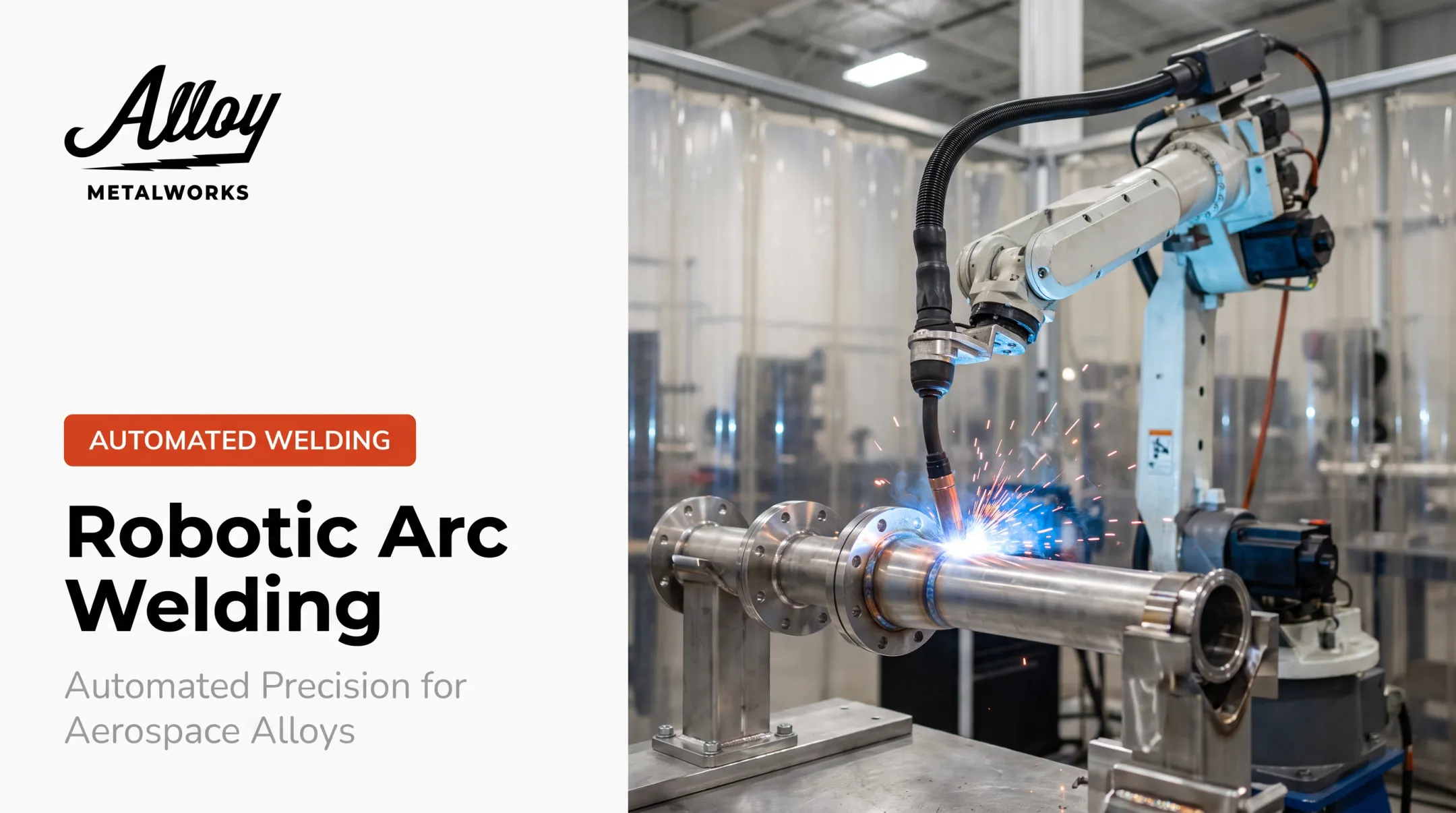
Robotic TIG automation takes the fundamentals of GTAW — a non-consumable tungsten electrode, separate filler wire feed, and shielding gas — and puts a robot in control of torch position, travel speed, and arc timing.
A typical cell includes:
- Robot arm (traditional 6-axis or collaborative cobot)
- TIG power source wired into the robot controller
- Wire feeder for filler metal delivery
- Fixturing to hold parts in repeatable position
- Fume extraction and safety enclosures

Traditional Robots vs. Cobots
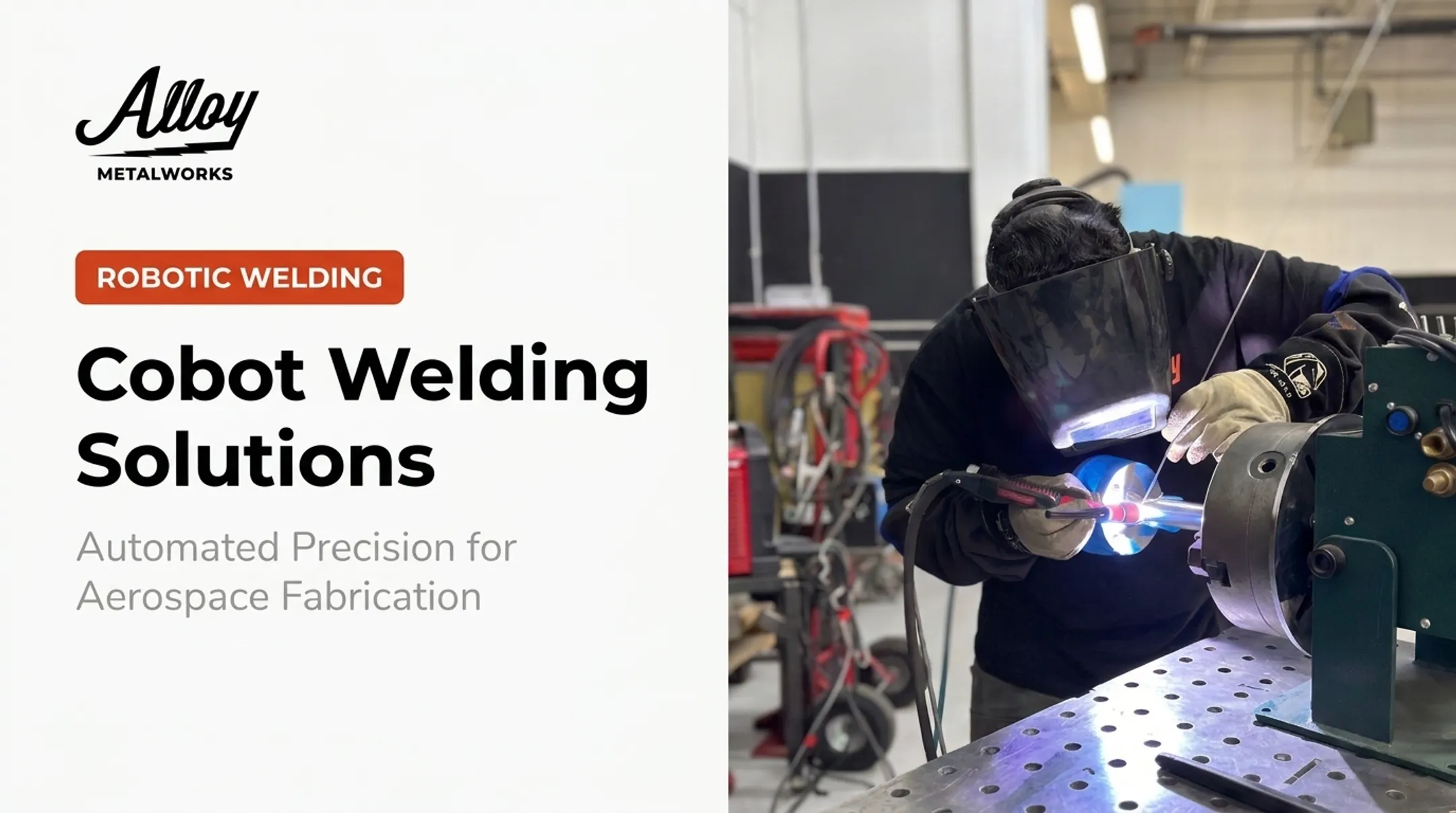
Traditional 6-axis robots handle high-speed, high-volume production with engineered positioners and sensing. Cobots trade some speed for faster programming and easier redeployment. That makes them a better fit for high-mix, lower-volume shops, according to The Fabricator's automation guidance.
Newer systems add vision-guided torch tracking and hot-wire TIG, which synchronizes filler delivery with arc control to push cycle times closer to MIG territory.
Are There Robotic TIG Welders Available Today?
Yes. Several platforms are available today:
- FANUC's ARC Mate pairs with servo laser tracking and a positioner for continuous seam welding
- Yaskawa's GYS interface connects TIG sources to its robots
- THG Automation builds cobot TIG cells around Fronius power sources and Universal Robots arms
- Wolf Robotics' TopTIG feeds filler through the torch nozzle for precise placement
These systems show up in aerospace, energy, and shipbuilding applications — though buyers should ask for a specific customer reference before treating a vendor's target-market list as proof of deployment.

Benefits of Automating TIG Welding
Repeatability tops the list. A robot doesn't get tired on hour six of a shift. Torch angle, travel speed, and filler placement stay consistent from the first weld to the thousandth.
That consistency translates into real numbers. K-TIG's case study with TFW Engineering reported 93% lower costs alongside improved quality, a strong result though tied to that specific application rather than a universal guarantee (K-TIG case study).
Other documented benefits:
- Heat input control — reduces warpage on thin-wall tubing and heat-sensitive alloys
- Operator safety — limits arc exposure and repetitive strain
- Fewer rejections — consistent, code-compliant welds mean less rework on inspection-critical parts
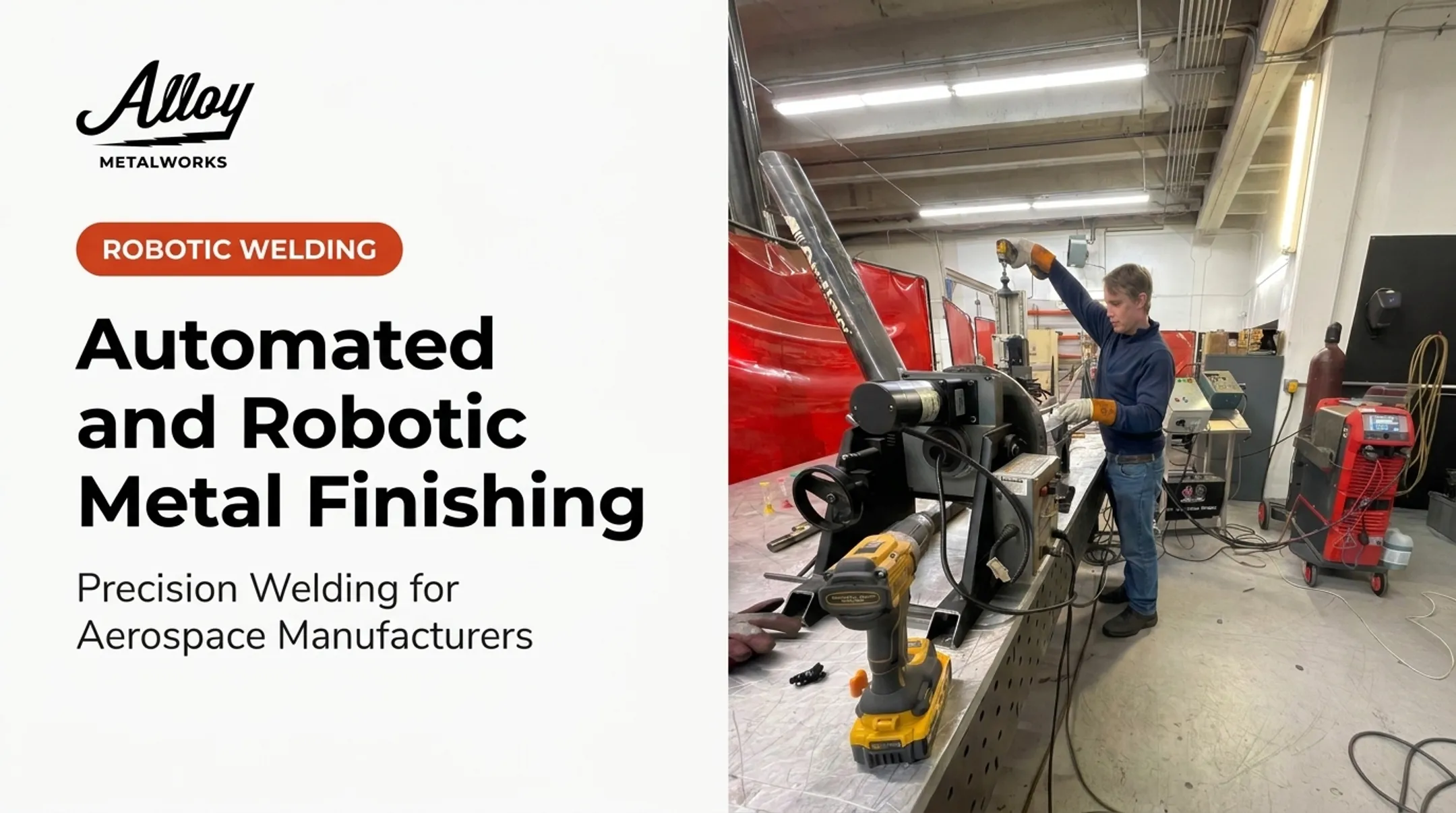
Alloy Metalworks has seen this firsthand in its own shop. When developing a repeatable process for Inconel 617, a difficult high-temperature nickel superalloy, the team first optimized weld parameters manually, then transferred those settings into a shop-built orbital welding system.
The result: reduced process variability and higher throughput on a part that would be brutal to weld consistently by hand, shift after shift.

Common Challenges and Limitations of Robotic TIG Automation
Automating TIG doesn't erase TIG's fundamental weakness: it's slow. The Fabricator identifies GTAW as the process with the lowest deposition rate of common arc welding methods. MIG still outpaces it because TIG prioritizes control over speed.
Additional limitations include:
- Tungsten erosion: electrodes burn back or degrade, so cells need monitoring or automated changers (some swap tips in 45 seconds)
- High-frequency arc-start interference: HF starts can disrupt robot controllers and nearby electronics without careful grounding and cable routing
- Bulky torch assemblies: wire feeders and torch bodies can't always reach tight joints or complex geometries
- Programming complexity: gas flow, tungsten geometry, pulse settings, and travel speed are interdependent—errors show up immediately in weld quality
Alloy Metalworks ran into the HF interference issue directly while building its orbital TIG system for Inconel 617. The fix required improved grounding, better cable routing, coded hard stops, and CPU-reboot safeguards, not a plug-and-play afternoon.
Is Robotic TIG Welding Worth It for Your Shop?
The decision comes down to a handful of factors:
- Production volume — enough repeated joints to justify programming and fixturing time
- Part complexity — stable fit-up and torch access matter more than raw volume
- Material — titanium, Inconel, and other exotic alloys demand tighter shielding control
- Quality and code requirements — ASME Section IX or AWS D17.1 compliance needs documented, validated procedures Automation pays off fastest when you've got a stable part family, consistent fit-up, and enough volume to spread fixture and programming costs. For prototypes, one-off assemblies, or exotic-alloy work where every part is a little different, skilled manual welding is usually still more practical. That's when a certified manual welding partner makes sense. Alloy Metalworks holds ASME Section IX and AWS D17.1 certifications and welds nickel-based superalloys, titanium, and stainless steel for aerospace and energy clients where automation isn't the right fit yet. For titanium work without a robot fixture, the shop uses custom inert-gas chambers and controlled purge setups. Welders manage shielding-gas purity, tungsten stick-out, torch angle, and joint cleanliness by hand.

How Much Does a Robotic TIG Welding System Cost?
Cobot TIG systems run $110,000-$145,000 for a complete setup (cobot, power source, wire feed, torch, table, and basic fixtures), according to a 2025 integrator cost breakdown.
Traditional robotic cells vary more widely since they're built around the specific part. Expect to add costs for:
- Servo positioners and seam-tracking sensors
- Custom fixturing and tooling
- Safety enclosures and fume extraction
- Integration and validation labor
Ongoing costs typically cover:
- Tungsten consumables and shielding gas
- Water-cooling maintenance and calibration
- Programmer training

ROI depends heavily on utilization. A cell running a single shift pays back far slower than one running two or three.
Frequently Asked Questions
How much does a welding robot cost?
Cobot TIG systems typically run $110,000-$145,000 for a complete setup. Traditional robotic cells vary widely based on positioners, sensing, and fixturing, so request an application-specific quote for an accurate figure.
Are there robotic TIG welders?
Yes. FANUC, Yaskawa, THG Automation, and Wolf Robotics all offer commercial robotic and cobot TIG systems used in aerospace, energy, and industrial manufacturing today.
Is robotic welding worth it?
It depends on volume, part complexity, and quality requirements. High-volume, repeatable joints with stable fixturing see the fastest payback; low-volume or highly variable parts often don't justify the investment.
What industries use robotic TIG welding most?
Aerospace, energy, and shipbuilding are common target markets, along with food and pharmaceutical sanitary systems. These sectors rely on TIG for precision joints, corrosion resistance, and code-compliant work on stainless and specialty alloys.
Can robotic TIG welding handle exotic alloys like titanium and Inconel?
Yes, but it requires specialized shielding, purge setups, and carefully developed weld procedures. Titanium especially needs oxygen-free purge environments to prevent contamination during welding.
Is manual TIG welding still relevant with robotic automation available?
Absolutely. Complex, low-volume, or highly specialized welds — especially in exotic alloys — still require hands-on expertise that fixtures and programming can't easily replicate.