
But titanium punishes sloppy welding. Many fabrication shops struggle to produce welds that pass inspection consistently, and a single contaminated pass can scrap an otherwise perfect part. This guide covers why titanium welding is so unforgiving, which processes actually work, how contamination sneaks in, and what to look for in a welding partner.
Key Takeaways
- Titanium reacts aggressively with oxygen, nitrogen, and hydrogen once it rises above roughly 500°C
- GTAW (TIG) is the industry-standard process; shielding gas coverage isn't optional
- Contamination, not heat input, causes most titanium weld failures
- Certified, code-compliant welding (AWS D17.1, ASME Section IX) is mandatory for flight-critical parts
Why Is Titanium Difficult to Weld?
Titanium melts at roughly 1,668°C (3,034°F), well above steel, and its thermal conductivity is low. That combination means welders need sustained, controlled heat input without letting the surrounding material warp or distort.
The bigger problem is chemistry, not heat. According to AWS Welding Journal research, titanium's oxidation resistance collapses above 500°C (932°F), opening the door to oxygen, nitrogen, and hydrogen contamination. These interstitial elements diffuse quickly into the molten pool and raise hardness while destroying ductility.
Alloy behavior varies by type:
- Alpha alloys: generally weldable in the annealed condition, more forgiving overall
- Alpha-beta alloys (Ti-6Al-4V is the most common): weldable, but HAZ grain structure and cooling rate drive final properties
- Beta alloys: most demanding; restraint during welding can cause cracking, often requiring post-weld heat treatment

Fluxes that work fine on steel are off the table for titanium. They react with the metal and cause brittleness, which rules out flux-shielded processes entirely.
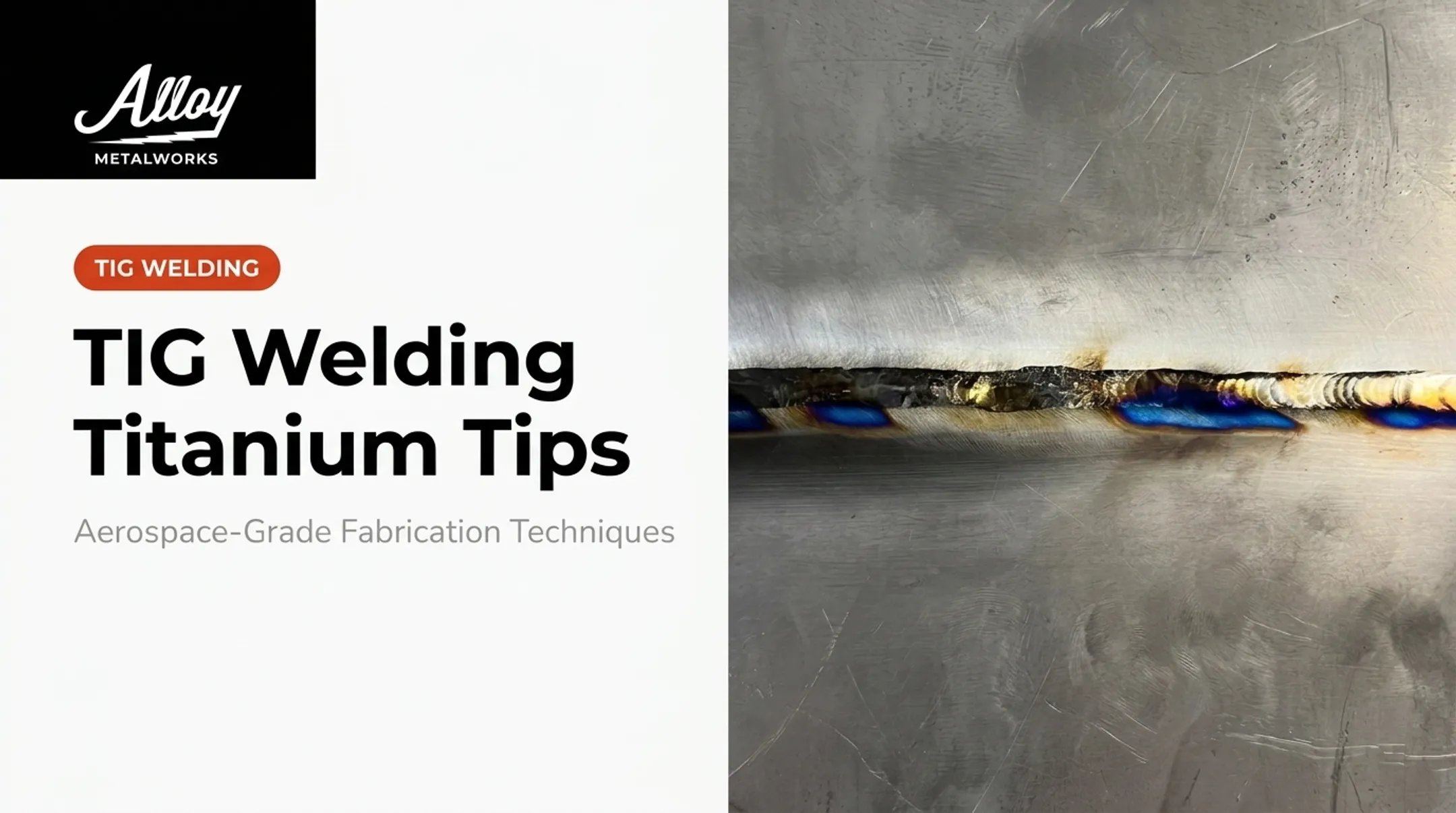
At Alloy Metalworks, this is a recurring conversation with clients. A titanium weld coupon submitted for AWS D17.1 Class A qualification can get rejected during visual inspection alone. Purple and blue discoloration disqualifies the part even if it passes destructive and radiographic testing. That's how strict the standard is.
Best Welding Methods and Techniques for Titanium
For thin-to-medium sections, GTAW (TIG) remains the industry standard. It gives welders precise heat control, which is critical given titanium's narrow thermal tolerance. Most thin-wall titanium TIG work happens below 3mm, often without filler metal.
For thicker or specialized work, these processes are the usual next step:
| Process | Best Use |
|---|---|
| GMAW (MIG) | Thicker sections (>3mm), more cost-effective at scale |
| Plasma Arc Welding (PAW) | Thicker sections needing a broader weld seam |
| Electron Beam Welding (EBW) | High-vacuum aerospace applications; narrow heat source, penetration up to 40mm |
Regardless of process, these details separate a passing weld from a rejected one:
- Tight joint fit-up before striking an arc
- Matching or ELI-grade filler metal for the alloy in question
- Low, narrow heat settings with steady, consistent travel speed
- Full shielding gas coverage: front, root, and trailing
Shielding gas matters as much as the process itself. Argon is the standard choice; helium offers deeper penetration through higher thermal conductivity but costs more and burns through faster. A trailing shield is essential for open-air welding, and back-purging protects the underside of the weld from atmospheric contamination.

This is where a lot of shops fall short. At Alloy Metalworks, titanium welding happens inside custom inert gas chambers with dedicated purge setups, keeping the entire weld area oxygen-free rather than relying on gas cups and trailing shields alone. It's a more controlled approach for parts where a single discolored pass means starting over.
What Type of Welder Do You Need for Titanium?
Short answer: a certified TIG (GTAW) welder. The machine still needs the right controls:
- High-frequency arc start
- Pulse control
- Precise amperage regulation
Certification to the relevant code matters more than machine specs alone:
- AWS D17.1 for aerospace and flight-critical hardware
- ASME Section IX for pressure equipment and industrial systems
Titanium base alloys fall under P-numbers 51 through 53, with fillers grouped under F-51 through F-56 in Section IX — a level of code specificity that generic welding shops rarely track closely.
Experience with reactive and exotic alloys matters more than raw torch skill. A welder with years on carbon steel can lay a clean-looking bead on titanium that still fails inspection.
The failure mode often isn't obvious until you know what weld discoloration actually means. Alloy Metalworks qualifies titanium work to AWS D17.1 and ASME Section IX so beads that look right also pass code.
Preparation, Cleaning, and Contamination Prevention
Most titanium weld failures trace back to contamination, not welder error at the arc. Preparation determines the outcome before welding even starts.
Standard cleaning sequence:
- Degrease the joint with acetone or an alcohol-based solvent
- Remove surface oxide with a clean stainless-steel wire brush or an approved pickling process
- Avoid touching cleaned surfaces before welding
- Verify gas purity, hoses, and fittings for leaks before striking an arc

Steel tools are off-limits. Carbon-steel brushes, grinding wheels, vises, or work surfaces can embed iron particles into the titanium surface. Those particles dissolve into the weld, reduce corrosion resistance, and create rust-initiation sites down the line.
Reading the Weld Color
Post-weld color is a fast, visual contamination check:
- Silver or straw — acceptable shielding, minimal oxidation
- Blue, purple, or gray — oxygen contamination present; reject under strict visual criteria
- White, chalky, or flaky — severe oxidation, weld is compromised
Under AWS D17.1 Class A, this isn't a suggestion — purple or blue discoloration fails visual inspection immediately, regardless of what destructive testing might show. Color is a useful first check, but it's a surface indicator, not proof of bulk weld quality.

Common Mistakes and Quality Risks in Titanium Welding
The same handful of errors show up again and again in rejected titanium welds:
- Inadequate gas coverage — gaps in trailing shield or back-purge let atmosphere reach the hot metal
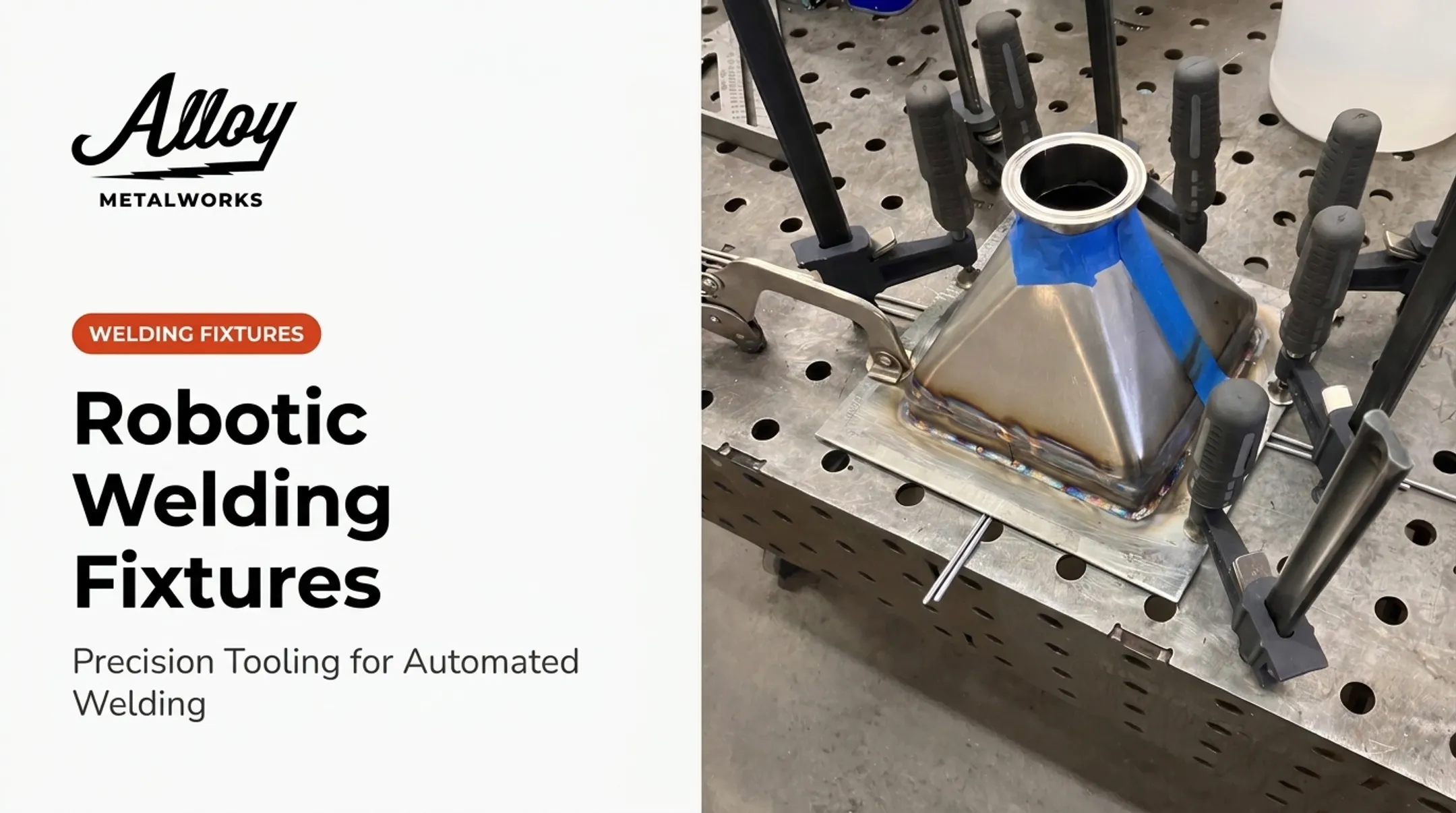
- Cross-contamination from steel tools, fixtures, or work surfaces
- Excessive heat input damaging the passive oxide layer through depletion and oxidation
- Skipping trailing shields on open-air welds, exposing the cooling bead to air The consequences aren't cosmetic. Porosity, embrittlement, and cracking lead directly to failed inspections, costly rework, or scrapped parts. On titanium, those outcomes are especially expensive given the material's price per pound. The fix is process discipline across every variable at once. AWS D17.1 Class A weld control means managing these factors together:
- Shielding-gas flow rate and purity
- Tungsten stick-out and torch angle
- Travel speed
- Joint cleanliness Weak trailing coverage on just one pass can undo everything else done correctly. That's why Alloy Metalworks runs titanium fabrication under ISO 9001-controlled processes with ASME Section IX and AWS D17.1 Class A certified welding. Inspection-ready documentation and traceability are how repeat failures get avoided on flight-critical and regulated hardware.
Frequently Asked Questions
Why is titanium difficult to weld?
Titanium reacts aggressively with oxygen, nitrogen, and hydrogen above roughly 500°C, causing embrittlement and porosity if unshielded. Combined with its high melting point and low thermal conductivity, precise heat and atmosphere control are non-negotiable.
What type of welder do you need for titanium?
You need a TIG (GTAW) setup with precise amperage control, plus an operator experienced with reactive alloys and qualified to AWS D17.1 or ASME Section IX depending on the application. Equipment capability alone isn't enough.
Can titanium be welded to other metals?
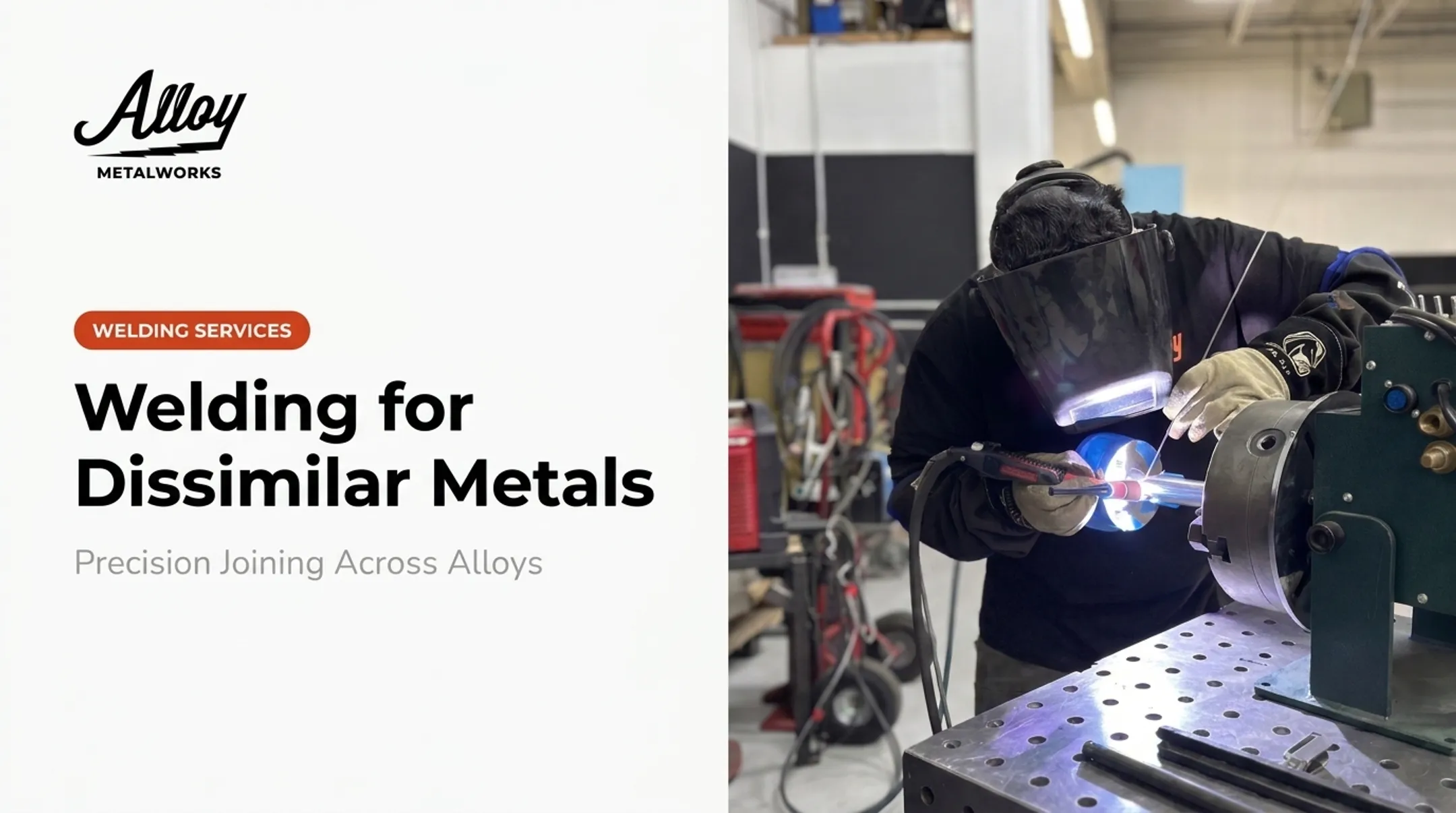
Generally not through direct fusion welding. Titanium and steel or aluminum form brittle intermetallic compounds at the joint. Specialized methods like explosion welding or an intermediate transition layer can join dissimilar metals in some cases.
What gas is used to weld titanium?
Argon is the most common shielding gas; helium or argon-helium blends offer deeper penetration when needed. Full coverage of the weld pool, HAZ, and cooling bead is essential regardless of gas choice.
How do you know if a titanium weld is contaminated?
Check the weld color: silver or light straw indicates a clean, well-shielded weld. Blue, gray, or white discoloration signals oxygen contamination and likely rejection under aerospace standards.
Do titanium welds need post-weld heat treatment?
Often, yes, but it depends on alloy type. Alpha-beta alloys like Ti-6Al-4V are typically weldable in the annealed condition, while beta alloys frequently need PWHT to restore strength and reduce cracking risk.