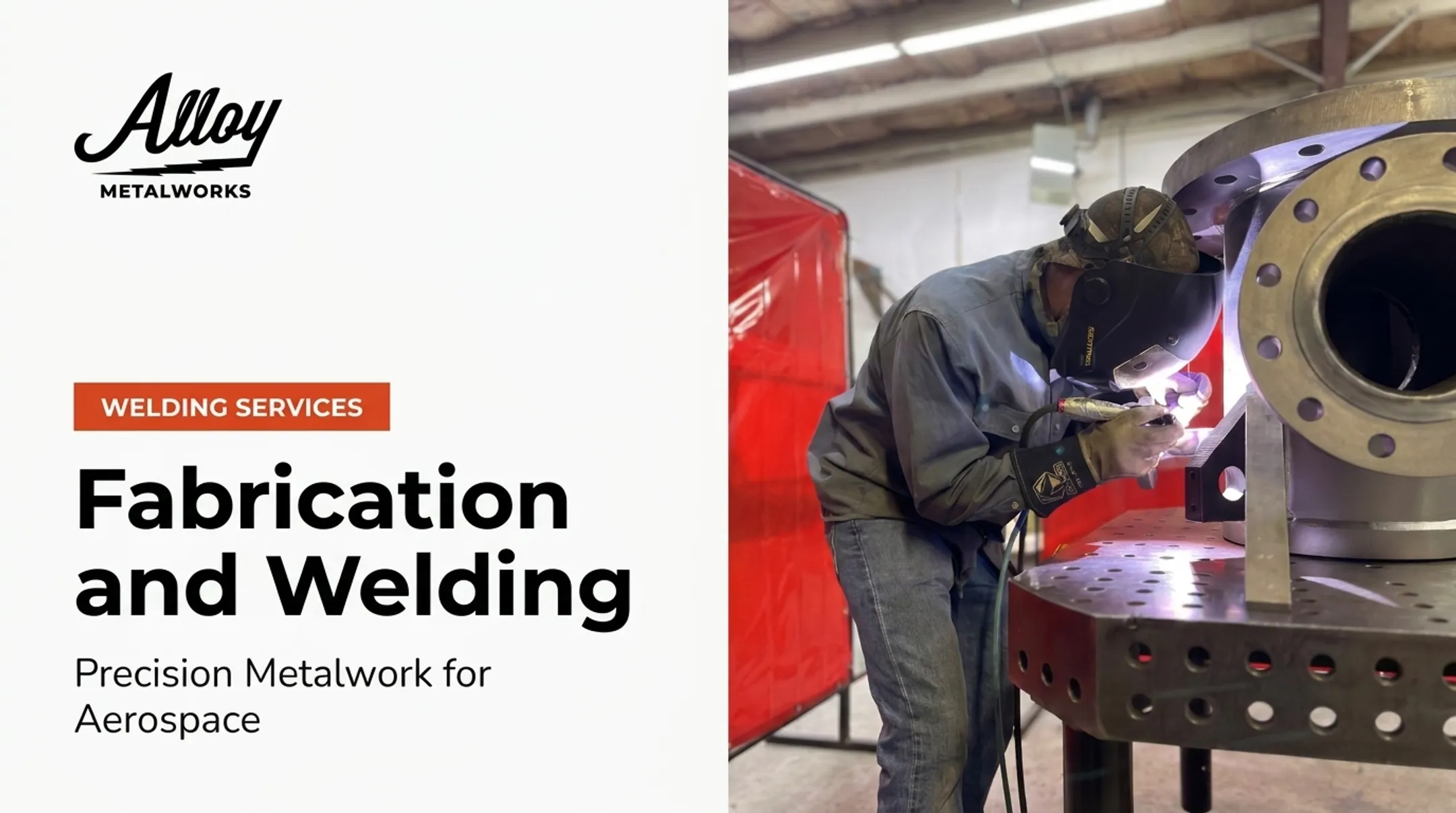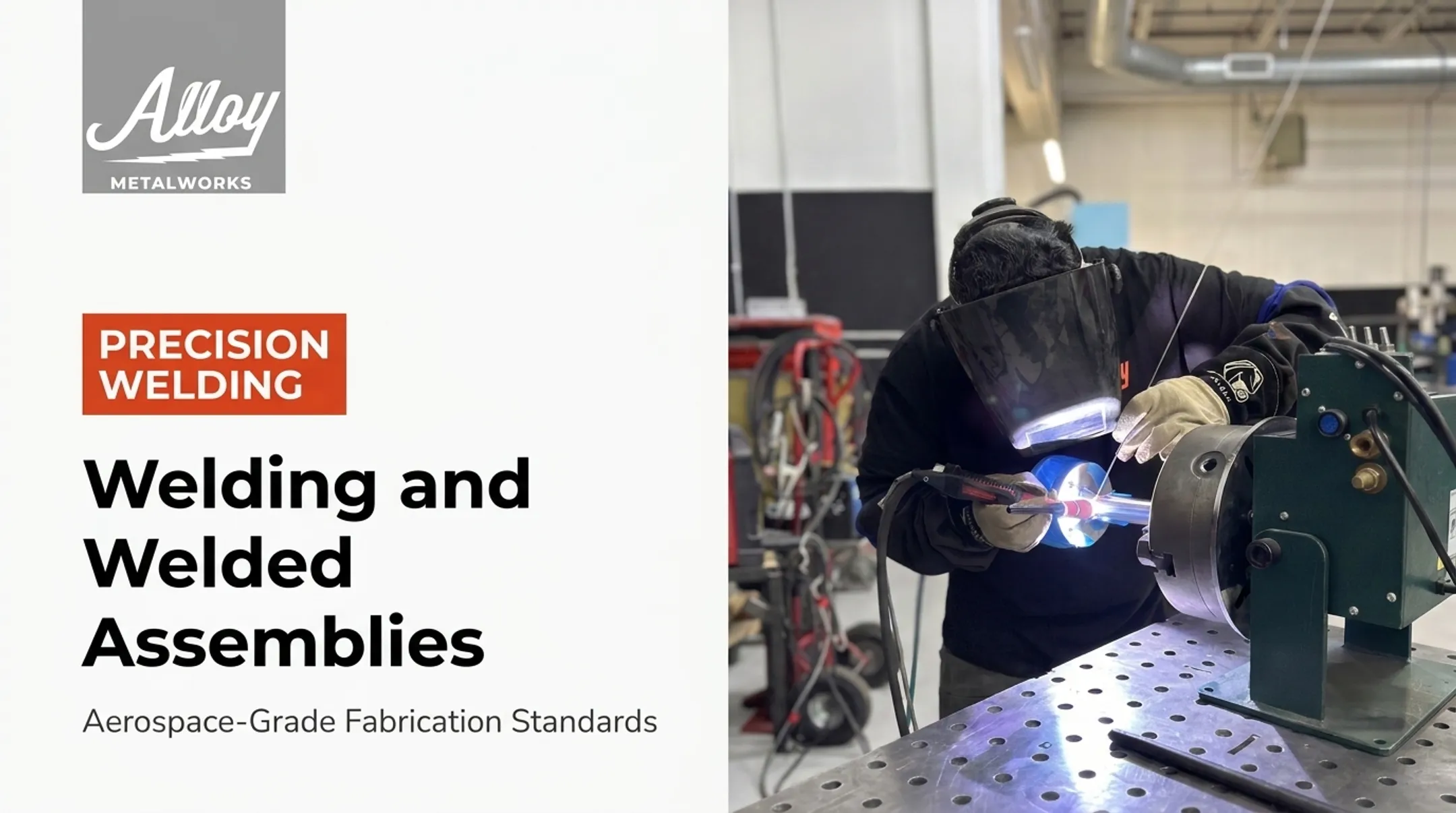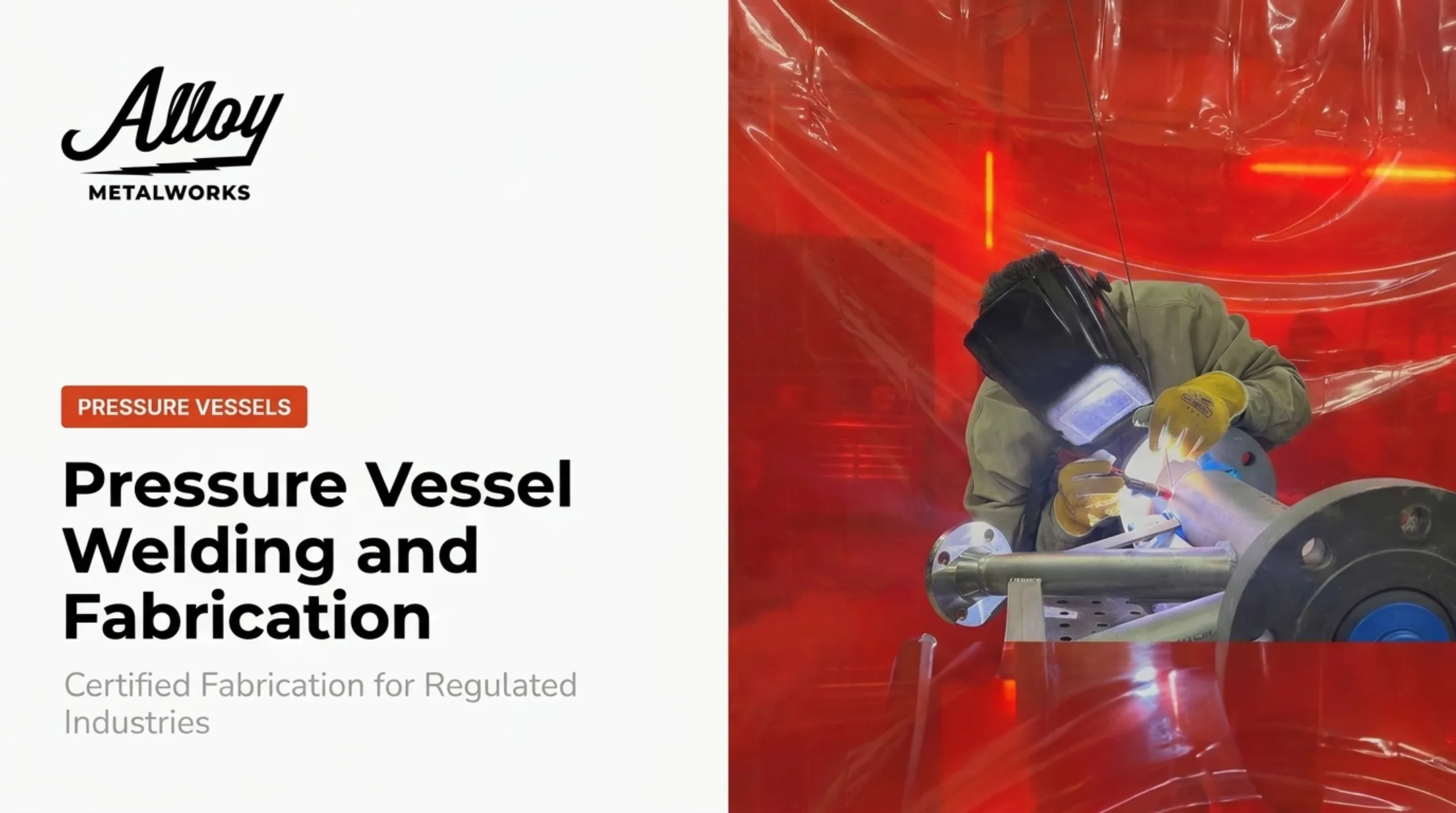

The difference isn't just semantics. It determines which code governs your equipment, what welding qualifications your fabricator needs, and whether your inspector signs off or sends you back to the drawing board. Get it wrong, and you're looking at failed inspections, expensive rework, or worse.
This guide breaks down the real distinctions: definitions, codes, materials, vessel types, and how to pick a fabrication partner who won't leave you exposed during an audit.
Key Takeaways
- Tanks handle atmospheric or low-pressure storage; pressure vessels are engineered for significant internal or external pressure
- OSHA and ASME draw the line at 15 psig — above that, ASME Section VIII Division 1 typically applies
- Pressure vessels demand stricter design codes, certified welding (ASME Section IX), and rigorous inspection
- A code-compliant, ISO 9001-controlled fabricator reduces the risk of failed inspections and costly rework
What Are Pressure Tanks and Vessels
Storage tanks are classified by code basis and service, not by an atmospheric label. OSHA's general rule: a pressure vessel is anything designed to operate above 15 psig. ASME BPVC Section VIII Division 1 governs vessels exceeding that threshold, whether fired or unfired.
Tanks, by contrast, fall under API standards. API 650 covers welded oil-storage tanks. API 620 addresses large, field-assembled, low-pressure carbon-steel tanks. Neither is a catch-all for "anything that holds liquid."
The distinction affects three practical areas:
- Procurement: Ordering a "tank" when you need an ASME-stamped vessel means starting over
- Safety planning: Pressure-rated equipment requires relief systems, NDE, and documented testing that atmospheric tanks don't
- Compliance: Regulated industries (hydrogen systems, chemical processing, cryogenic storage) can't substitute one for the other
A small vessel can still be pressure-rated. A large vessel-shaped tank might not need ASME certification at all. Design pressure, temperature, fluid hazard, and jurisdiction decide the classification, not size or shape.
Tank vs Vessel: Key Differences
| Basis | API 650 (Tanks) | API 620 (Tanks) | ASME VIII Div. 1 (Vessels) |
|---|---|---|---|
| Scope | Welded oil-storage tanks | Low-pressure, field-assembled carbon-steel tanks | Internal/external pressure exceeding 15 psig |
| Construction | Rolled plate, simpler geometry | Field-assembled, aboveground | Thick-walled, stress-analyzed, reinforced heads |
| Inspection | Periodic visual checks | Periodic visual checks | Hydrostatic testing, NDE, third-party certification |
| Common materials | Carbon steel | Carbon steel | Carbon steel to high-performance alloys (Inconel, Hastelloy, titanium) |

Construction and Material Differences
Tanks are typically rolled-plate assemblies: straightforward fabrication with predictable geometry. Pressure vessels require stress calculations for wall thickness, nozzle reinforcement, and head design. There's no universal thickness rule here; it depends on pressure, vacuum risk, temperature, and corrosion allowance.
Standard tanks run on carbon steel or basic stainless. Demanding pressure vessel applications such as cryogenic hydrogen, high-temperature reactors, and corrosive process streams call for Inconel, Incoloy, Hastelloy, or titanium. We've built reactor components from Alloy 800HT rated above 700°C for exactly this reason: standard alloys don't hold up.
Inspection and Certification
Tanks get visual inspections on a schedule. Pressure vessels require hydrostatic or pneumatic testing, non-destructive examination (NDE), and often third-party certification before they ever see service. Skip a step here, and your vessel doesn't get a nameplate. It doesn't get installed.

Types of Pressure Vessels
Pressure vessels are grouped by function, not only by shape.
Process vessels include reactors, separators, and heat exchangers used in chemical and energy processing. In oil and gas, a separator splits well fluids into gas and liquid streams for metering, sale, or equipment protection.
Storage-under-pressure vessels cover gas cylinders, air receivers, and cryogenic vessels. OSHA's 29 CFR 1910.169 requires air receivers to meet ASME Section VIII construction, carry safety valves, and include accessible drains.
Specialty and research vessels are custom units for aerospace ground support, hydrogen fuel systems, and R&D. The Department of Energy notes gaseous hydrogen storage runs 350–700 bar (about 5,000–10,000 psi), with composite-wrapped cylinders reaching similar ratings for cryogenic liquid hydrogen.
Internal components vary by function:
- Agitators create rotating fluid movement for mixing
- Baffles limit vortex formation and raise agitation power, though they can create dead zones in viscous fluids
- Jackets and coils manage temperature through heating or cooling contact
Vertical, horizontal, or spherical orientation follows footprint, volume, and process requirements.

Codes, Standards, and Compliance Requirements
US pressure vessel work sits on a small set of non-negotiable codes. Miss one and the vessel can fail inspection even if the geometry looks perfect.
- ASME Section VIII — Design, fabrication, inspection, testing, and certification for vessels above 15 psig, fired or unfired
- ASME Section IX — Qualification of welding procedures and welders; dimensional compliance alone does not pass a vessel with unqualified welds
- AWS D18.1 — Hygienic welding for food, beverage, and pharmaceutical service: smooth seams, cleanable joints, documented visual exam
- FDA 21 CFR 117.40 — Product-contact surfaces must be cleanable and corrosion-resistant, in addition to pressure-design rules (full text)
The stakes are concrete. OSHA's Technical Manual ties non-compliant construction to rupture, fragmentation, fire, and explosion. That is why relief systems, NDE, and qualified welding are baseline requirements, not optional extras.
Industries That Rely on Pressure Vessels and Tanks
Pressure vessels serve regulated and high-performance industries, each with distinct material, pressure, and documentation demands:
- Aerospace and space technology: Flight-critical, weight-optimized vessels. NASA tracks roughly 10,000 ground-based pressure vessels and systems agency-wide, each requiring documented inspection and life assessment.
- Clean energy and hydrogen systems: Vessels rated for extreme pressure and cryogenic temperatures. We fabricated an Alloy 800HT component for the National Renewable Energy Laboratory's thermochemical reactor operating above 700°C while mixing three separate streams. NREL added us to its approved vendor list afterward.
- Food, beverage, and pharmaceutical processing: Sanitary, corrosion-resistant construction under AWS D18.1 and 3-A standards. Product-contact surfaces, drainability, and clean-in-place access matter as much as pressure rating.
- Research and advanced manufacturing: Custom, small-batch fabrication with fast turnaround. Startups and labs rarely have time for a six-month lead time on a single prototype vessel.

Choosing a Qualified Fabrication Partner
Not every shop that can weld a seam should be building your pressure vessel. Look for:
- Documented traceability: ISO 9001-controlled processes with full material certs, weld records, and test documentation ready for audit
- Engineering-aware collaboration: a partner who catches design issues before fabrication starts, not after
- Certified welding in demanding alloys: ASME Section IX and AWS-qualified welders experienced in Inconel, Hastelloy, titanium, and other exotic materials
- Rapid turnaround: critical for startups and research teams on tight development timelines
Alloy Metalworks builds to those standards. Our welding is qualified to ASME Section IX and AWS D17.1 Class A, and our sanitary welding meets AWS D18.1 and USDA 3-A. TDA Research reported that our reactor modifications came in early and under budget.
For a thermochemical reactor component, hydrogen storage vessel, or sanitary process tank, certifications and documentation practices matter as much as the equipment list.
Frequently Asked Questions
What is a tank vessel?
"Tank vessel" typically refers to a storage container built for atmospheric or low-pressure service. It's distinct from a pressure vessel, which is specifically engineered and certified to contain substances under significant pressure.
What is a vessel in oil and gas?
In oil and gas, a vessel usually refers to process equipment like separators — pressure vessels that split well fluids into gas and liquid streams. These support metering, sale preparation, and equipment protection during extraction and refining.
What is the difference between a tank and a vessel?
Tanks store contents at or near atmospheric pressure and follow API codes like 650 or 620. Vessels are engineered to safely contain pressurized contents, generally above 15 psig, and fall under ASME Section VIII.
What are the different types of pressure vessels?
Major categories include process vessels (reactors, separators, heat exchangers), storage-under-pressure vessels (gas cylinders, air receivers, cryogenic tanks), and specialty vessels for aerospace or R&D applications.
What is the purpose of a pressure tank?
A pressure tank maintains consistent pressure within a fluid or pneumatic system, smoothing out fluctuations between pump cycles or supply demands. Common examples include residential water systems and compressed-air setups.
Is a 20-gallon pressure tank big enough for a house?
It depends on your pump's delivery rate, desired minimum run time, and system pressure range. Sizing calculations vary by household demand, so consulting a qualified engineer is the safest way to confirm adequate capacity.