
But there's a catch. Titanium is far harder to fabricate than steel or aluminum. It absorbs oxygen, nitrogen, and hydrogen when heated, turning brittle if contamination sneaks into the weld. That single fact separates capable fabricators from the rest.
This guide covers titanium's material properties, design considerations, welding requirements, real-world applications, and how to vet a fabricator qualified to build these vessels correctly.
Key Takeaways
- Titanium offers roughly 60% of steel's density with comparable alloyed strength—ideal when weight matters (ASM International)
- Contamination-free welds need inert chambers, purge setups, and AWS D17.1/ASME IX qualified welders
- Simple structures and smart flange design cut cost and fabrication risk
- Fusion welds to dissimilar metals require engineered transition joints
- A certified, experienced fabricator is the biggest factor in avoiding failure and rework
Why Titanium is Used in Pressure Vessel Fabrication
Titanium's appeal comes down to physics. It weighs about 60% as much as steel, yet through alloying and processing can match or exceed steel's strength (ASM International, 2000). For aerospace hardware or hydrogen tanks where every pound matters, that tradeoff is decisive.
Corrosion resistance is the other half of the story. Titanium forms a tenacious oxide layer that self-heals when scratched, so it resists pitting and crevice attack in oxidizing and chloride-rich service.
Common Grades in Vessel Fabrication
- Grade 2 (commercially pure): The corrosion-first choice for chemical processing, chloride service, and industrial vessels
- Grade 5 (Ti-6Al-4V): The strength-to-weight workhorse for aerospace and cryogenic applications, with annealed yield strength around 880 MPa
- Grade 7 (Ti-0.2Pd): Palladium-enhanced corrosion resistance for reducing acids and aggressive chloride media

Alloy Metalworks welds titanium across these grades, giving engineers flexibility to match material selection to the actual service environment rather than settling for a generic spec.
Is titanium as strong as steel? For vessel design, strength-to-weight is the better test. Commercially pure grades match many common steels at lower mass; Ti-6Al-4V exceeds them, which is why flight and hydrogen programs accept titanium’s higher material cost.
Industries relying on titanium vessels include:
- Aerospace and space technology
- Hydrogen and fuel cell energy systems
- Chemical and pharmaceutical processing
- Cryogenic storage and research equipment
Critical Design Considerations for Titanium Pressure Vessels
Titanium doesn't forgive sloppy design the way mild steel does. Two material traits drive most design decisions:
- Cold creep under sustained load over time
- Low impact toughness, meaning stress concentrations can trigger cracking that steel would simply absorb
Designers need to avoid sharp transitions, minimize high-stress zones, and keep geometry simple enough to inspect every weld visually and radiographically.
Structural Simplicity Isn't Optional
Complex geometries make inert gas shielding difficult to maintain during welding. A simpler vessel shape means better shielding coverage, cleaner welds, and faster inspection. That simplicity is a reliability requirement, not a cost-cutting shortcut.
Flange and Cover Strategy
Loose flanges are typical for all-titanium vessels and generally suit pressures up to roughly 1.6 MPa. Beyond that, flanged-ring designs handle severe pressure or temperature swings better. For flat covers, manholes, and handholes, titanium-lined steel or titanium-steel composite construction is common — it retains corrosion resistance where it matters while controlling material cost.
Pressure Ratings
Maximum pressure capacity comes down to three variables working together:
- Thicker walls handle higher pressure but add weight and cost
- Grade 5 tolerates higher stress than Grade 2
- Cylindrical shapes distribute stress more evenly than complex forms
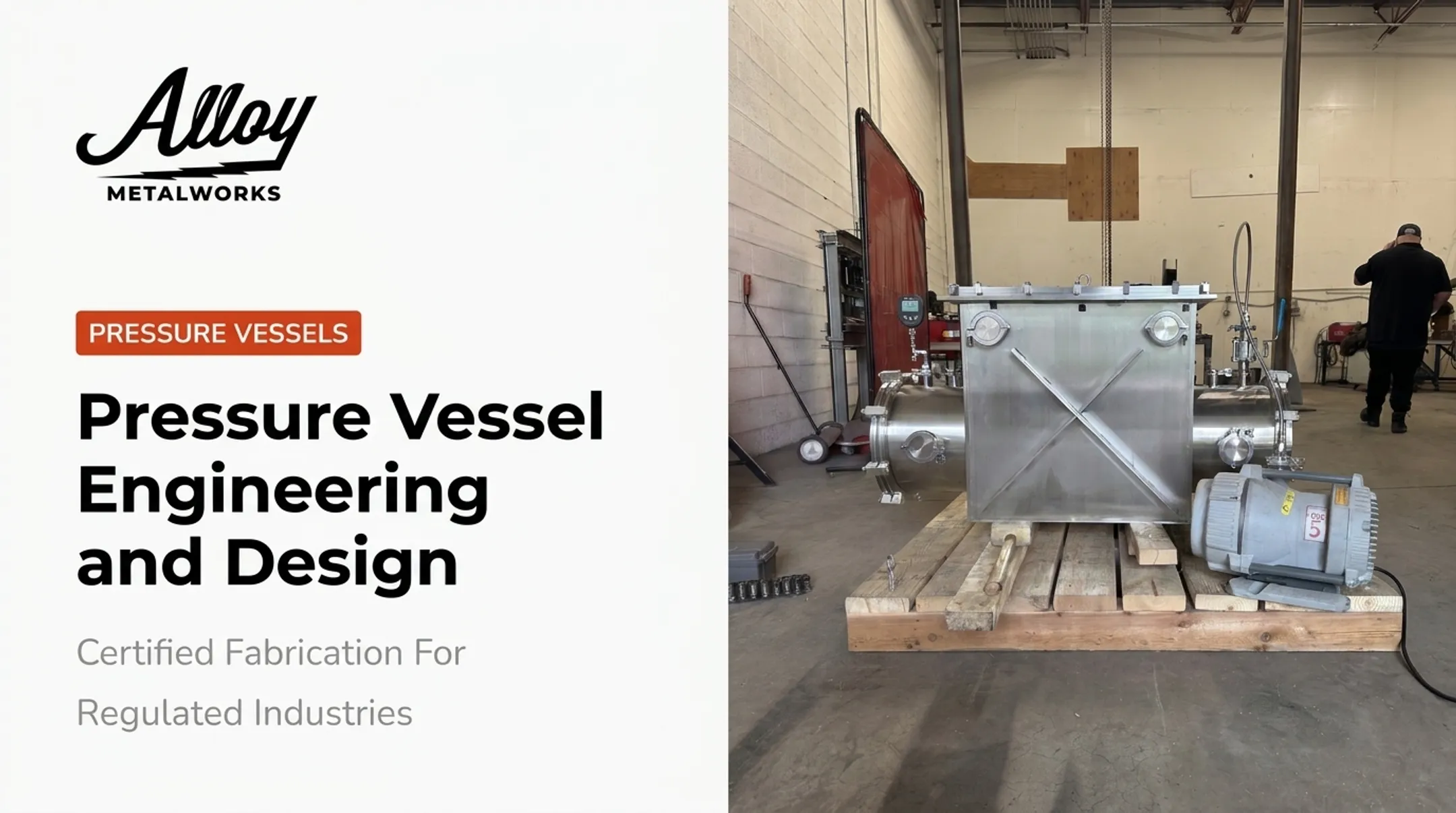
Properly engineered titanium vessels can meet high-pressure ASME-rated requirements on par with steel vessels of equivalent duty. Wall schedule, alloy choice, and inspectable geometry set that ceiling—not the base metal alone.

The Welding Challenge: Why Titanium Fabrication Requires Specialized Expertise
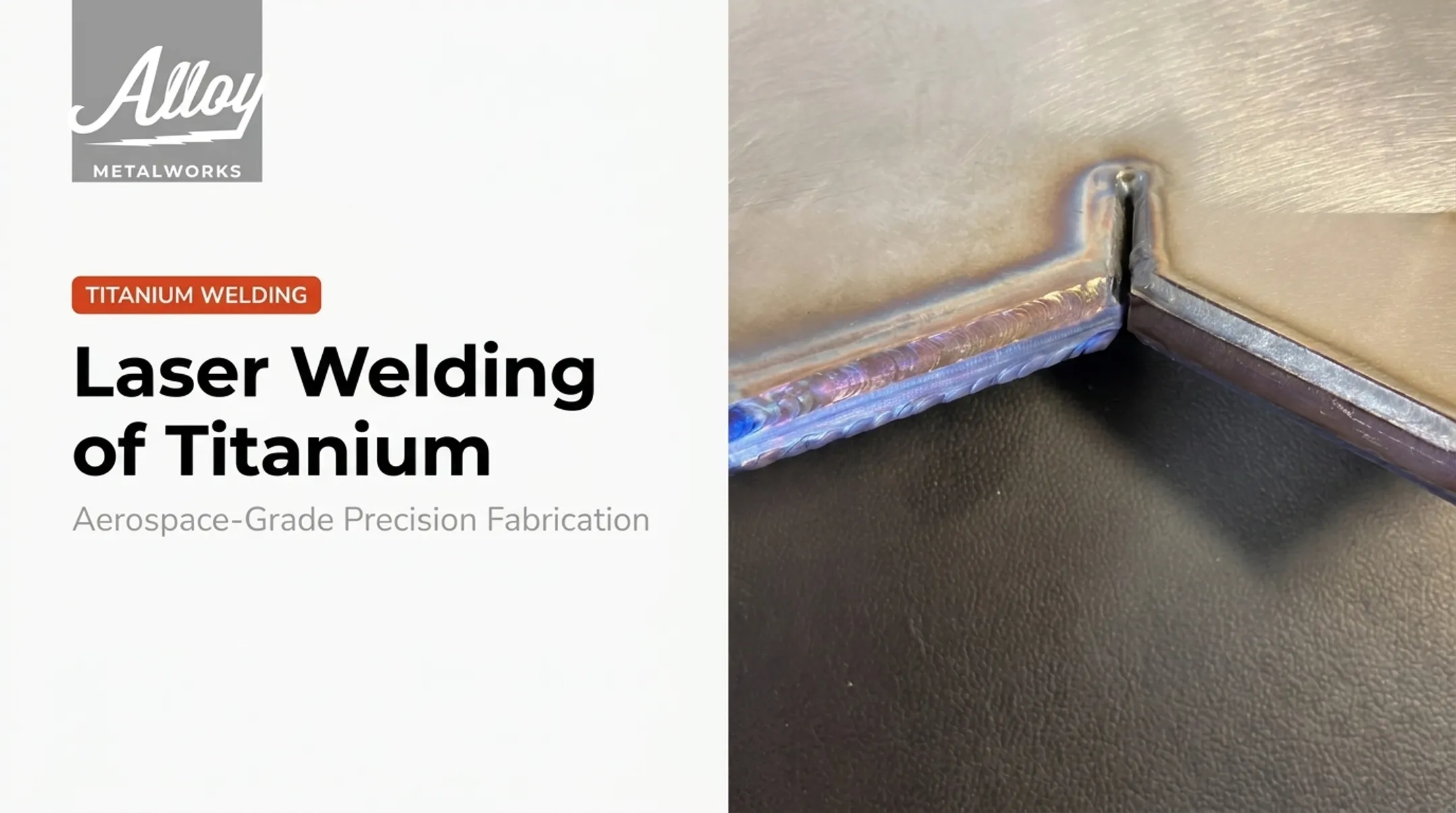
Above roughly 500°C, titanium aggressively absorbs oxygen, nitrogen, and hydrogen (TWI). That contamination embrittles the weld — raising tensile strength while stripping ductility. A weld can look perfect and still fail. Controlling that risk is what separates skilled titanium fabricators from everyone else.
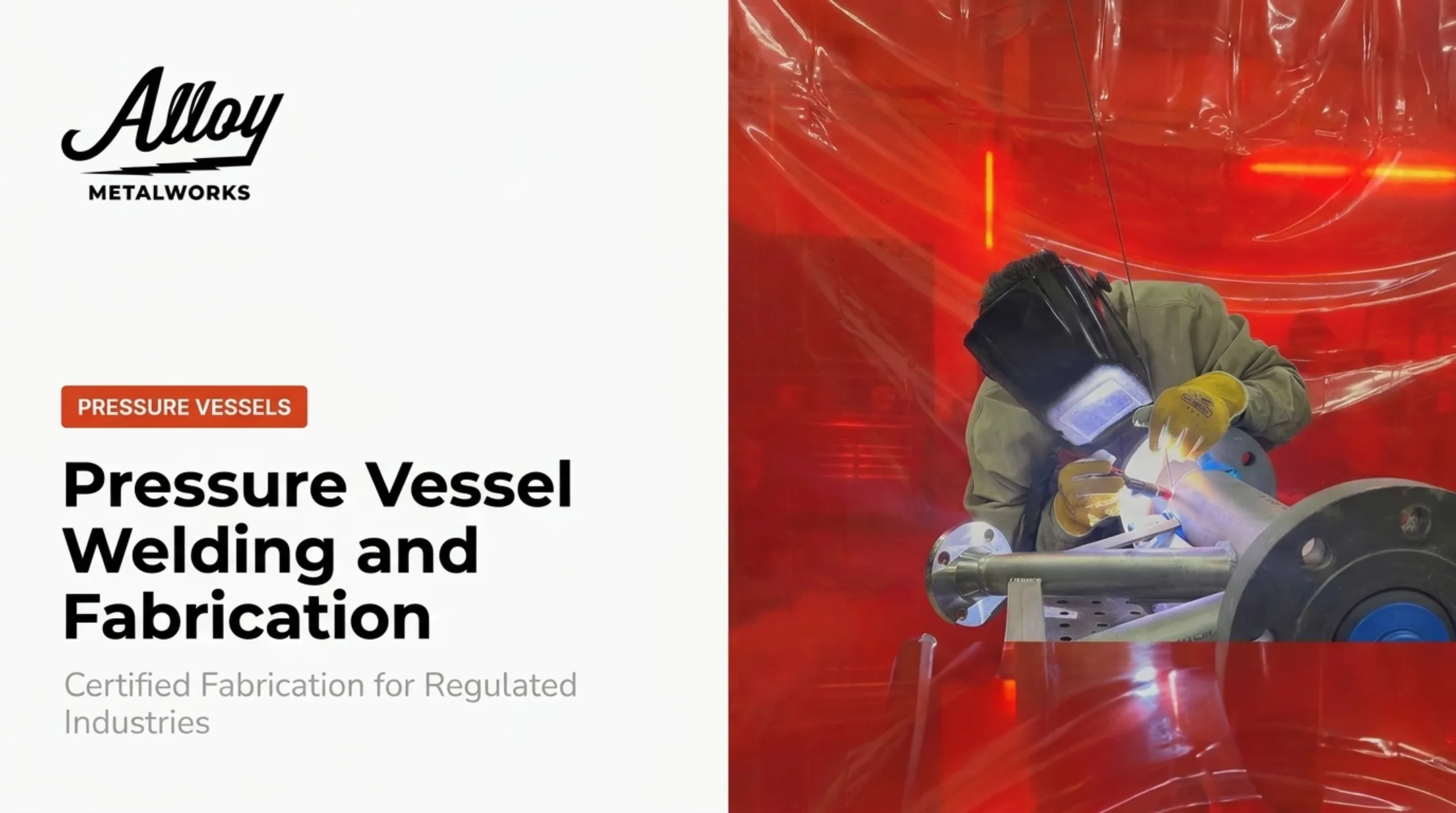
This is exactly why Alloy Metalworks builds titanium welds inside custom inert gas chambers and purge setups, maintaining an oxygen-free environment throughout the weld and cooling cycle. Weak shielding at the trailing edge or backside of a joint is one of the most common sources of contamination — and one of the easiest to miss without disciplined process control.

AWS D17.1 Class A: The Benchmark for Flight-Critical Work
AWS D17.1 Class A is the strictest tier of aerospace titanium welding certification. Under this standard:
- Shielding-gas purity, tungsten stick-out, torch angle, and travel speed all require tight control
- Weld cleanliness is non-negotiable
- Visual contamination alone can disqualify a weld, even if mechanical or radiographic testing looks fine
Alloy Metalworks holds AWS D17.1 Class A certification alongside ASME Section IX, so buyers can verify process capability against a published standard.
Titanium and Dissimilar Metals
Process control gets harder still when a vessel design joins titanium to other metals. Titanium generally cannot be fusion-welded to steel, aluminum, or nickel alloys without an application-specific qualification. Transition points typically use:
- Bolted connections
- Brazing
- Explosion-welded transition joints
Any vessel design that mixes titanium with other metals needs this joining strategy built in from the start, not patched in later.
Applications of Titanium Pressure Vessels Across Industries
Titanium pressure vessels show up wherever weight, corrosion, or extreme environments rule out conventional alloys:
- Hydrogen and fuel cell systems rely on titanium’s compatibility with hydrogen and resistance to embrittlement, a critical property when the stored gas itself is the risk factor. Alloy Metalworks supports hydrogen energy systems and fuel cell technologies as part of its energy fabrication work.
- Aerospace and space technology need flight-critical components with fully traceable, documented welds. NASA’s flight history includes multiple Ti-6Al-4V pressure vessels in liquid-hydrogen tank environments, underscoring both the material’s value and the rigor required to qualify it (NASA NTRS, 2008).
- Research and cryogenic applications need vessels that hold up under extreme temperatures and specialized gases, where titanium’s toughness and corrosion resistance are essential.
- Chemical processing and desalination favor titanium because its corrosion resistance in chloride and acidic environments beats steel outright, even at a material cost premium.

Quality Assurance and Compliance in Titanium Vessel Fabrication
In titanium pressure vessel work, certifications qualify the people and procedures behind every pressure-retaining weld.
- ASME Section IX qualifies welding procedures and personnel for pressure-retaining components. It doesn't certify the whole vessel, but it's a foundational requirement.
- Traceability and documentation — material certs, weld logs, inspection records — are non-negotiable for aerospace and regulated energy clients. Without them, a vessel simply isn't audit-ready.
- ISO 9001-controlled processes reduce the risk of downstream failures, delays, and rework during certification reviews.
Alloy Metalworks operates under ISO 9001 QMS and holds FAA Part 145 Repair Station accreditation, giving flight-critical and regulated projects an added layer of assurance beyond baseline welding qualifications.
Choosing the Right Titanium Pressure Vessel Fabricator
Before selecting a fabricator, verify:
- ASME Section IX certification for welding procedures and personnel
- AWS D17.1 experience, ideally Class A for flight-critical work
- ISO 9001 quality management systems
- Documented, titanium-specific welding procedures (not a generic TIG process repurposed for titanium)
- Proven inert-purge and contamination-control capability for titanium
Beyond credentials, look for engineering-aware collaboration. Choose a fabricator that works from design concept through the built part, catching heat-input issues, distortion risk, and joint design problems before welding starts. That upfront involvement prevents costly rework later.
Finally, ask for evidence of past titanium projects in aerospace, energy, or research settings similar to your own. A portfolio of comparable work tells you more than any certificate alone.
Frequently Asked Questions
How much pressure can a titanium pressure vessel withstand?
Pressure capacity depends on wall thickness, alloy grade, and vessel geometry. Properly engineered titanium vessels can meet high-pressure ASME-rated requirements comparable to steel vessels of equivalent duty.
Is titanium as strong as steel?
Unalloyed titanium has comparable strength to many steels at roughly half the density. Alloys like Grade 5 (Ti-6Al-4V) can exceed many steel grades in strength-to-weight performance.
What certifications should a titanium pressure vessel fabricator have?
Look for ASME Section IX, AWS D17.1 (ideally Class A for flight-critical work), and ISO 9001. Together they cover welding qualification, aerospace-specific fusion welding, and overall quality management.
Can titanium be welded to other metals in a pressure vessel assembly?
No. Titanium generally cannot be fusion-welded to dissimilar metals. Transition points typically require bolting, brazing, or explosion-welded joints instead.
How does titanium vessel cost compare to stainless steel?
Titanium carries a significant cost premium over stainless steel, driven by material, forming, and contamination-controlled welding. Design choices like titanium-lined or composite structures help control that cost on larger vessels.
What industries most commonly require titanium pressure vessels?
Aerospace, hydrogen and fuel cell energy, cryogenic research, and chemical processing are the leading sectors. Each is drawn to titanium’s strength-to-weight ratio or corrosion resistance.