
It shows up most often in the vacuum of space and in high-vacuum industrial systems, which makes it a serious concern for aerospace, energy, and research hardware designers. This guide breaks down the science, walks through NASA's famous Galileo antenna failure, identifies which metals are most at risk, and explains how engineers design around it.
Key Takeaways
- Cold welding is a genuine solid-state bond formed when clean, oxide-free metal surfaces contact under pressure
- A vacuum enables cold welding by preventing oxide layers from reforming after contact wears them away
- Aluminum, copper, gold, and certain stainless steels are far more susceptible than carbon steels
- Coatings, lubricants, smart material pairing, and design geometry are the most reliable defenses
What Is Cold Welding and Why Does It Happen?
At the atomic level, cold welding is straightforward: bring two clean metal surfaces close enough, and their electrons stop recognizing a boundary. They form a genuine metallic bond, no different from the bonds holding the metal together internally.
The catch is that "clean" metal almost never exists in the real world. Every ordinary surface carries an invisible oxide or contamination layer that keeps this bonding from happening. That thin film does more to prevent bonding than most engineers expect.
Rev. John Theophilus Desaguliers first documented the effect in 1724, twisting two lead balls together until they stuck. TWI notes that later testing found the bond as strong as the parent metal.
The behavior wasn't treated as general metallurgical practice until the 1940s and 1950s, when a 1949 General Electric patent codified cold pressure welding as an industrial process.
Don't confuse cold welding with:
- Cold Metal Transfer (CMT) — an arc process with low heat input, not zero heat
- "Cold" TIG welding — still uses a molten weld pool
Both run cooler than traditional fusion welding, but both still melt metal. True cold welding has no liquid phase at all.
Oxide thickness is the real control variable. NASA's 1980 ion-beam cleaning study showed that once those layers were removed, surfaces bonded strongly with only 1% deformation — versus roughly 70% for conventional cold pressure welding. A few atomic layers of oxide change the outcome.

Can Cold Welding Happen on Earth?
Yes — it's used industrially right now, particularly in copper and aluminum wire splicing. Vacuum isn't required to cold weld metal. What vacuum does is preserve a freshly cleaned surface far longer than open air ever allows, which is why the failure mode is so strongly associated with spaceflight.
Why Vacuum Makes Cold Welding More Likely
In normal atmosphere, exposed metal reacts with oxygen and water vapor almost instantly, rebuilding a protective oxide film within moments. Scratch a piece of aluminum on your workbench, and it's already re-oxidizing before you set down your tool.
Vacuum removes that oxygen supply. Once friction or impact strips a surface bare, it can stay chemically reactive for a much longer window, sometimes indefinitely, until something touches it.
Important clarification: Vacuum doesn't actively strip surfaces on its own. NASA/JPL's 1972 cold-welding test environment report found that passive, non-sliding exposure to vacuum had little to no effect.
The real driver was accumulated sliding motion. Static vacuum dwell time barely mattered.
That distinction matters for design. The real risk zones aren't flat surfaces sitting quietly in vacuum. They're the parts that move:
- Bearings
- Hinges
- Latches
- Gears
- Fasteners under vibration
Anywhere sliding or repeated contact wears through oxide film, the risk climbs.
Testing cold welding risk in vacuum chambers
That is why teams validate moving hardware on the ground. A vacuum chamber removes air and gas molecules to create a low-pressure, contamination-controlled environment that mimics space conditions. Engineers use it to replicate cold welding risk under realistic thermal and mechanical loads before hardware leaves the ground.
The Galileo Spacecraft: A Real-World Cold Welding Failure
Galileo's high-gain antenna is the textbook cold welding case study. It happened on a real mission at Jupiter.
In April 1991, JPL commanded the spacecraft's 16-foot umbrella-like antenna to deploy. It only partially unfurled, with one side extending further than the other. The antenna used gold-plated molybdenum-wire mesh ribs, driven by redundant motors through a worm gear and lever system.
What actually happened: A peer-reviewed space-mechanism study later attributed the failure to fretting during ground transport and launch vibration. That repeated micro-motion wore away lubricant and oxide layers on the antenna ribs at their hold-down points, allowing them to cold weld to the spacecraft structure. The resulting adhesion exceeded the force of the opening springs.

Recovery meant a full communications redesign, not a physical repair. JPL engineers:
- Switched to the spacecraft's low-gain antenna
- Added data compression and channel coding
- Used antenna arraying from Earth-based receivers to recover as much signal as possible
NASA's Lessons Learned database notes this workaround was still expected to meet 70% of the mission's science objectives.
No other documented catastrophic cold-welding failure has grounded a major spacecraft mission since. Prevention strategies work when engineers build them in from the start.
Which Metals Are Most (and Least) Prone to Cold Welding?
Not all metals are equally at risk. TWI's technical guidance identifies clear patterns:
Commonly susceptible (especially similar-to-similar pairings):
- Aluminum, including 7XXX series grades
- Copper and 70/30 brass
- Gold and silver
- Zinc and nickel
Possible but demanding tighter control:
- Stainless steels: austenitic grades show higher cold-welding tendency than martensitic ones
Generally resistant:
- Carbon-containing steels (mild and carbon steel)
Why the split? Ductile, non-ferrous metals deform easily under pressure, which helps rupture oxide films and expose clean surfaces for bonding.
Carbon steels are harder, less ductile at the surface, and their crystal structure resists the same plastic flow. TWI's guidance treats carbon content as a practical screening factor, though every real alloy and finish still needs its own qualification testing.

Can aluminum be cold welded?
Yes. Aluminum is one of the most commonly cold-welded metals in wire and sheet applications, including grades like 2xxx and 7xxx that are traditionally difficult to fusion weld.
What is the best cold welding method for aluminum?
The typical industrial process:
- Shear or brush the surface to mechanically remove the oxide layer
- Degrease to eliminate contamination
- Apply pressure quickly, using cold pressure welding equipment, before oxide reforms
A 2024 study on dissimilar aluminum cold-butt welding confirmed that plastic deformation during this process removes oxide and produces joints with strength comparable to the base metals.
Which metals cannot be cold welded?
Carbon-containing steels generally resist cold welding. Their crystal structure and hardness make it difficult to achieve the plastic deformation needed to rupture surface oxides and create genuine metal-to-metal contact.
Engineering Around Cold Welding: Prevention in Real-World Hardware
Preventing unwanted cold welding comes down to a handful of proven strategies:
Material pairing. Choose dissimilar metals with low mutual solubility or poor crystallographic compatibility. Two metals that don't "want" to bond metallurgically are inherently safer neighbors in a moving assembly.
Protective barriers. Solid lubricants like molybdenum disulfide, specialized coatings, and ceramic or polymer spacers keep clean metal surfaces from ever making direct contact in the first place.
Design-stage controls:
- Limit contact stress at interfaces
- Control surface finish specifications
- Minimize unnecessary sliding motion
- Build in force margin on release mechanisms so a partial weld doesn't defeat deployment
Testing. Thermal-vacuum chamber testing with vibration and life-cycle simulation is standard practice for validating hinges, latches, and moving assemblies before flight or long-term deployment. NASA's guidance is explicit here: passive dwell time isn't a reliable stand-in for real qualification testing.
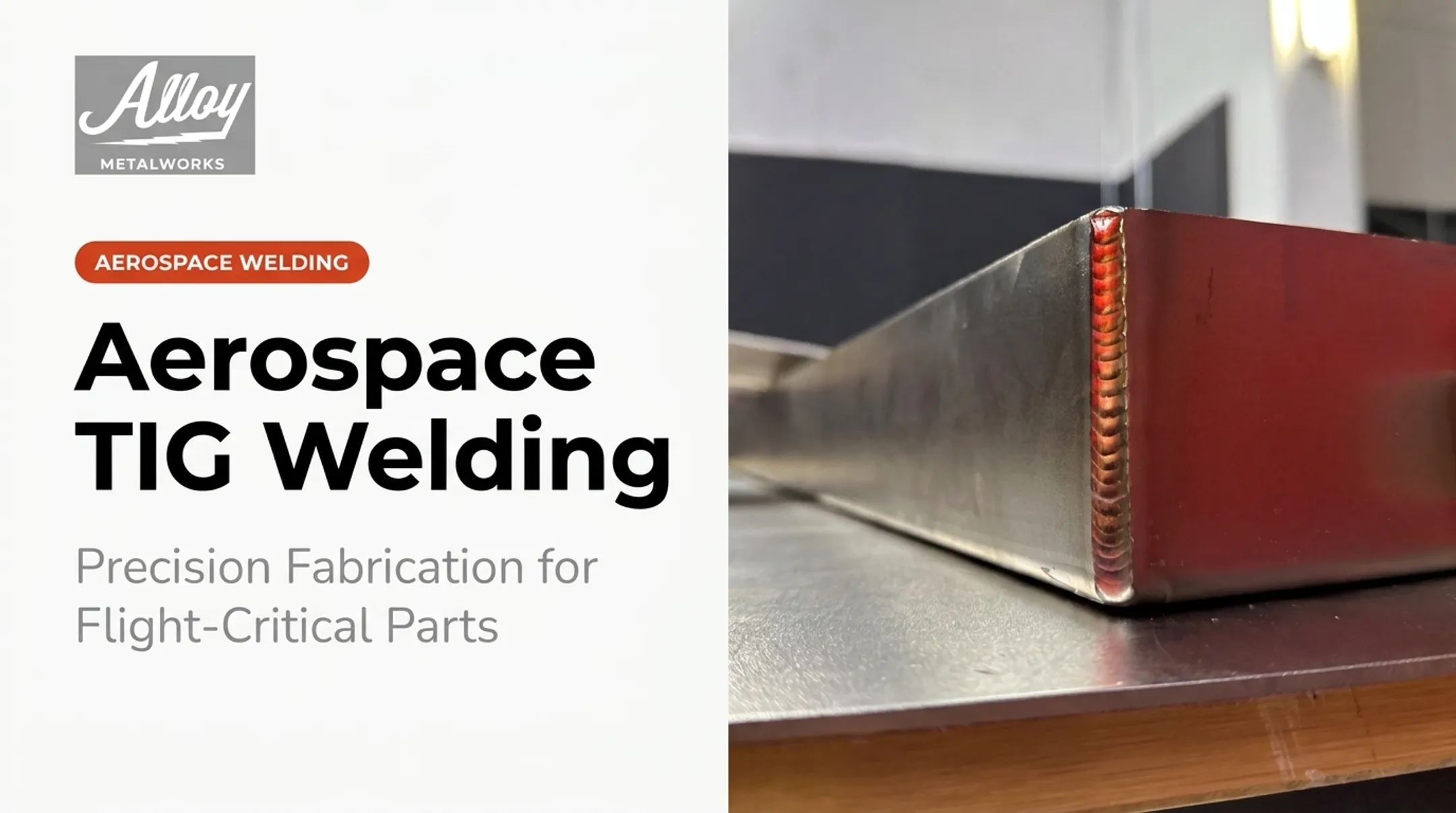
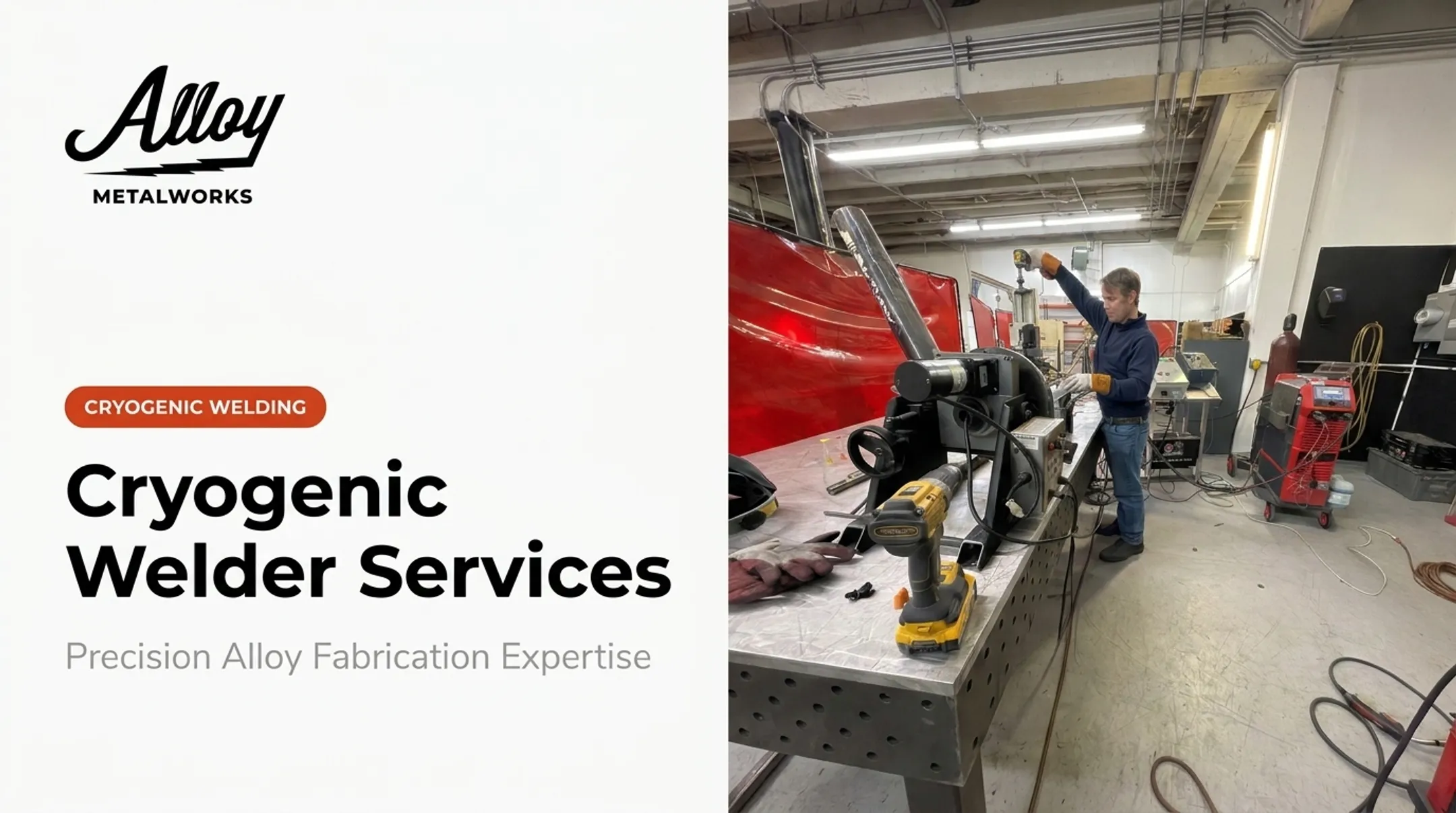
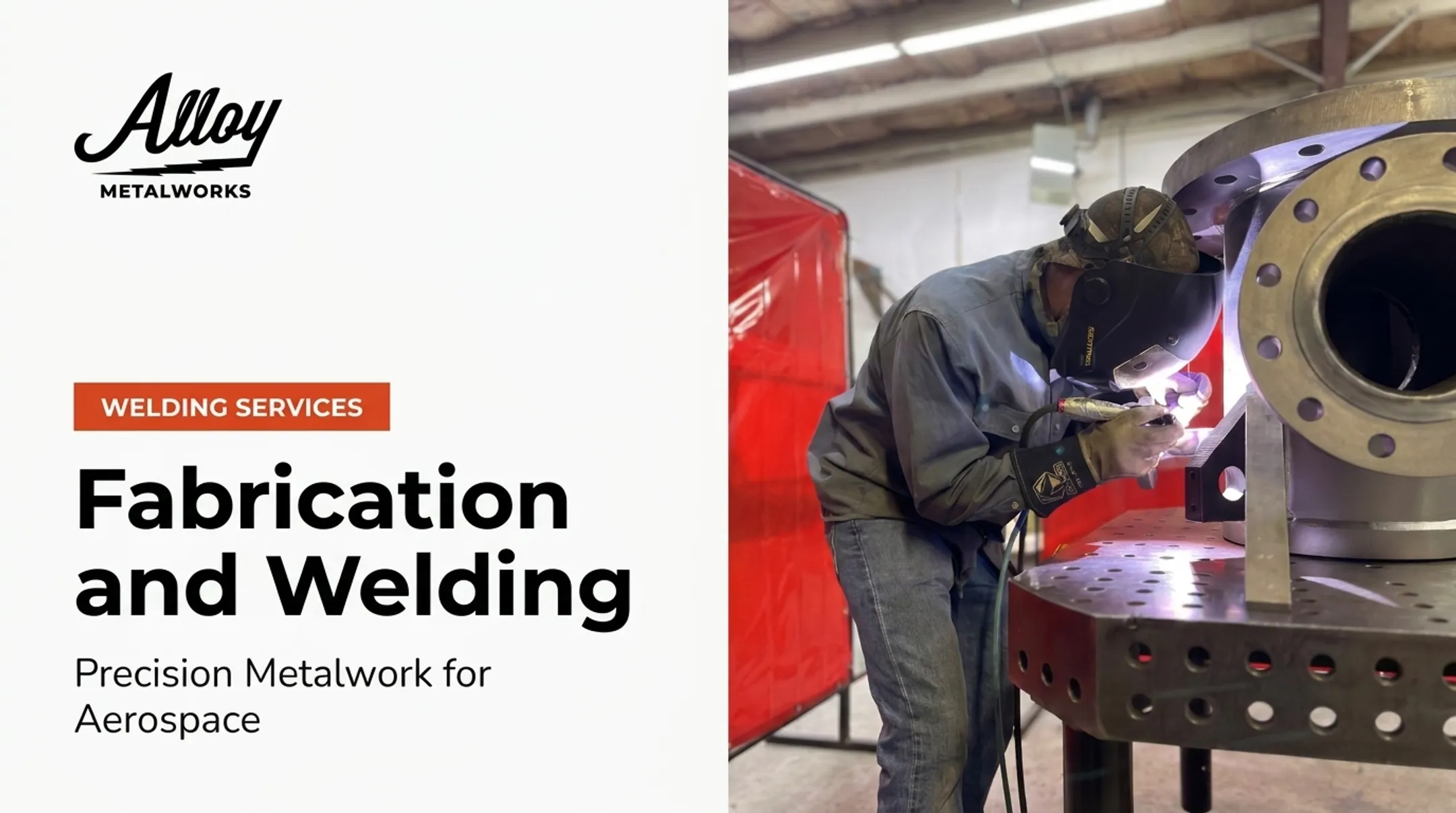
Fabrication expertise matters as much as the underlying materials science. Alloy Metalworks builds custom vacuum chambers for controlled aerospace testing environments and welds the exotic alloys used in flight-critical hinges, latches, and structural assemblies:
- Inconel 600, 601, 617, 625, and 718
- Incoloy 800HT
- Titanium Gr2 and Gr7
Those components must hold up under vibration, thermal cycling, and mechanical stress without introducing new failure points. Controlled, documented welding under ASME Section IX and AWS D17.1 gives engineers traceable, repeatable results when designing around galling, fretting, and unintended bonding.

Is Cold Welding as Strong as Hot Welding?
A properly formed cold weld can approach the strength of the parent metal. It skips the heat-affected zone entirely, so there are no grain structure changes and no thermal distortion. TWI states that under correct conditions, cold welds can match the weakest parent material's strength, and the aluminum-wire research above backs that up.
The tradeoff is consistency. Cold weld strength is extremely sensitive to:
- Surface cleanliness
- Contact pressure
- Deformation amount
A fusion weld is easier to standardize across a production run. A cold weld demands tighter control over prep and pressure to hit the same result every time. That is why it remains a specialty process rather than a default for most production parts.
Frequently Asked Questions
Is vacuum welding (cold welding) real and can it be done on Earth?
Yes, it's a genuine industrial process used for copper and aluminum wire splicing on Earth. Vacuum simply extends how long a freshly cleaned metal surface stays "weld-ready" before it re-oxidizes.
Is cold welding as strong as hot welding?
Bond strength can rival the base metal's strength under ideal conditions. However, it depends heavily on surface cleanliness, contact pressure, and deformation, making consistent results harder to guarantee than with fusion welding.
Can aluminum be cold welded?
Yes. Aluminum, including hard-to-fusion-weld grades like 2xxx and 7xxx, is commonly cold welded in wire and sheet joining applications.
What is the best cold welding method for aluminum?
The standard process shears or brushes away the oxide layer, then applies high pressure via cold pressure welding equipment within a short time window before re-oxidation occurs.
Which metals cannot be cold welded?
Carbon-containing steels, including mild steel and other carbon steels, generally resist cold welding due to their crystal structure and hardness limiting plastic deformation.
How does a vacuum chamber work?
It removes air and gas molecules to create a low-pressure, contamination-controlled environment. Engineers use these chambers to test hardware and study failure modes like cold welding before flight.