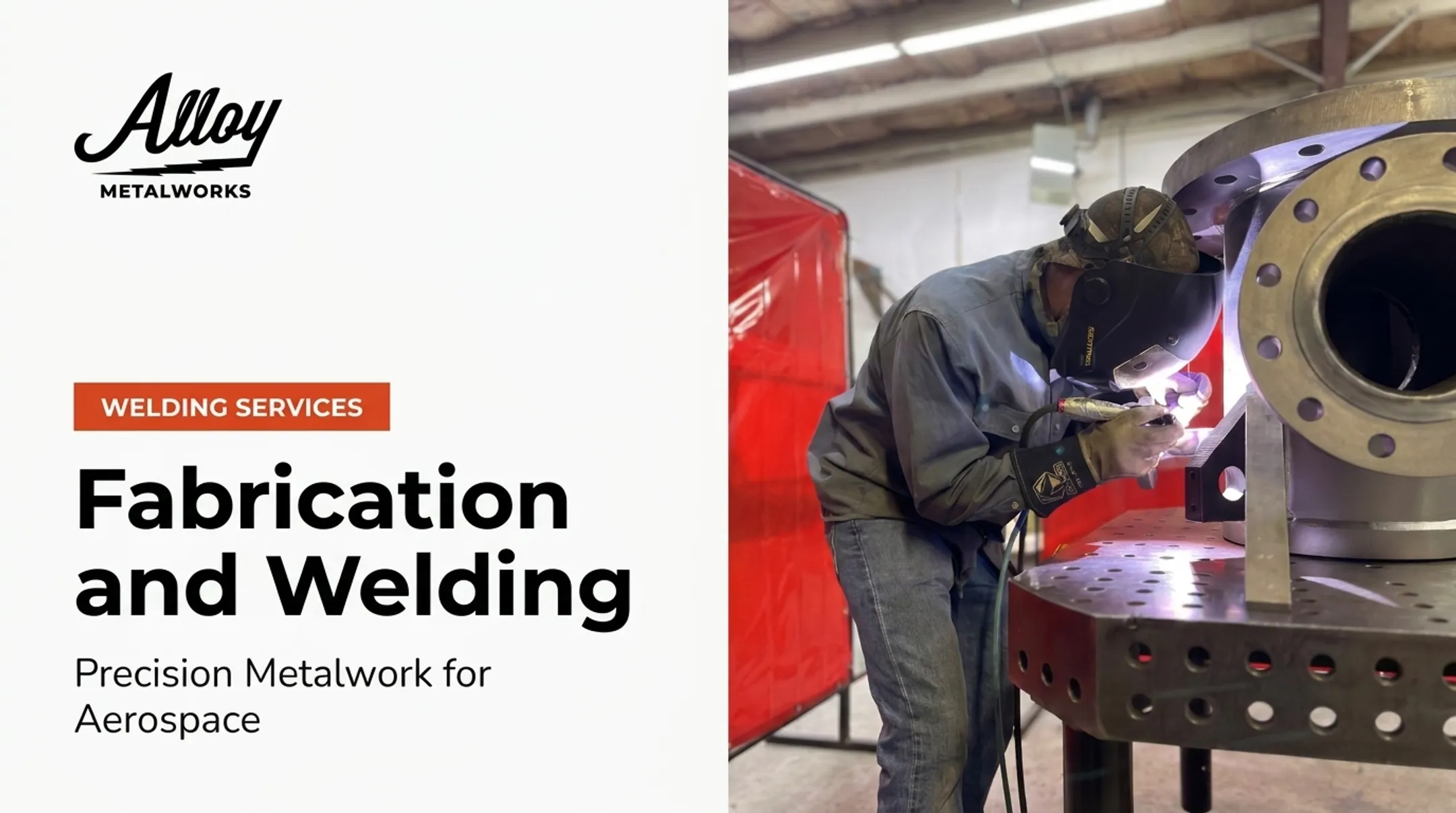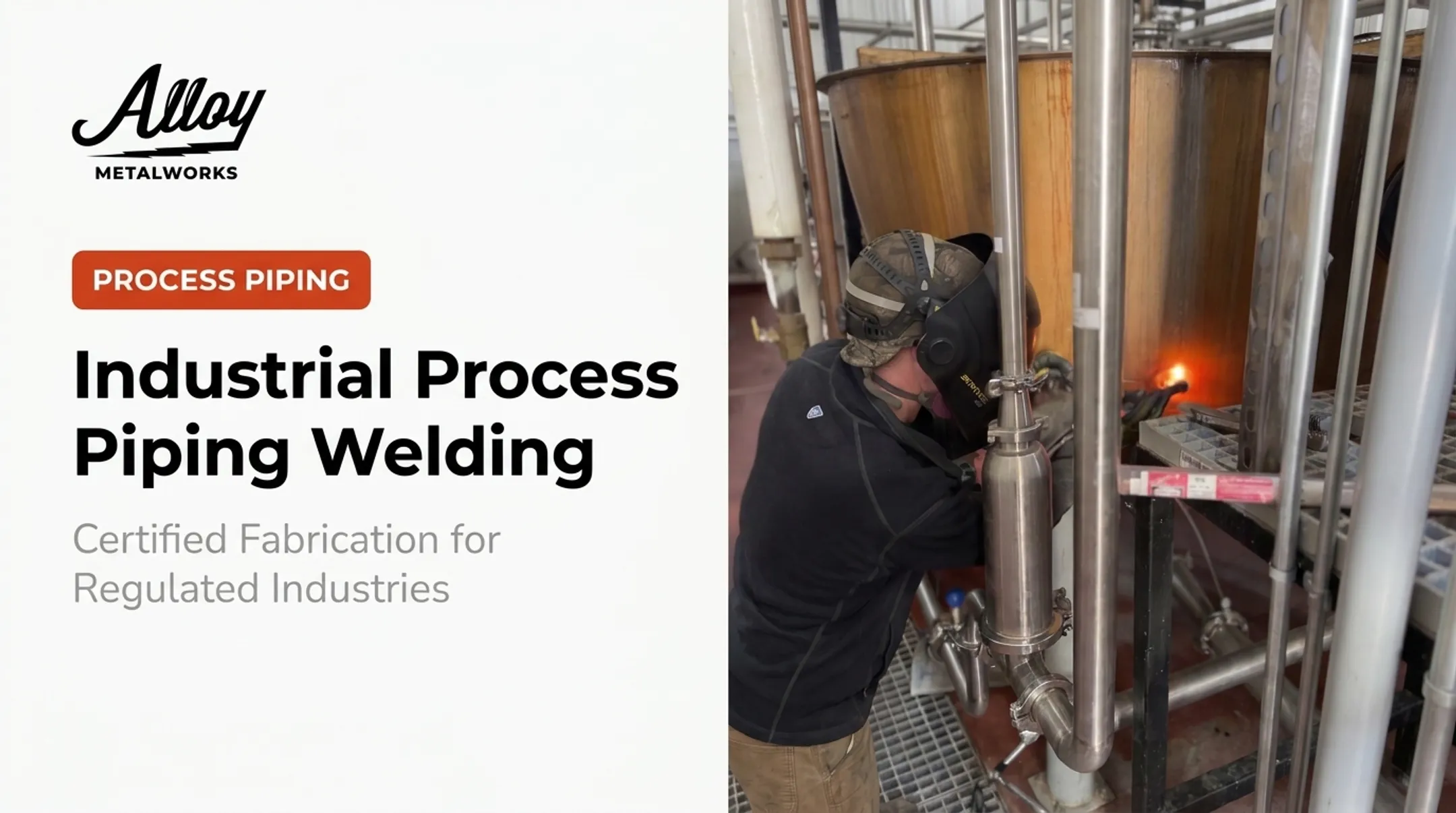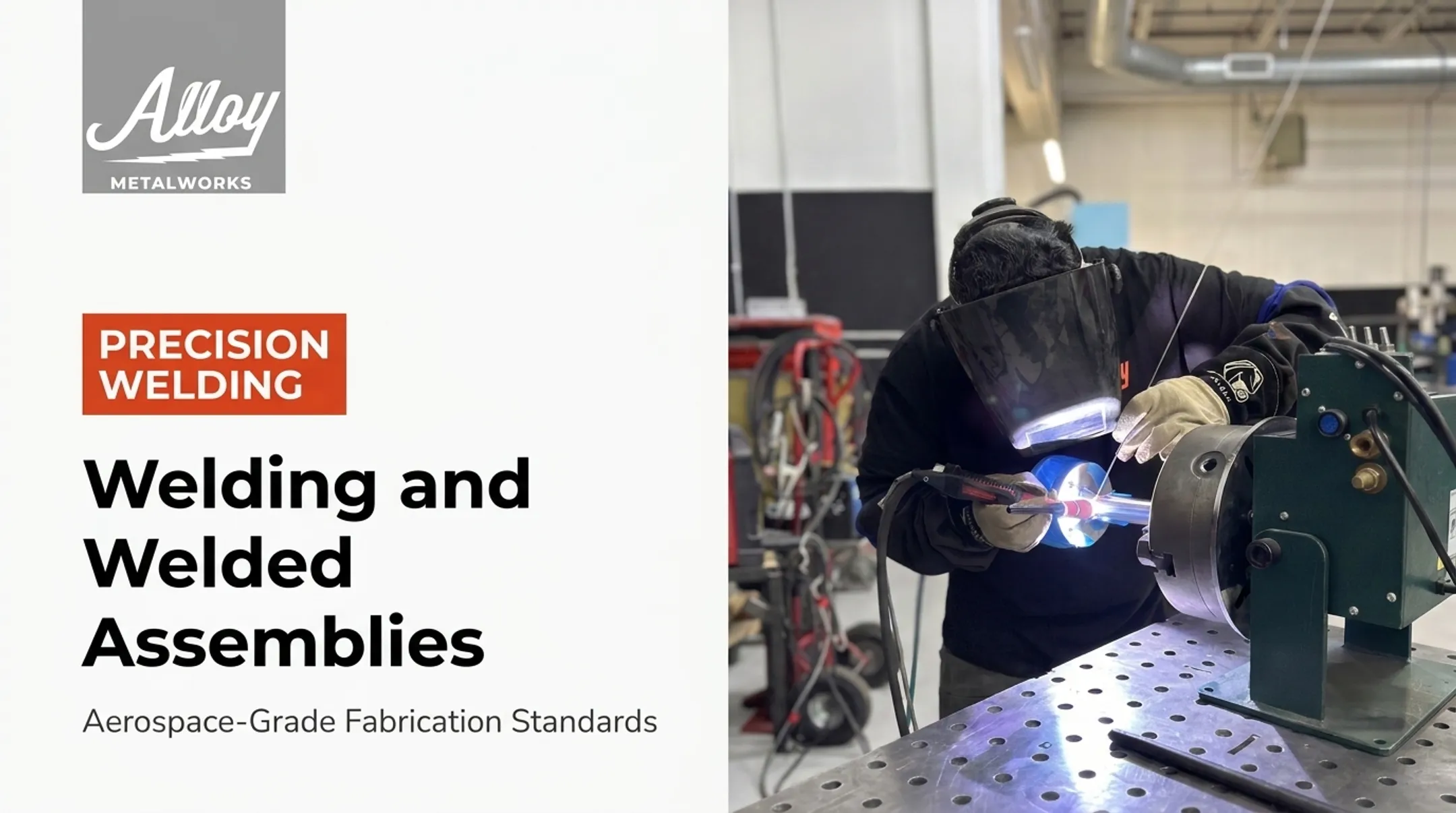

Wind turbine welding isn't one job. It spans tower fabrication, nacelle components, hub castings, and specialty parts, each with its own material behavior and code requirements. A weld that works on a tower can won't necessarily transfer to a cast-iron hub repair.
This guide covers the welding processes behind wind turbine manufacturing, the codes that govern them, the material challenges unique to this industry, and what separates a qualified welding partner from one that just says "we can weld that."
Key Takeaways
- Submerged arc welding (SAW) remains the standard for tower can seams; spiral welding is a faster alternative
- AWS D1.1 and ASME Section IX govern most structural tower welding and procedure qualification
- Offshore towers demand thicker steel, higher fatigue resistance, and corrosion-specific consumables
- Repowering and life-extension work is raising repair welding demand as the U.S. fleet ages
- Select partners by component-specific certifications, not generic "wind experience"
Understanding Wind Turbine Components That Require Welding
A wind turbine is an assembly of very different welded parts, each with distinct demands.
Tower cans are the cylindrical sections that stack to form the tower. They start as flat steel plate, commonly high-strength carbon steel such as ASTM A709 Grade 50, rolled into cylinders roughly 9 feet long and 8-15 feet in diameter. Wall thickness increases toward the base, often ranging from 10mm to 40mm depending on load.
Other major welded assemblies include:
- Transition pieces connecting tower to foundation (offshore)
- Nacelle bedplates : typically cast iron over a steel frame, not a pure weld structure
- Hub castings : cast iron, requiring casting-specific repair procedures
- Internal tower equipment like ladders, platforms, and cable trays
Onshore vs. Offshore: Not Just a Thickness Difference
Offshore towers run 80-100 meters (about 260-330 feet) tall and face a tougher combination of loads: larger fatigue cycles, saltwater corrosion, colder temperatures, and bigger generators overhead.
Offshore monopiles can exceed 12 meters (about 40 feet) in diameter with walls up to 150mm thick, weighing over 2,500 metric tons, according to WELD Magazine's coverage of offshore monopile fabrication. Some structures carry more than 25,000 kg of total weld metal.

Base and Foundation Components
Monopile foundations for offshore installations require their own qualified welding routes with separate fatigue classifications, toughness requirements, and NDE plans from the tower sections they support. Treating a monopile weld like a tower can weld is a mistake that shows up years later in inspection reports.
Core Welding Processes Used in Wind Turbine Manufacturing
Submerged Arc Welding (SAW)
Submerged arc welding (SAW) is the primary process for longitudinal and circumferential seams on tower cans. Multi-pass butt welds are typical, with weld heads suspended on cantilevered guide rails and linear actuators controlling axis movement.
Smaller can sections often move through a "growing line," where sections are joined progressively into a full tower segment.
Spiral Welding: An Emerging Alternative
Colorado-based Keystone Tower Systems developed a different approach: curling meters-wide steel plate into a cylinder using coiled steel rather than rolled flat plate. The Department of Energy backed this innovation with over $7 million in support, including a $5 million award in 2019 for a 160-meter demonstration tower.
According to DOE's success story on spiral welding, the process can:
- Build towers up to twice as tall as conventional methods
- Operate up to 10 times faster
- Use less steel overall
- Enable on-site production, cutting transportation bottlenecks entirely

These are DOE-reported program figures rather than an independently audited cost study. Still, spiral welding directly targets the transport limits that have long capped tower height on trucks and rail cars.
Automation and Process Selection
Robotic welding lines are already in production. Many pair high-deposition SAW on heavy seams with GMAW where access or flexibility matters, using custom software to hold consistency and deposition rates steady.
Choosing between SAW, GMAW, or a hybrid process comes down to three factors:
- Plate thickness — thicker offshore sections favor high-deposition SAW
- Joint design — narrow-gap joints benefit from specialized SAW configurations
- Production volume — high-volume runs justify automated SAW lines; smaller or field repairs may call for GMAW flexibility
There's no universal thickness cutoff dictating process choice — it's a qualified WPS decision, not a rule of thumb.
Welding Codes, Standards, and Quality Requirements
A tower welded today needs to hold up for 20+ years of dynamic fatigue loading. That's not a spec you gamble on with unqualified procedures.
AWS D1.1 (Structural Welding Code – Steel) is the primary standard governing tower and structural component welding. It covers procedure and welder qualification, fabrication workmanship, inspection, and acceptance criteria for structural steel — the backbone requirement for most tower fabrication contracts.
ASME Section IX governs welding procedure qualification and welder performance qualification. It's used broadly across energy-sector fabrication, wherever a governing spec calls for BPVC-style qualification rules rather than (or alongside) D1.1.
Why Documentation Matters as Much as the Weld
A perfect weld with no paper trail is a liability on a 20-year structure. Inspection-ready records prevent downstream delays when an owner, insurer, or regulator asks for proof:
- WPS and PQR
- Welder qualifications
- Material certifications
- NDE reports
Alloy Metalworks, a Colorado-based fabricator, holds ASME Section IX qualification alongside AWS D1.1, D1.2, and D1.6, supported by an ISO 9001 quality management system. Traceability and documentation stay built into every job rather than added after the fact.
ISO 9001 doesn't qualify a weld itself — it's a QMS benchmark. In the renewable energy supply chain, it signals controlled, auditable processes instead of informal shop knowledge.
Materials and Environmental Challenges in Wind Turbine Welding
Thicker, higher-strength steel plate, required for offshore towers and cold-climate installations, adds welding complexity at every step. More passes, more heat input control, and specialized consumables become non-negotiable.
Key material challenges include:
- Cracking risk: filler metals must be engineered to match base metal mechanical properties, especially where cold temperatures make steel more brittle
- Cold-climate impact toughness: SAW flux and electrodes need specific Charpy impact performance, not just tensile strength
- Corrosion resistance: offshore parts face constant saltwater and humidity, so coating systems and weld cleanup must protect the joint—not only the parent metal
None of these are solved by picking a stronger steel grade alone. The filler metal chemistry has to deliver matching mechanical properties in the deposit itself. Corrosion protection plans also have to treat splash-zone, submerged, and atmospheric interfaces as separate conditions.
Repair and Maintenance Welding for Aging Turbines
Turbines don't stay pristine. Erosion, fatigue cracking, and mechanical wear show up in blades and drivetrain components over time. Specialized hardfacing or repair welding can restore worn parts without a full replacement.
Aging U.S. infrastructure is pushing more work toward repair. DOE/LBNL's 2024 Land-Based Wind Market Report recorded 0.6 GW of partial repowering in 2023 across seven projects, retrofitting 348 turbines that were 11-15 years old (median age 13).
Performance falls as projects age. The median project at year 20 runs at roughly 70% of its year-2 capacity factor.
That data supports a growing repair and refurbishment market, but there's no universal weld-repair interval. Repair frequency depends on:
- Loading history and site conditions
- Weld joint detail and original fabrication quality
- Corrosion exposure
- OEM repair limits and access constraints
As the U.S. fleet ages, more owners will need welding partners who can produce repair-specific procedures with controlled preheat, distortion management, and return-to-service NDE — not just general fabrication capability.
Innovations Shaping the Future of Wind Turbine Welding
Spiral welding and on-site manufacturing are breaking the transportation bottleneck that's capped tower height for years. When a tower section can be built on the wind farm itself, the truck-and-rail width limits that constrained conventional cans stop mattering.
Power source technology is advancing too. AC waveform control on modern inverter-based welders enables:
- Long stick-out techniques that boost deposition through resistive electrode heating
- Triple-arc SAW setups exceeding 43 kg/hr in monopile factories
- Welding-time reductions reported up to 50% for equivalent plate thickness

These aren't guaranteed numbers for every shop. They're process benchmarks that depend on the joint and consumables. Still, the trend toward higher deposition and better control is consistent across the industry.
On-site fabrication and higher deposition rates both support a broader push for domestic manufacturing capacity. DOE reports more than 500 U.S. wind manufacturing facilities, with over 80% domestic nacelle assembly and up to 70% domestic tower manufacturing. The 2024 Section 45X tax rules now include towers and offshore foundations among covered components, adding financial incentive to build that capacity at home.
Choosing a Qualified Welding Partner for Energy Sector Projects
Not every welding shop that says "we do wind" can back it up with the right paperwork. Look for:
- Relevant certifications: ASME Section IX, AWS D1.1, D1.2, D1.6 depending on the component
- Documented QMS: ISO 9001 or equivalent, with real traceability, not just a certificate on the wall
- Material experience: hands-on work with high-performance alloys used across energy infrastructure, not just carbon steel Alloy Metalworks supports energy sector clients, including the National Renewable Energy Laboratory. NREL added Alloy as an approved and preferred vendor after the shop fabricated an Alloy 800HT component for a thermochemical reactor operating above 700°C. That relationship comes from code-compliant welding, engineering collaboration during the design phase, and audit-ready documentation that holds up when a national lab or utility asks for proof. For energy infrastructure projects, shops must prove on paper that the weld will hold for 20 years—not merely that they can strike an arc.
Frequently Asked Questions
What welding standard is used for wind turbine tower fabrication?
AWS D1.1 governs most structural steel tower welding, covering fabrication, inspection, and acceptance criteria. ASME Section IX is used alongside it for welding procedure and welder qualification.
What type of welding is used to build wind turbine towers?
Submerged arc welding (SAW) is the standard method for longitudinal and circumferential seams on tower cans. Spiral welding, using coiled steel plate, is emerging as a faster, less material-intensive alternative.
Why is offshore wind turbine welding more challenging than onshore?
Offshore towers combine thicker steel, higher fatigue loads from larger generators, and constant saltwater corrosion exposure. Cold temperatures also demand specific impact-toughness performance from welds.
How is spiral welding changing wind turbine manufacturing?
DOE reports spiral welding can build towers up to twice as tall and 10 times faster than conventional rolled-and-welded construction, while using less steel. It also enables on-site production, cutting transportation constraints.
What materials are wind turbine towers typically made from?
Tower cans use high-strength carbon steel plate, commonly ASTM A709 Grade 50. Other components like hubs and bedplates use cast iron, requiring separate material-specific fabrication approaches.
How often do wind turbines need weld repairs?
Repair frequency depends on environmental exposure, loading history, and turbine age rather than a fixed schedule. Repowering projects are increasing repair and refurbishment demand as the U.S. fleet ages past 10-15 years.