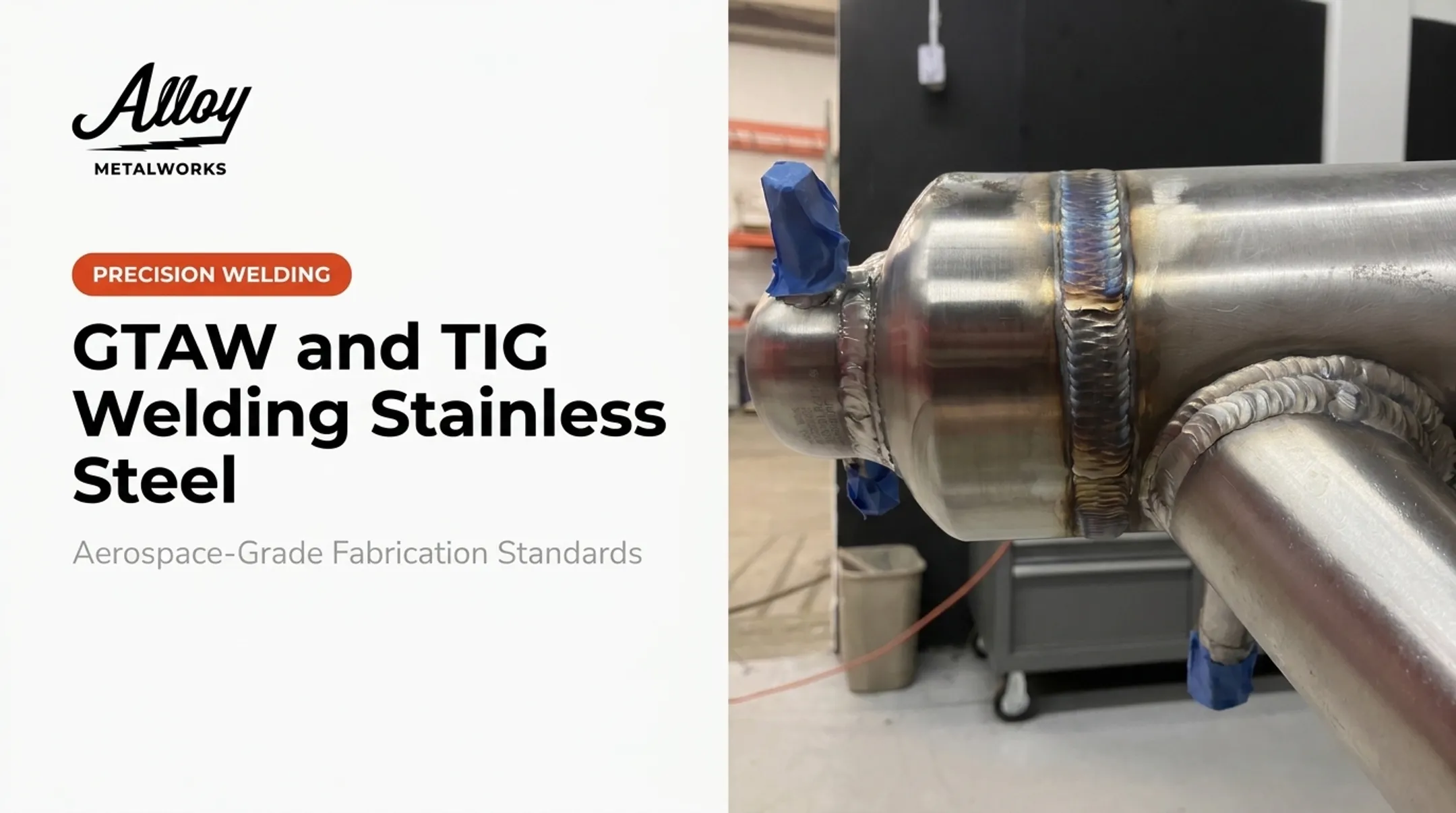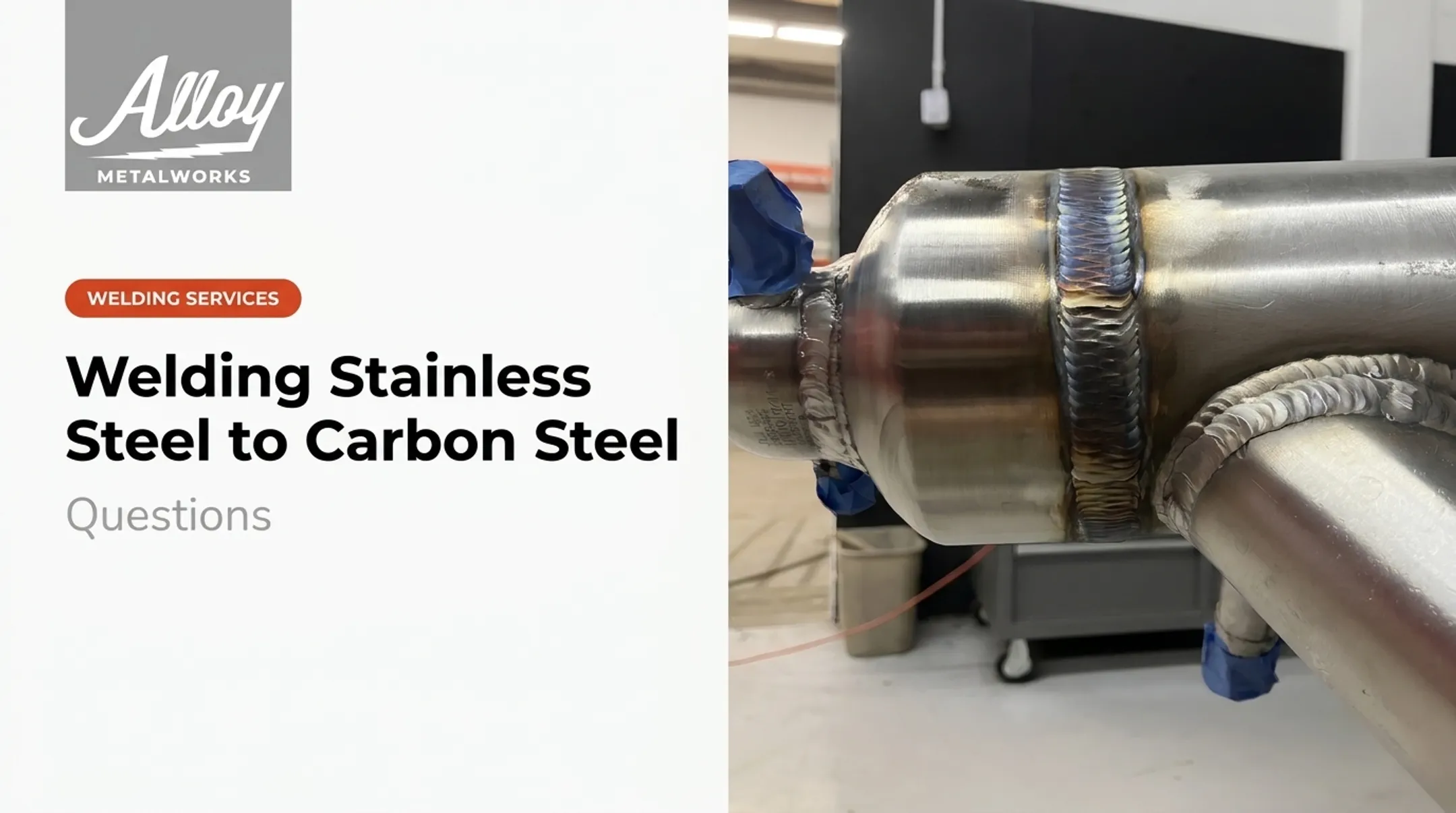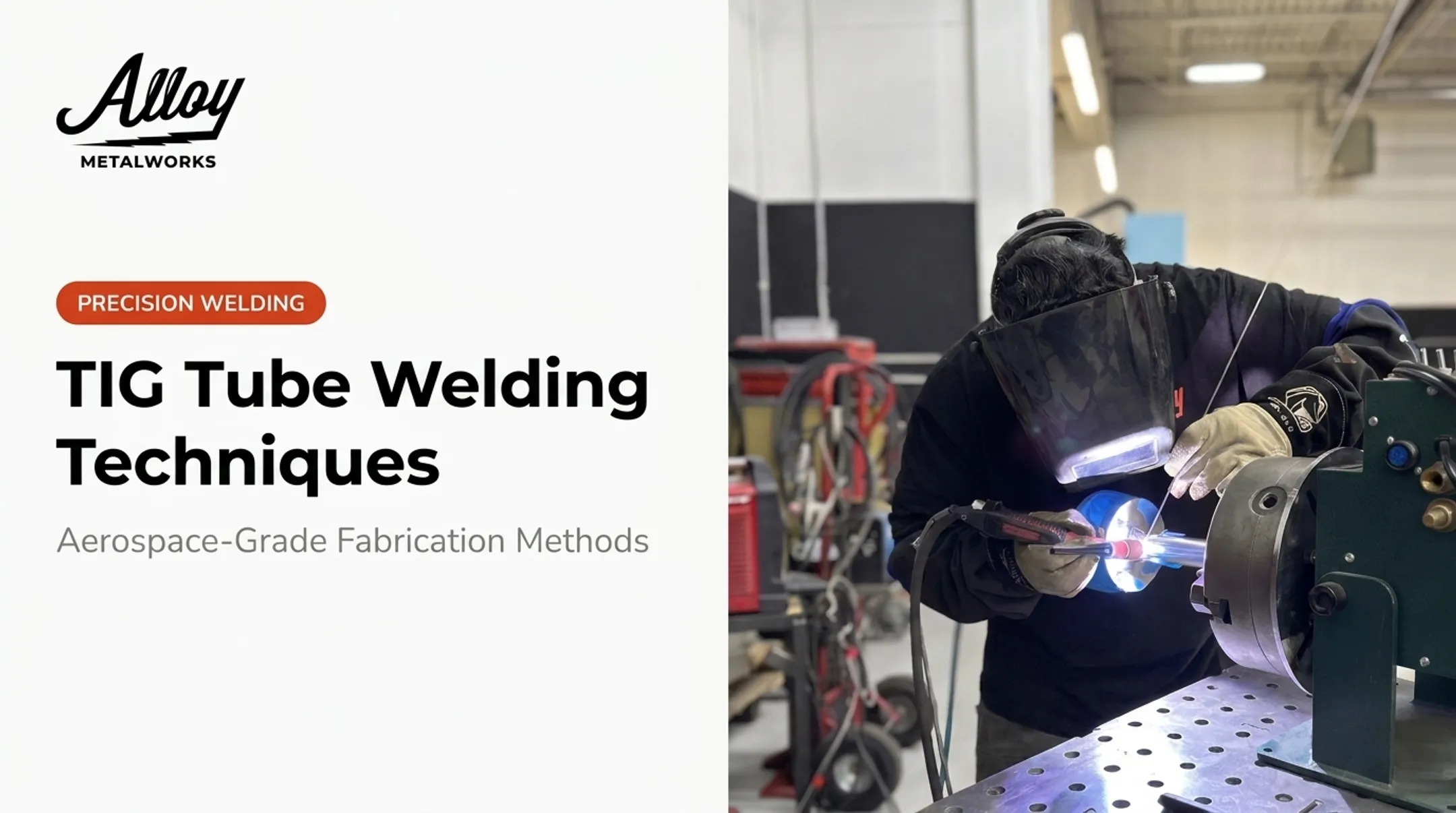

TIG welding remains the go-to process for stainless because it gives welders precise control over heat and arc — control that stainless demands. This guide covers equipment setup, prep work, technique, filler rod selection, and the defects that show up when something goes wrong.
The stakes are real. Excessive heat input or inadequate shielding gas can damage the passive chromium oxide layer, leading to alloy depletion and oxidation that shows up months or years later as rust or pitting. For structural, sanitary, or aerospace applications, that's not a cosmetic problem — it's a failure point.
Key Takeaways
- DCEN polarity, 100% argon shielding, and clean tungsten selection form the foundation of every stainless TIG weld
- Dedicated stainless-only tools prevent carbon steel contamination that causes rust months after welding
- Filler rod choice (ER308L vs. ER316L) must match base metal and service environment
- Back purging protects the root of pipe and tube welds from oxidation and "sugaring"
- Post-weld cleaning and passivation restore corrosion resistance lost to heat tint
Equipment Setup for TIG Welding Stainless Steel
Stainless TIG welding starts with the right machine configuration. A DC TIG welder with high-frequency start, running DCEN (Direct Current Electrode Negative), is the standard setup for stainless and most steel alloys.
Tungsten Electrode Selection
2% lanthanated (blue-tipped) tungsten is a solid all-around choice for DC TIG on stainless, offering good arc stability and a long service life. Sharpen it to a fine point for precise arc control, especially on thin material.
Some welders still reach for 2% thoriated (red) tungsten because it holds an arc well on DC. It contains radioactive thorium.
The AWS Safety and Health Fact Sheet No. 27 notes that normal welding exposure is generally negligible, but grinding the electrode creates dust that poses an inhalation risk. Lanthanated, ceriated, and zirconiated tungstens are safer thorium-free alternatives.
Shielding Gas and Flow Rate
100% argon is the standard shielding gas for stainless TIG work. Typical flow rates land around 10–15 CFH, matched to cup size and joint access. A small helium addition can help on thicker sections by increasing heat input, but for most fabrication work, straight argon does the job.
Starting Parameters by Thickness
Here's a flat-position reference table adapted from Linde Gas & Equipment's published TIG parameters for stainless steel:
| Thickness | DCEN Current | Tungsten Diameter | Gas Flow | Passes |
|---|---|---|---|---|
| 0.018 in | 20 A | 0.040 in | 10 CFH | 1 |
| 0.062 in | 70 A | 1/16 in | 10 CFH | 1 |
| 0.125 in | 140 A | 3/32 in | 15 CFH | 1 |
| 0.250 in | 250 A | 1/8 in | 15 CFH | 3 |

Treat these as starting points, not gospel. Your actual weld procedure specification (WPS), joint design, and position will dictate the final numbers.
Those starting amps still need real-time control. A foot pedal or fingertip amperage control matters more on stainless than most metals—thin sheet heats up fast, and tapering current at the end of a weld prevents crater cracking and blowthrough.
Preparation and Cleaning Best Practices
Contamination ruins more stainless welds than bad technique does. The fix starts before you ever strike an arc.
Use dedicated stainless-only tools. Grinding discs, wire brushes, and Scotch-Brite pads used on carbon steel or aluminum carry embedded particles. Those particles transfer to your stainless workpiece and cause rust weeks or months after the weld looks perfectly clean.
Keep stainless tooling labeled and stored apart from carbon steel equipment.
Before striking an arc:
- Degrease the joint and filler rod with a cleaner specified by your WPS or material manufacturer
- Remove oxides, oil, and mill scale from the weld zone
- Keep filler rods dry — moisture introduces hydrogen into the weld, which leads to porosity and cracking
- Store rods in a sealed container, away from humidity
None of this is glamorous work. It's also the difference between a weld that passes inspection and one that doesn't.

Technique: Heat Control, Gas, and Filler Rod Selection
Stainless punishes excess heat more than mild steel does. Its lower thermal conductivity means heat builds up fast in the weld zone, so technique has to compensate.
Arc Length, Travel Speed, and Pulsed TIG
Keep your arc length short and consistent, roughly 1/8 inch. Move steadily; don't linger. A wandering arc or hesitant travel speed dumps unnecessary heat into the joint, which shows up later as heat tint or warping.
Pulsed TIG alternates between a high peak current and a lower background current, which reduces average heat input while still maintaining fusion. You get tighter puddle control and less distortion on thin-gauge material, where warping shows up fast.
Back Purging for Pipe and Tube
For full-penetration welds on pipe, tube, or any joint where the backside is exposed, back purge with argon before striking an arc. Without it, the root oxidizes and develops a black, brittle scale welders call "sugaring."
Argon purity of 99.99% is standard. Keep purge flow running until the weld cools enough to resist oxidation.
Matching Filler Rod to Base Metal
Filler selection isn't optional guesswork. Match the rod to the base alloy:
- ER308L for 304/304L base metal — standard general-purpose stainless filler
- ER316L for 316/316L base metal or corrosion-heavy environments — adds molybdenum resistance
Both classifications fall under AWS A5.9/A5.9M, the governing specification for bare stainless filler rods. The "L" designation means low carbon (0.03% max), which reduces the risk of carbide precipitation and intergranular corrosion at the weld.
Let the weld cool naturally. Quenching creates thermal shock and can introduce stress cracking. Once cooled, clean the bead with a dedicated stainless brush or a passivation solution to remove heat tint and restore the passive oxide layer.
For sanitary, aerospace, or ASME-code applications, technique alone isn't enough — the weld procedure itself has to be validated and documented. Alloy Metalworks holds ASME Section IX and AWS D18.1 sanitary welding certifications, so procedures are qualified, traceable, and audit-ready before parts leave the shop.
Choosing the Right Stainless Grade: 304 vs 316
The difference between 304 and 316 comes down to one element: molybdenum.
According to Outokumpu's published Core and Supra datasheets, 316 contains roughly 2.1% molybdenum, while 304 has none listed. That molybdenum boosts chloride resistance, so 316 is the better choice for marine, chemical processing, and other saltwater or aggressive-chemical environments.
| Factor | 304/304L | 316/316L |
|---|---|---|
| Molybdenum | None | ~2.1% |
| Chloride resistance | Moderate | Superior |
| Typical use | General fabrication, food service, architectural | Marine, chemical, pharmaceutical |
| Relative cost | Lower | Higher |
For general fabrication and food-grade work, 304 usually does the job at a lower cost. When the job involves harsh chemicals or coastal exposure, 316 earns its price premium.
Alloy Metalworks fabricates both grades regularly for food and beverage, pharmaceutical, and industrial process work. Matching the alloy to the environment belongs in the first conversation with your fabricator.

Common Defects and Troubleshooting
Most stainless TIG defects trace back to one of three root causes: heat, contamination, or shielding failure.
Discoloration and heat tint. Dark, rainbow-colored bands along the weld indicate inadequate shielding or excessive heat input. Fix it with:
- Proper gas flow and coverage
- Back purging on full-penetration joints
- Post-weld cleaning or passivation to restore the passive layer
Porosity. Small pinholes in the weld usually come from moisture, oil, or contaminated shielding gas. Check for:
- Damp or improperly stored filler rods
- Loose or damaged gas hose connections
- Drafts blowing shielding gas away from the puddle
- Contaminated base metal surfaces
Warping and distortion. Stainless has higher thermal expansion than carbon steel, so heat management matters more. Reduce distortion with:
- Copper or brass backing bars to act as heat sinks
- A planned tack-welding sequence that balances heat across the joint
- Lower amperage or pulsed TIG to minimize total heat input
- Proper fixturing to hold parts in place during cooling

Frequently Asked Questions
Can you weld stainless steel with a TIG?
Yes. TIG (GTAW) produces clean, precise, corrosion-resistant welds on stainless steel—especially on visible or critical joints.
What thickness of stainless steel can TIG weld?
TIG can handle everything from thin sheet under 1/16 inch to thick plate at 1/4 inch and beyond. Amperage, tungsten diameter, and pass count all adjust with thickness.
Is 304 or 316 better for welding?
Both weld equally well with TIG. 316 offers superior corrosion resistance for harsh or chloride-heavy environments, while 304 is more economical for general fabrication.
What is the best welding rod for welding 316 stainless steel?
ER316L is the standard filler for 316/316L base metal. Its low carbon content and matching molybdenum content preserve corrosion resistance and avoid sensitization.
How do I prevent stainless steel from rusting after TIG welding?
Clean and passivate the weld after cooling, and avoid any carbon steel contact from tools, sparks, or storage throughout fabrication.
Do I need to back purge when TIG welding stainless steel pipe?
Yes, for any full-penetration or sanitary pipe weld. Back purging with argon prevents oxidation and sugaring on the unseen root side of the joint.