
Introduction
Tight schedules and skilled labor shortages are squeezing aerospace, energy, and industrial projects across the US. The Associated Builders and Contractors estimated the construction industry needed 501,000 additional workers above normal hiring in 2024 just to keep pace with demand.
That labor crunch makes field-built piping systems a risky bet. Every hour spent welding on-site is an hour exposed to weather delays, safety hazards, and inspection bottlenecks.
Piping skid systems cut that exposure. By pre-assembling piping, valves, pumps, and instrumentation into a single frame in a controlled shop, teams shrink field labor and tighten quality control. Below: what piping skids are, common types, design and fabrication essentials, and how a certified welding partner keeps the work code-compliant.
Key Takeaways
- Piping skids arrive as pre-assembled modules—pipe, valves, pumps, and instruments on a structural frame—ready to set and connect.
- Shop fabrication cuts field labor, compresses schedules, and keeps high-risk work off the jobsite.
- Common builds cover process, pump, metering, heat exchanger, and sanitary service.
- Design quality hinges on stress analysis, clear access/space planning, and transport/lift review before release.
- Certified fabricators supply code-compliant welds plus inspection-ready documentation and traceability.
What Is a Piping Skid System?
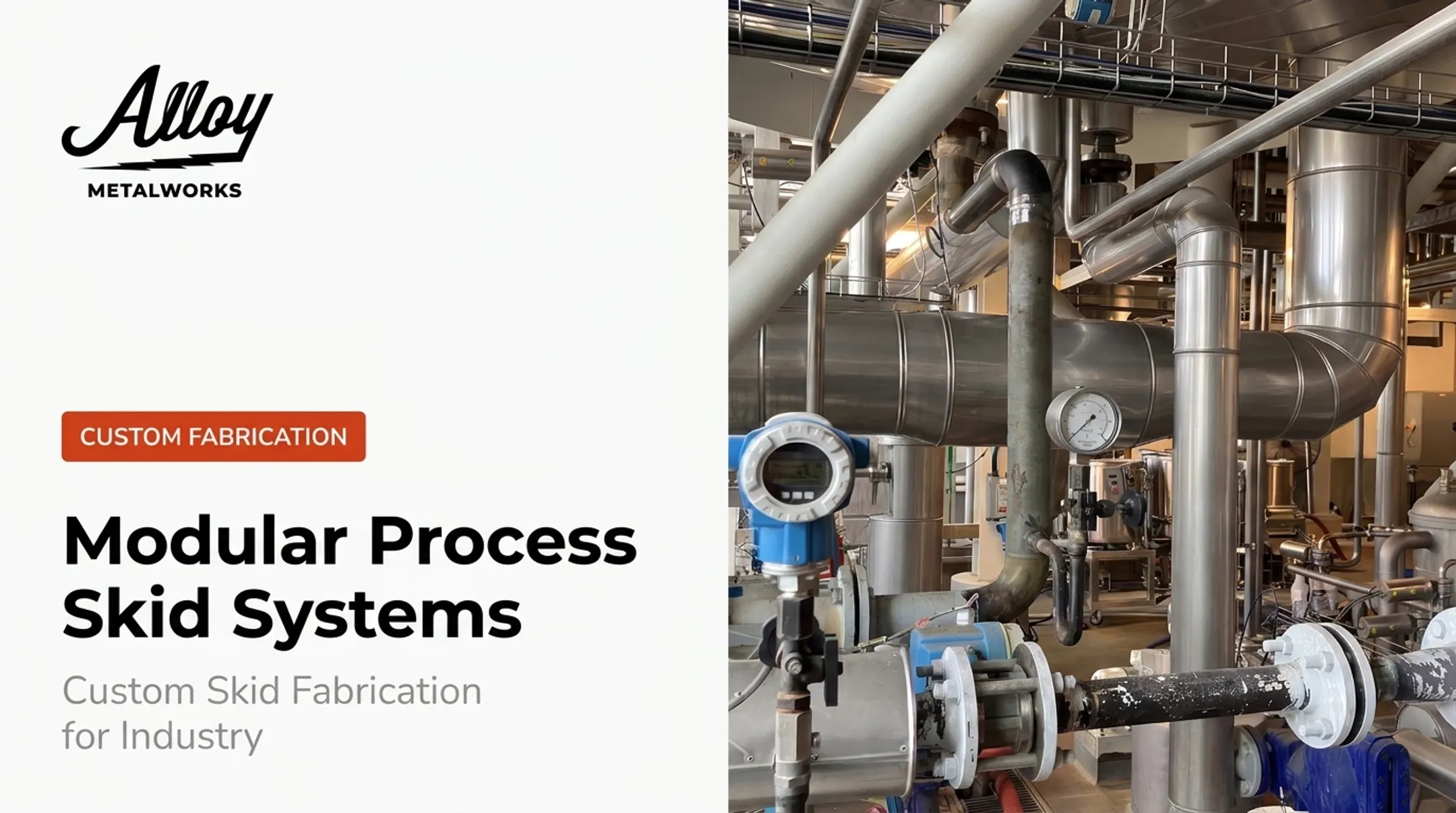
A piping skid is a prefabricated, modular unit that combines process piping, valves, pumps, and instrumentation onto a structural steel frame. Instead of building a fluid-handling system piece by piece on-site, the entire assembly gets built, tested, and shipped ready to connect.
ASME B31.3, the governing code for process piping, explicitly covers piping that interconnects stages within a packaged equipment assembly, which is exactly what a skid is. A skid is an engineered, integrated package—not a simple bundle of pipe spools.
What are piping skids used for? Common functions include:
- Fluid or gas transfer between process stages
- Filtration and separation
- Precise flow metering for custody transfer
- Chemical injection and dosing
- Pressure regulation and thermal management
Industries relying on these systems span hydrogen energy, aerospace ground support, sanitary and pharmaceutical processing, and research facilities. Alloy Metalworks, based in Colorado, works across several of these segments, supporting hydrogen and clean energy systems, aerospace ground support equipment, and pharmaceutical production and R&D.
Skids arrive plug-and-play. Minimal field welding means less time on hazardous sites and fewer schedule surprises.
Types of Piping Skid Systems
Not every skid does the same job. Here's how the main categories break down:
| Type | Function |
|---|---|
| Process skid | Integrates piping, pumps, valves, and instruments for filtration, mixing, or chemical injection |
| Pump skid | Houses pumps with piping and controls for water treatment, cooling, or fluid transfer |
| Metering skid | Delivers precise flow measurement for custody transfer and regulatory compliance |
| Heat exchanger skid | Manages thermal regulation, often built with exotic alloys for corrosive or high-heat service |
| Sanitary skid | Built for hygienic fluid handling in food, beverage, and pharmaceutical applications |

Specialty Alloy and Sanitary Requirements
Heat exchanger and high-performance skids frequently require materials like Inconel, Hastelloy, or titanium to withstand corrosive or extreme-temperature environments. Alloy Metalworks welds a range of these alloys, including Inconel 600, 601, 617, 625, and 718, plus Incoloy 800HT and titanium Grades 2 and 7.
Sanitary process skids follow a different rulebook. They're built to AWS D18.1 welding standards and USDA 3-A sanitary requirements for food, beverage, and pharmaceutical fluid handling, where cleanability drives the design.
Engineering Considerations for Skid Design
Skids pack a lot of equipment into a small footprint. That density creates real engineering challenges.
Space optimization matters because pipe routing has to work around pumps, valves, and instruments without blocking maintenance access. Cramming components together without planning for a technician's hands and tools later causes headaches during commissioning.
Pipe stress analysis goes beyond basic pressure ratings. Engineers need to account for:
- Thermal expansion within a compact frame
- Equipment nozzle loads from connected pumps or exchangers
- Operational pressure swings and transients from valve or pump startup
A public LANL engineering guide applying ASME B31.3 notes that pressure equations alone don't cover every load case. Components must be checked against deadweight, thermal movement, and equipment-nozzle limits together, not in isolation.
Loading beyond operations is where many field problems originate. The structural frame has to handle:
- Normal operating loads
- Lifting forces during rigging
- Shipping vibration and shock
- Seismic loads, where applicable
Hydrogen piping code ASME B31.12 addresses support types and locations but doesn't cover the structure the supports attach to. That's a separate structural review. Skip it, and you're gambling on a frame that was never actually validated for the trip to site.
Early planning of center of gravity and lifting points prevents last-minute logistics scrambles. So does clear access to gauges, valves, and strainers: details easy to overlook on paper but painful to fix after fabrication.

Fabrication and Quality Assurance Process
Shop fabrication follows a defined sequence. Each stage feeds into the next, with documentation carried forward at every step:
- Material selection and traceability
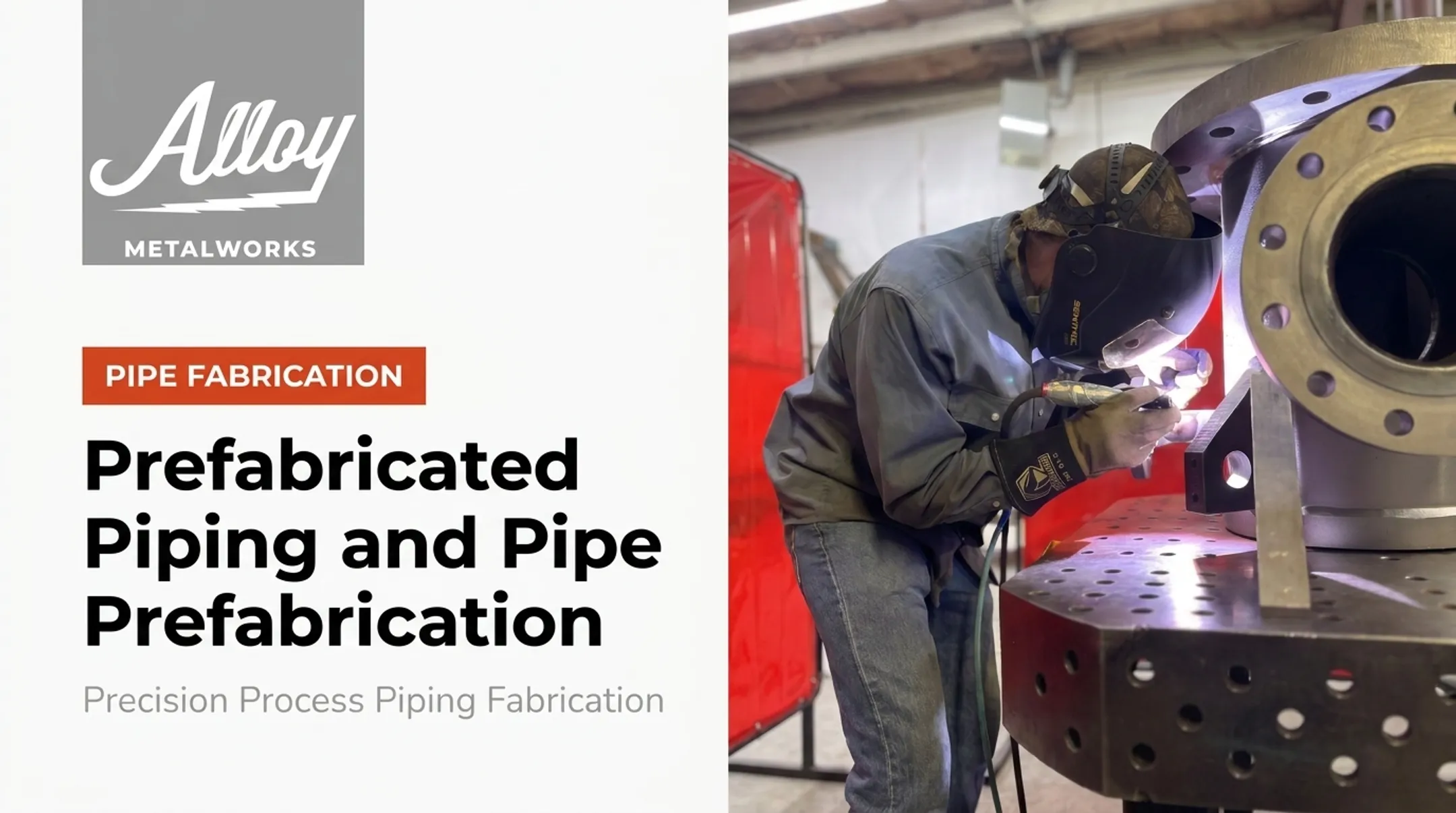
- Precision welding
- Component assembly
- Structural frame construction

Welding to Recognized Codes
Structural integrity depends on welding to the right code for the job. Several codes commonly apply:
- ASME Section IX governs welding procedure qualification
- AWS D1.1 covers carbon and low-alloy steel structures
- AWS D1.2 applies to aluminum
- AWS D1.6 covers stainless structural welds
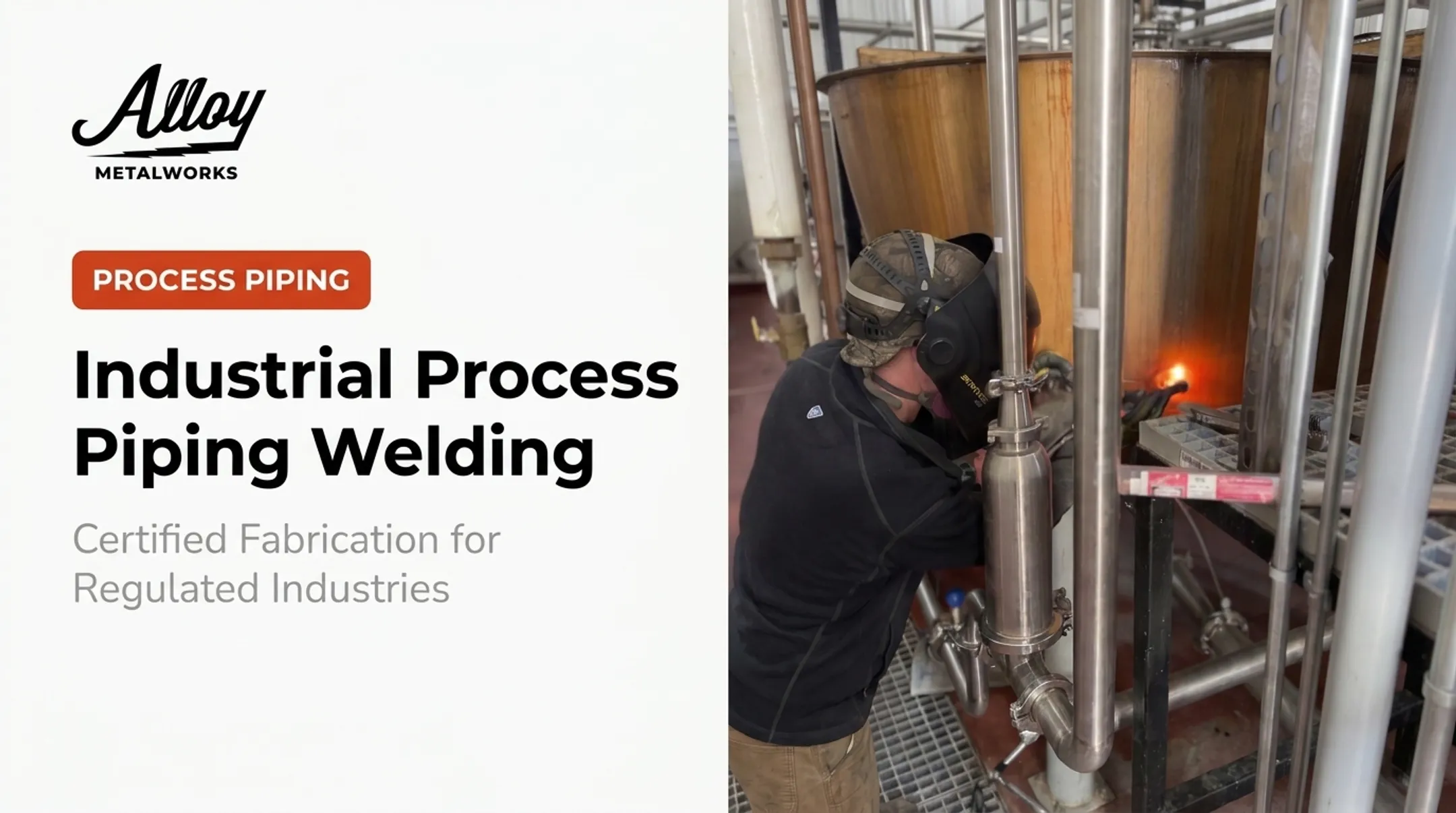
Alloy Metalworks applies these codes on piping-system rebuilds with in-house borescope and dye penetrant testing ahead of third-party inspection. Welds are checked to ASME B31.3 through visual inspection and magnetic particle testing by a certified third-party inspector.
Factory Acceptance Testing
Before a skid ships, Factory Acceptance Testing (FAT) validates the whole package. This typically includes hydrostatic or leak testing and instrument calibration checks. A defensible FAT record ties approved drawings to weld maps, material certs, NDE results, pressure test data, and instrument calibration logs. That package gives the site team everything needed for a smooth handoff.

Positioning Alloy Metalworks as a Fabrication Partner
Alloy Metalworks operates under ISO 9001 and ASME Section IX certified welding processes built to produce inspection-ready, traceable results. Every job includes full material and filler-metal traceability with documented procedures.
The company's experience with specialty alloys is a direct fit for high-performance skid work:
- Inconel, Incoloy, Monel, and Hastelloy for corrosive or high-temperature service
- Titanium for aerospace and research-grade applications
- Stainless grades including 304, 316, 347, 17-4, 15-5, and Duplex/Super Duplex
One example: Alloy Metalworks fabricated an Alloy 800HT component for a National Renewable Energy Laboratory thermochemical reactor operating above 700°C. That extreme-service capability overlaps directly with heat exchanger and process skid fabrication.
Industries and Applications Served
Aerospace and space technology. Ground support structures and flight-critical hardware require AWS D17.1 certified welding. Alloy Metalworks holds AWS D17.1 Class A certification and fabricates custom ground support equipment for aerospace programs.
Hydrogen, clean energy, and industrial process systems. A DOE summary report on electrolyzer installations recommends factory-built, pre-assembled skids to cut engineering design time. Alloy Metalworks supports hydrogen energy, thermal and chemical processes, and energy storage fabrication for clients including Utility Global and NREL.
Sanitary and biotech applications. Pharmaceutical, food and beverage, and water treatment skids demand hygienic welding to AWS D18.1 and USDA 3-A standards. Alloy Metalworks fabricates these systems for pharmaceutical production, R&D, and biotechnology labs.
Frequently Asked Questions
What is a skid in piping?
A piping skid is a prefabricated, modular unit that mounts piping, valves, pumps, and instrumentation on a structural frame for off-site assembly and field installation. It arrives ready to connect, minimizing on-site work.
What is a piping skid used for?
Piping skids handle fluid transfer, filtration, metering, and chemical injection across industrial, energy, and aerospace applications. They're common wherever a compact, pre-tested process package saves field time.
What materials are commonly used in piping skid fabrication?
Materials range from stainless steel and carbon steel to specialty alloys like titanium, Inconel, and Hastelloy, depending on pressure, temperature, and corrosion requirements. Sanitary skids typically use austenitic stainless steel.
How long does it take to fabricate a piping skid?
Timelines vary by complexity, material lead times, and testing requirements, but shop fabrication generally runs parallel with on-site civil work. This overlap is what shortens overall project schedules rather than a fixed skid-specific timeline.
What codes and standards apply to piping skid welding?
Common references include ASME Section IX for procedure qualification and AWS D1.1 for structural steel welds. Industry-specific codes like AWS D17.1 apply to aerospace hardware, and AWS D18.1 governs sanitary systems.
How do you ensure a piping skid is ready for transport and installation?
Factory Acceptance Testing validates piping, instrumentation, and structural integrity before shipment. Combined with defined center-of-gravity data, lifting points, and complete documentation, this ensures a clean handoff to the field team.