
Laser welding has changed the equation. Its concentrated, low-heat-input process gives fabricators tighter control over the heat-affected zone (HAZ), which is exactly what reactive metals like titanium demand. This article breaks down why titanium fights back against welding, how laser welding handles it better, the parameters that matter, and when you need a certified fabrication partner instead of a general shop.
Key Takeaways
- Titanium becomes chemically reactive above roughly 500°C, absorbing oxygen and nitrogen that embrittle the weld
- Laser welding's narrow HAZ reduces the volume of hot metal exposed to atmosphere, cutting contamination risk
- Weld bead color is a useful screening tool, but it isn't a substitute for radiographic or destructive testing
- AWS D17.1 Class A can reject a visually contaminated weld even if it passes mechanical testing
- Fit-up, cleanliness, and shielding coverage matter more with laser welding, not less
Why Titanium Is Difficult to Weld
Titanium's melting point sits around 1,668°C (3,034°F), and it doesn't conduct heat away quickly. That combination means heat lingers in the weld zone longer than you'd expect, raising the risk of warping and distortion in thin sections. The bigger problem is chemistry. Above approximately 500°C (932°F), titanium's natural oxidation resistance collapses. The metal starts absorbing oxygen, nitrogen, and hydrogen straight out of the air, forming brittle oxides and nitrides in the weld and surrounding HAZ. According to AWS Welding Journal research, this interstitial contamination increases hardness while wrecking ductility and toughness — the opposite of what you want in flight-critical hardware.
Contamination Doesn't Always Show
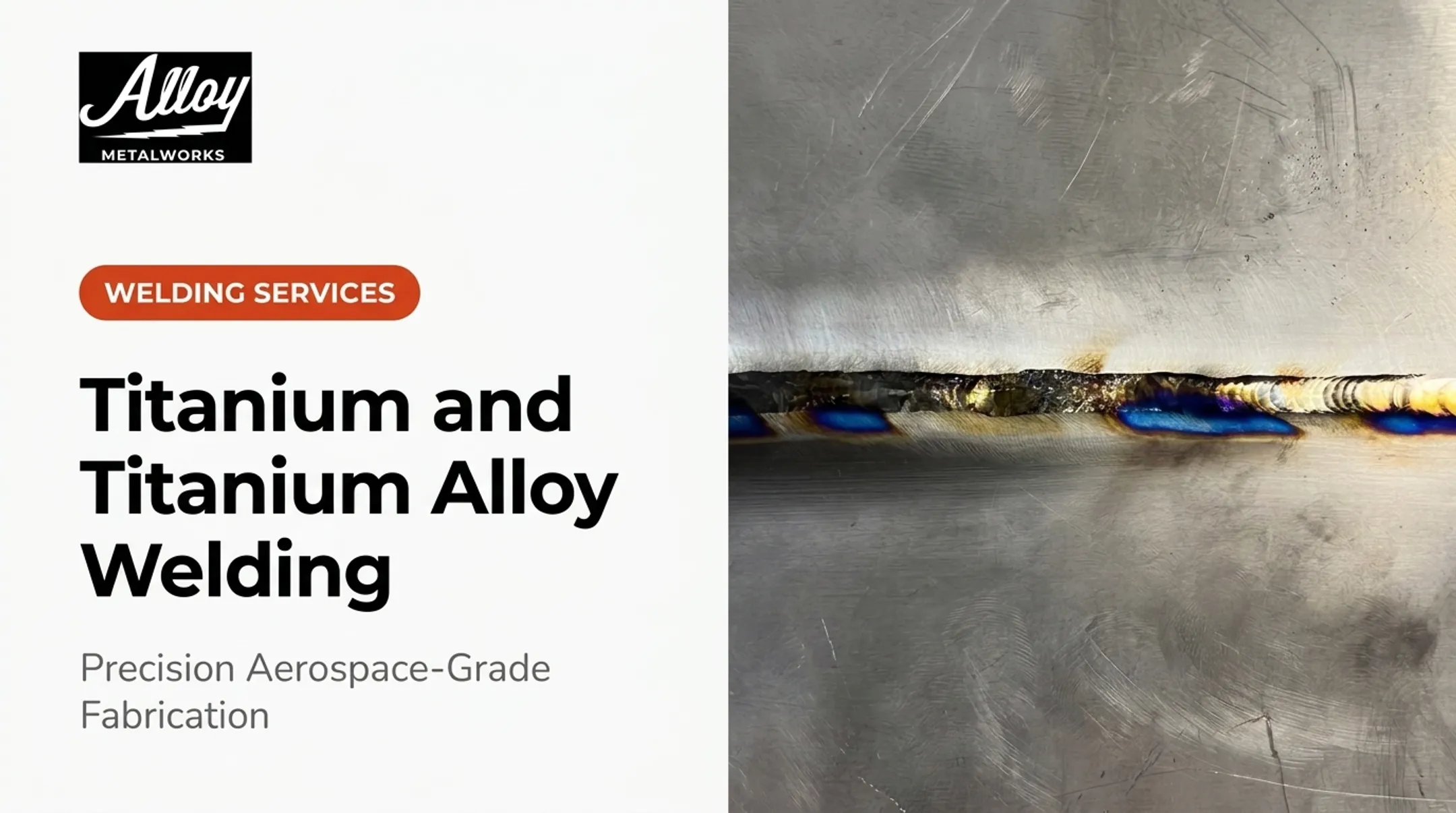
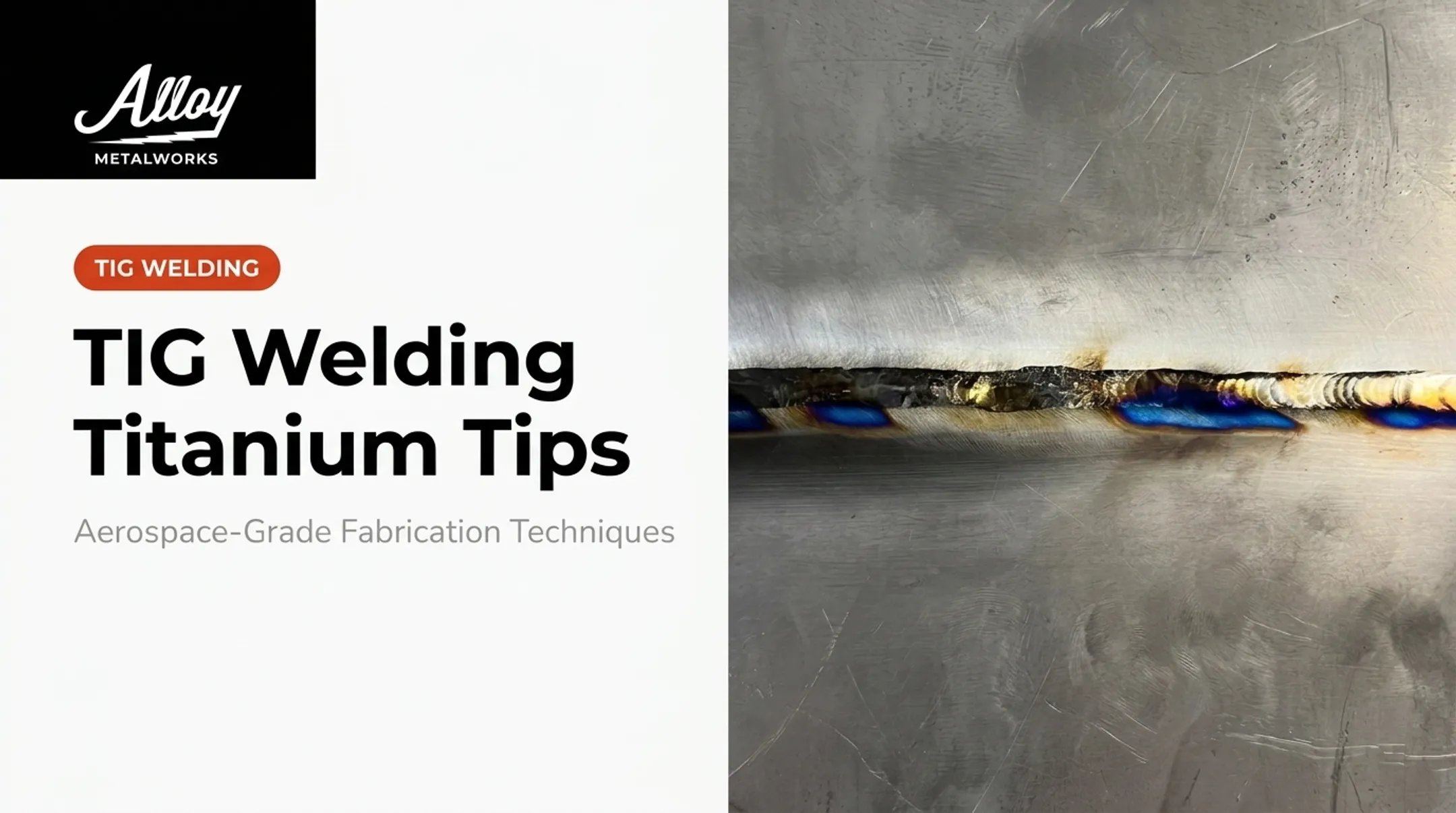
Even a small amount of oil, moisture, or carbon steel residue from a shared grinding wheel can trigger porosity or embrittlement. Alloy Metalworks flags this as a persistent risk: grinding discs and Scotch-Brite pads used on carbon steel or aluminum can transfer embedded particles onto titanium surfaces. That is why dedicated consumables per alloy (separate discs, brushes, and storage) are non-negotiable. Bead color is the classic visual indicator, but treat it as a screening tool, not proof of soundness:
- Silver or light straw — generally acceptable
- Dark straw or bronze — borderline, inspect further
- Blue or purple — oxygen/nitrogen exposure, typically rejected
- White or chalky — heavy contamination, failed Under AWS D17.1 Class A, that discoloration alone can disqualify a weld, even when destructive or radiographic testing looks fine. Grade choice changes the picture further. CP-Ti Grade 2 is an alpha alloy, while Ti-6Al-4V (Grade 5) is alpha-beta. Weldability depends on the specific alloy, thickness, and joint design, not a one-size-fits-all ranking.

Why Laser Welding Is Ideal for Titanium
Laser welding delivers a fraction of the heat input that TIG requires. That concentrated energy source produces a narrower heat-affected zone (HAZ), meaning less molten and hot metal is exposed to atmosphere at any given moment. Less exposure means less opportunity for oxygen and nitrogen to sneak in.
Practical advantages over TIG:
- Substantially higher travel speeds, which shortens the contamination window
- Finer grain structure and reduced distortion in thin sections
- Deeper penetration with less filler material required
- Fewer post-weld treatments needed for stress relief
A 2013 comparative study on 0.8 mm Ti-6Al-4V plate found pulsed Nd:YAG laser welding produced less distortion, a narrower HAZ, and higher joint strength and ductility compared to TIG on the same material. That's the mechanism working as intended.

There's a tradeoff worth naming honestly: reduced heat input doesn't eliminate solidification shrinkage or residual stress, and gas coverage can actually be less forgiving with laser welding than TIG. Fit-up, alignment, and travel speed need to be dialed in precisely, because minor deviations show up immediately in the weld.
Both fiber and CO2 lasers see titanium use today, with fiber systems increasingly common for thinner sections.
The Laser Welding Process and Critical Parameters
Laser welding titanium follows a tight sequence: beam generation, focusing onto the joint, localized melting and fusion, inert gas shielding throughout, and rapid solidification as the beam moves on.
Shielding is the make-or-break variable. A 2020 CIRP paper on high-power fiber laser welding of titanium reported full penetration without cracking or porosity at 3.2mm thickness, 1.80 kW, and 1 m/min — but only under properly optimized argon shielding coverage. Inadequate side shielding produced heavy contamination instead of a clean, silvery bead.
Beyond top-side argon coverage, three shielding controls keep the weld clean:
- No nitrogen substitute — titanium dissolves nitrogen as an interstitial and causes the same embrittlement as oxygen contamination
- Back purging on through-penetration joints — the underside needs the same inert protection as the top
- Trailing shields during cool-down — titanium stays chemically reactive well below its melting point

Parameters Fabricators Actually Adjust
- Power density and pulse duration — control penetration depth and fusion-zone width
- Beam diameter and focal position — affect precision and heat concentration
- Travel speed — balances penetration against contamination exposure time
- Shielding-gas flow rate and purity — the single most-monitored variable on the floor
Even dialed-in parameters fail on dirty base metal. Pre-weld cleaning isn't optional: degreasing, dedicated titanium-only brushes (never shared with carbon steel), and clean gloves at every handling step. Weld-joint cleanliness sits alongside gas purity and torch control as a core requirement under AWS D17.1 Class A.
Quality Standards, Documentation, and Why Certification Matters
For aerospace, energy, and research applications, a good-looking weld isn't enough. You need inspection-ready parts with full traceability — material certs, procedure qualifications, welder qualifications, and inspection records that all match up.
Two codes govern most of this work:
| Code | Purpose |
|---|---|
| ASME Section IX | Qualifies welding procedures (WPS/PQR) and welder performance |
| AWS D17.1 | Governs design, fabrication, and acceptance for aircraft and aerospace hardware, including titanium |
Neither code stands alone. Section IX is a qualification framework used alongside a governing construction code or drawing spec; AWS D17.1 supplies the aerospace-specific acceptance criteria.
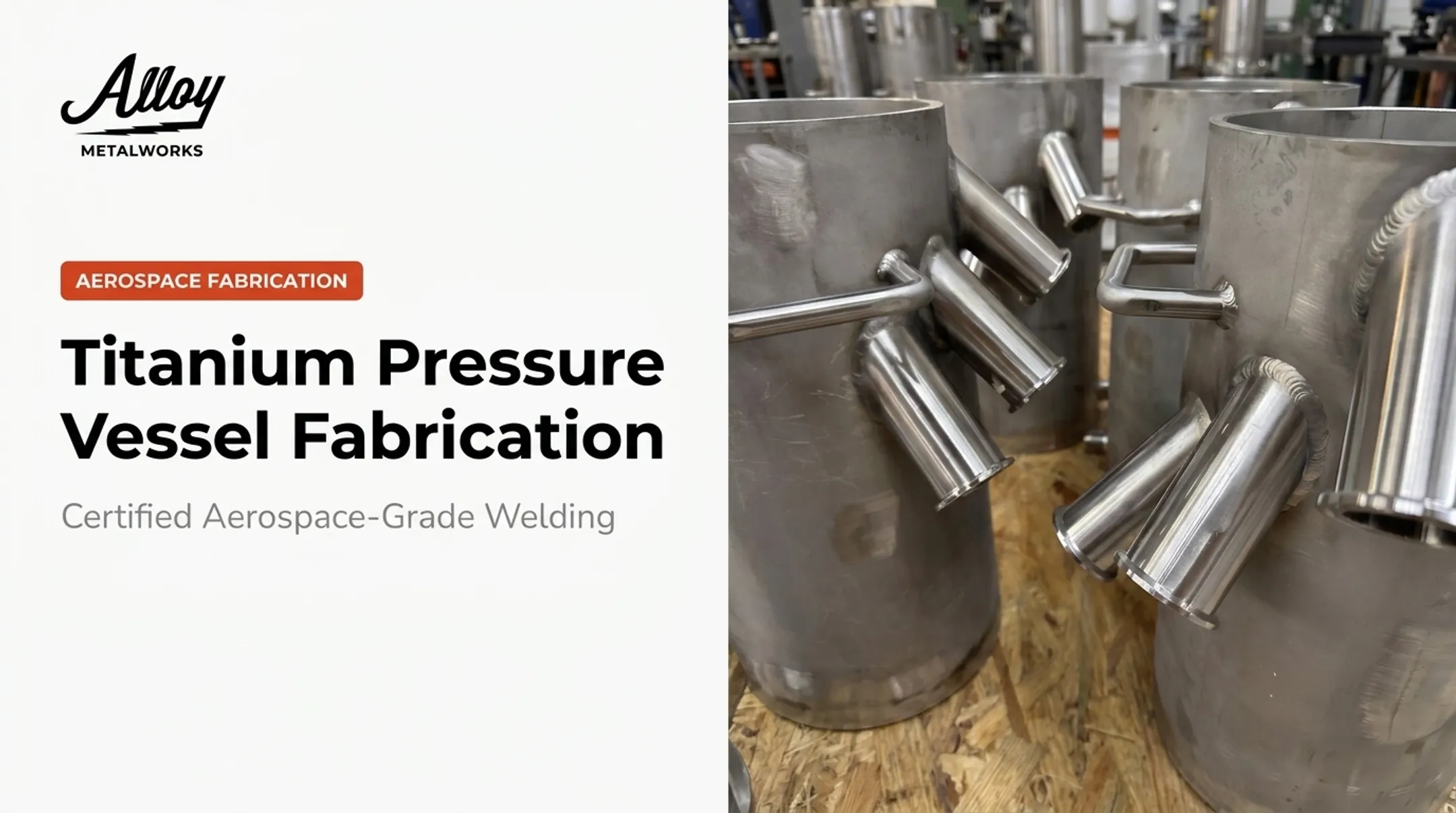
Alloy Metalworks operates under both, along with ISO 9001-controlled processes and FAA Part 145 accreditation. That combination means titanium welding here isn't just about producing a strong joint — it's about producing a documentation trail an aerospace or energy auditor will actually want to see, supported by engineering-aware collaboration from initial design through final inspection.
Industry Applications of Laser-Welded Titanium
Laser-welded titanium shows up in industries that need high strength-to-weight performance, corrosion resistance, and inspection-ready joints.
Aerospace and Space Technology
Turbine components, structural brackets, and flight-critical hardware rely on titanium's strength-to-weight ratio. AWS D17.1 Class A exists specifically for this category, where a single visual defect can disqualify a part regardless of mechanical test results.
Energy Systems
Hydrogen infrastructure and fuel cell components depend on titanium's corrosion resistance. A 2025 RSC review notes its use in PEM fuel-cell bipolar plates and gas-diffusion layers, where low density still matters even when cost and manufacturing complexity are high.
Research, Medical, and Advanced Manufacturing
Prototype equipment, lab apparatus, and biocompatible assemblies often need small-batch precision rather than mass production. Fabricators that support research organizations and startups, not only large aerospace primes, fill that gap.
Common Defects and Troubleshooting Tips
Three defects dominate titanium weld failures:
- Oxidation discoloration — caused by inadequate shielding coverage, contaminated gas lines, or excessive heat exposure time
- Porosity — often traced to trapped moisture, contaminated filler wire, or inconsistent gas flow
- Cracking — frequently a downstream consequence of porosity acting as a stress concentrator
A systematic troubleshooting sequence:
- Verify shielding-gas purity and check for line leaks
- Inspect trailing-shield and backside purge coverage for gaps
- Confirm joint cleanliness and check for cross-contamination from shared tools
- Adjust travel speed, torch angle, or focal position incrementally — one variable at a time
- Section or test a representative coupon before committing to a full production run

In one documented case, minor adjustments to travel speed and torch angle turned a failing weld into one that passed both destructive and nondestructive testing under AWS D17.1 Class A. Small, disciplined corrections like these usually resolve defects without a full process redesign.
Radiographic (X-ray) inspection is the standard nondestructive method for confirming internal weld integrity before final acceptance. Don't rely on visual appearance alone, even when the bead looks silver and clean.
Frequently Asked Questions
Can titanium be laser welded?
Yes. Standard fiber lasers weld titanium effectively when paired with high-purity argon shielding, proper joint cleanliness, and tight fit-up control. It's a well-established process for aerospace and energy-grade components.
What is the thickest material a laser welder can weld?
Thickness capability depends on laser power. A documented case achieved 3.2mm titanium at 1.8 kW; higher-power fiber systems handle thicker sections, and multi-pass techniques extend capability further. No universal kW-to-thickness table exists; limits depend on alloy, joint design, and quality requirements.
What two metals cannot be welded together?
Dissimilar pairs such as aluminum and steel often can't be welded directly—mismatched melting points form brittle intermetallics. Titanium welds reliably within its own alloy family when matched fillers and inert shielding are used.
What shielding gas is required for laser welding titanium?
High-purity argon. Nitrogen should never be used, since titanium dissolves nitrogen as an interstitial element, causing the same embrittlement problem as oxygen contamination.
How can you tell if a titanium weld is contaminated?
Bead color is the primary visual indicator — silver or light straw signals a clean weld, while blue, purple, or white discoloration points to contamination. Under AWS D17.1 Class A, that discoloration alone can fail a weld even if other testing passes.