
These systems distribute oxygen, nitrous oxide, medical air, and vacuum through networks of piping, valves, alarms, and outlets that hospitals and surgical centers depend on every hour of every day. The components, materials, and code requirements behind them are more complex than most facility managers realize, governed by NFPA 99 and ASME Section IX.
This article breaks down system types, core components, required materials, and why fabrication quality and welding certification aren't optional extras.
Key Takeaways
- Medical gas systems deliver oxygen, nitrous oxide, medical air, and vacuum through code-compliant piping, valves, and outlets
- Seamless copper tube (Types K or L per ASTM B819) is the required material, joined per ASME Section IX
- Centralized systems favor multi-zone reliability; decentralized layouts simplify maintenance and isolation
- Certified installers and brazers (ASSE 6010, ASME Section IX) are mandatory for code compliance
What Is a Piped Medical Gas System?
A piped medical gas system is a fixed network of piping, valves, alarms, and gas-specific outlets. It delivers medical gases and vacuum from a central or area source directly to patient care locations.
That setup differs from portable cylinder delivery, where individual tanks move room to room.
The system works through four functional stages:
- Production/storage — bulk tanks, cylinder manifolds, or compressors generate or store the gas
- Distribution — piping carries gas from source to point of use
- Delivery — terminal units and outlets provide gas at the bedside or procedure room
- Waste/vacuum removal — dedicated vacuum lines handle suction and waste anesthesia gas disposal

NFPA 99, the Health Care Facilities Code, governs all four stages. It sets comprehensive, risk-based requirements for medical gas and vacuum system design, operation, maintenance, and inspection.
This isn't optional guidance. CMS requires hospitals to comply under 42 CFR 482.41(c). The Joint Commission treats these systems as high-risk utilities during accreditation surveys.
The line between "piped" and "portable" matters for accreditation purposes: a fixed distribution network with dedicated infrastructure is piped. Individual cylinders wheeled to a patient's bedside are not, even if they temporarily feed into a manifold.
Core Components of a Medical Gas Piping System
Supply Sources and Control Equipment
Every system starts at a source. Common configurations include:
- Bulk oxygen systems — large cryogenic or gaseous storage vessels with reserve capacity exceeding an average day's supply
- Cylinder manifolds — at least three cylinder connections with pressure monitoring, used as primary or backup supply
- Medical air compressors — generate breathing-quality air, with intake location restrictions (no placement near chemical storage or patient treatment spaces)
Control panels and pressure regulators keep gas flowing at consistent, safe pressures downstream. Without them, pressure spikes or drops can damage equipment and interrupt patient care mid-procedure.
Piping, Valves, and Fittings
Piping material isn't a matter of preference. NFPA 99 requires seamless copper tube, color-coded and sized per the code, installed to strict cleanliness standards.
Three valve types do the heavy lifting:
- Shut-off valves — isolate sections for maintenance without disrupting the whole system
- Check valves — prevent backflow that could contaminate the supply
- Pressure relief valves — protect against overpressure events
Every fitting and component touching the gas path must be cleaned to oxygen-service standards. A speck of oil or grease in an oxygen line is a fire risk, not a housekeeping detail.
Alarms, Outlets, and Backup Systems
Real-time monitoring happens through three alarm types:
- Master alarms — monitor source, reserve, and main-line pressure using two or more panels in separate locations
- Area alarms — cover patient care and anesthetizing locations, flagging a 20% pressure deviation
- Local/combo alarms — track compressor status, vacuum pumps, and dew point at the equipment level
Outlets are gas-specific by design. ISO 9170-1 governs terminal units for compressed medical gases and vacuum, ensuring an oxygen outlet physically can't accept a nitrous oxide fitting. That physical incompatibility blocks a cross-connection error that can be fatal.
Redundancy matters too. Dual manifolds and portable cylinder backups keep gas flowing if a primary source fails. NFPA requirements call out isolation, automatic check valves, and continuous monitoring on oxygen sources for that reason.

Materials, Welding Standards, and Why Precision Fabrication Matters
Why ACR Pipe Doesn't Cut It
This question comes up constantly: can you use ACR (air conditioning and refrigeration) pipe for medical gas piping? No.
ASTM B819 covers specially cleaned seamless copper tube, Types K and L, specifically manufactured and marked for medical gas service. ASTM B280, the standard governing ACR tube, is scoped for field air-conditioning and refrigeration service—a different application with different cleanliness requirements.
A B280 marking alone doesn't establish medical-gas suitability, regardless of the copper alloy or pressure rating. Using ACR pipe on a medical gas system risks a failed inspection and, more importantly, contamination of the gas path.
Brazing Qualification Is Non-Negotiable
ASME Section IX governs welding, brazing, and fusing qualifications. For medical gas piping, brazing procedures and brazer performance must be qualified under ASME Section IX (or the permitted AWS B2.2 alternative). The procedure record needs to document:
- Cleaning method
- Joint clearance
- Purge gas flow
- Filler metal
- Freedom from internal oxidation
Uncertified brazing isn't just a paperwork gap — it's a direct leak and contamination risk. A poorly brazed joint can introduce flux residue or scale into an oxygen line, creating a combustion hazard.

Sanitary Welding for High-Purity Applications
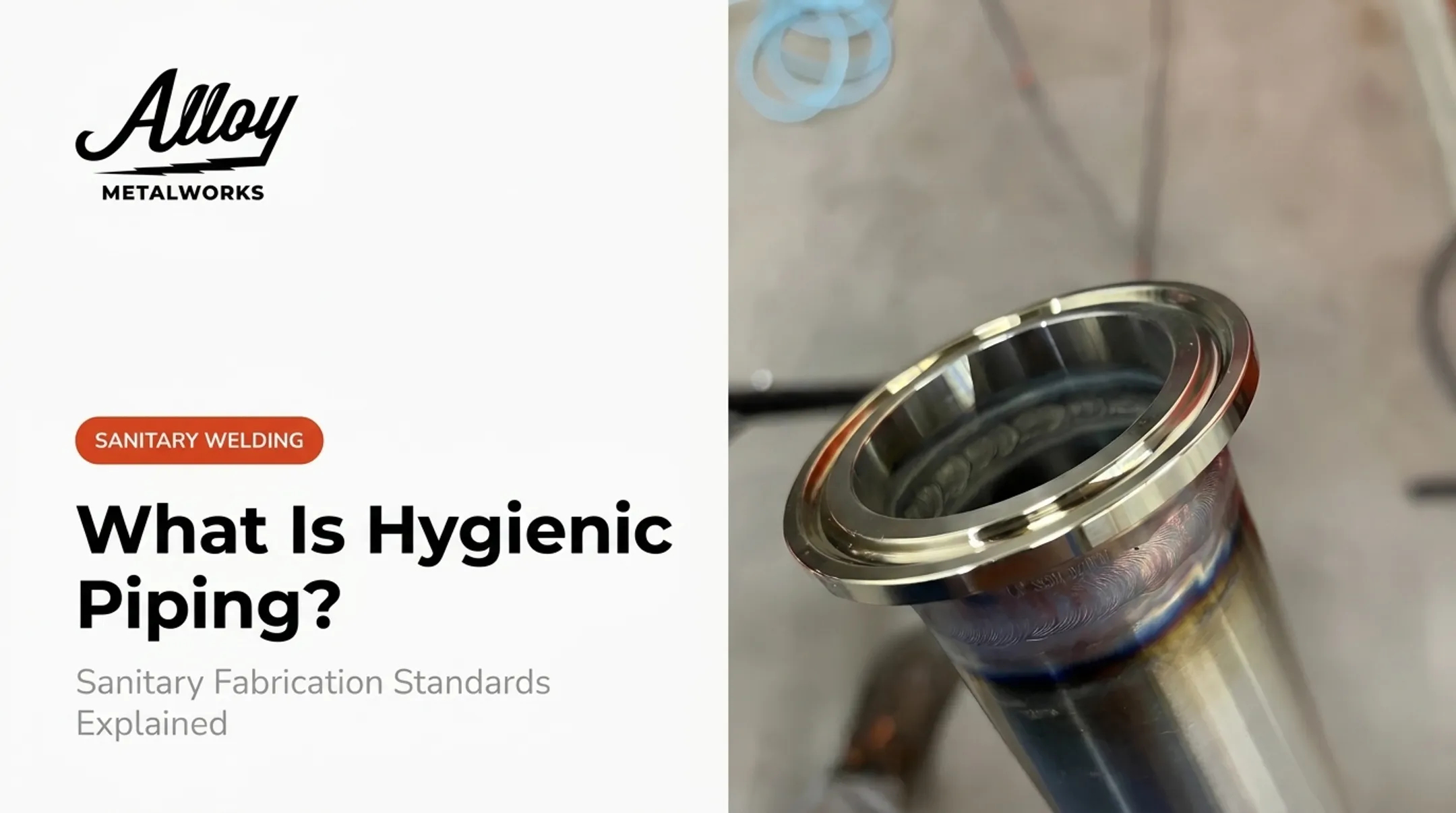
Some specialty gas lines and purity-sensitive systems call for sanitary stainless steel construction, governed by AWS D18.1, the specification for welding austenitic stainless steel tube and pipe in sanitary applications. This standard isn't a medical gas code substitute. It doesn't replace NFPA 99, ASSE personnel qualifications, or the required brazing route, but it applies where project specs call for stainless construction on purity-critical gas service.
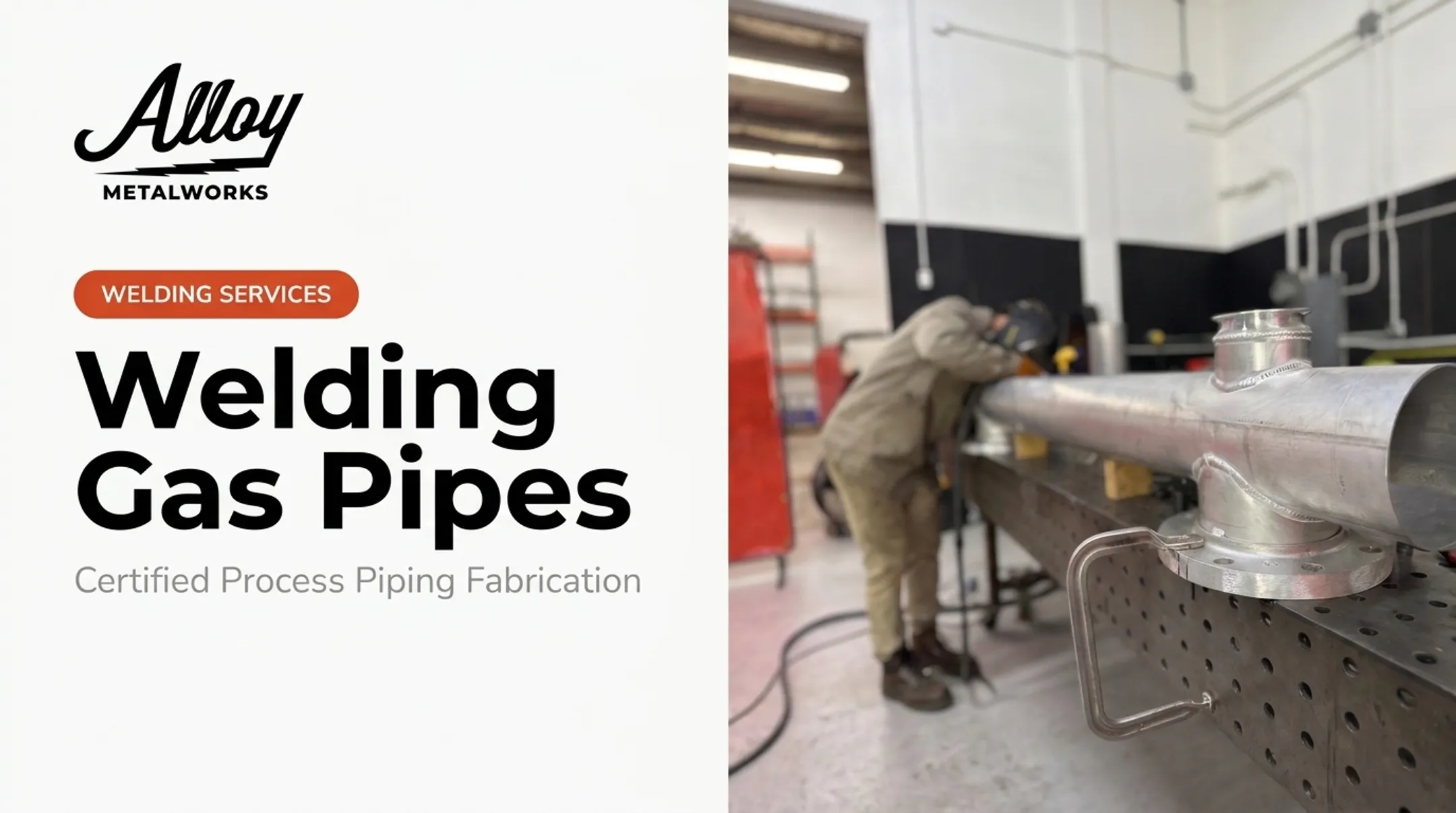
This is where fabrication quality separates a compliant system from a liability. Alloy Metalworks is an ISO 9001-controlled fabrication shop working to ASME Section IX and AWS D18.1 sanitary welding standards for inspection-ready gas and fluid assemblies in regulated environments.
That documented, traceable process is what an AHJ or third-party verifier expects during system commissioning.
Documentation gaps cause real failures. One rebuild project came about specifically because a previous contractor's welds failed inspection — the welding procedures and welder qualifications simply couldn't be produced. The corrected work had to be independently inspected via visual and magnetic particle testing before it passed.
Traceability isn't bureaucratic overhead. It's what keeps verification on schedule instead of sending the job back to demolition and rework.
Centralized vs. Decentralized Medical Gas Systems
When designing a medical gas piping network, facilities choose between two basic architectures.
Centralized systems distribute gas from a single source facility-wide. Benefits include:
- Lower equipment costs (one source instead of many)
- Simpler monitoring and maintenance
- Uniform pressure management across the facility
Decentralized systems use multiple localized supply points. Benefits include:
- Enhanced control over individual departments
- Built-in redundancy if one localized source fails
- Customization for department-specific gas demand
| Factor | Centralized | Decentralized |
|---|---|---|
| Upfront cost | Lower | Higher |
| Maintenance complexity | Single program | Multiple points to service |
| Failure impact | Can affect large areas | Isolated to local zone |
| Best fit | Large hospitals, campuses | Remote or phased facilities |

Neither approach is mandated by NFPA 99. The right choice depends on facility size, how much demand varies by department, and how much local redundancy each area needs.
Installation and Compliance Requirements
Certification requirements are the backbone of system safety, not a paperwork exercise. Installers and brazers must hold ASSE 6010 certification, while brazing itself must meet ASME Section IX qualification. Using uncertified personnel is one of the fastest ways to fail an inspection, and it creates liability that follows the facility long after the contractor leaves.
Before a system goes live, installers perform a series of verification tests:
- Pressure test: confirms the system holds at required pressure without leaks
- Cross-connection test: verifies no gas line is accidentally connected to the wrong service
- Purge test: clears debris and contaminants from the piping before use
- Standing vacuum test: confirms vacuum lines hold for a set duration (often 24 hours for certain system categories)

None of this testing should be self-certified by the installing contractor. Initial pressure and cross-connection tests must be witnessed by an independent party: an ASSE 6020 inspector, ASSE 6030 verifier, or the authority having jurisdiction. That party's interests must align with the facility, not the contractor who did the work.
Frequently Asked Questions
What is a piped medical gas system?
It's a fixed network of piping, valves, alarms, and outlets that delivers medical gases and vacuum from a central or area source directly to patient care locations. NFPA 99 governs its design, operation, and maintenance.
Is ACR pipe used for medical gas piping?
No. ACR pipe is not an approved substitute. Medical gas systems require seamless copper tube meeting ASTM B819 Type K or L, specially cleaned and marked for medical gas service.
What size pipe is used for medical gas systems?
Piping is generally 1/2 inch (DN15) or larger for most medical gas and vacuum mains per NFPA 99, though exact sizing depends on facility demand, gas category, and pressure drop calculations.
How often should medical gas systems be inspected?
There's no single universal interval. The Joint Commission requires facilities to document a manufacturer-based or risk-assessed maintenance strategy, with inspection triggered any time a system is breached or components are added or replaced.
Who is qualified to weld or braze medical gas piping?
Only ASME Section IX-qualified brazers and ASSE 6010-certified installers may join medical gas piping components. Uncertified work risks contamination, leaks, and failed inspections.