
The stakes are real. A sugared root pass on a sanitary line can mean a failed inspection. A burned-through joint on thin-wall aerospace tubing can mean a scrapped part or worse. According to Fronius, TIG (GTAW) is prized precisely because it produces high-quality, spatter-free welds — but that quality only shows up when the technique is right.
This guide breaks down the core techniques, prep steps, equipment settings, and common defects in TIG tube welding, plus when it's time to bring in a certified specialist.
Key Takeaways
- TIG tube welding demands simultaneous torch, filler, and amperage control, making it harder to master than MIG or stick
- Joint fit-up, cleanliness, and purge gas control matter as much as torch technique
- Walking the cup with consistent travel speed produces the most reliable circumferential welds
- Codes like ASME Section IX and AWS D17.1/D18.1 govern flight-critical and sanitary tube systems
What Is TIG Tube Welding?
TIG welding, or GTAW, uses a non-melting tungsten electrode shielded by inert gas — typically argon, helium, or a blend — to fuse metal without spatter. That part's simple enough on flat plate.
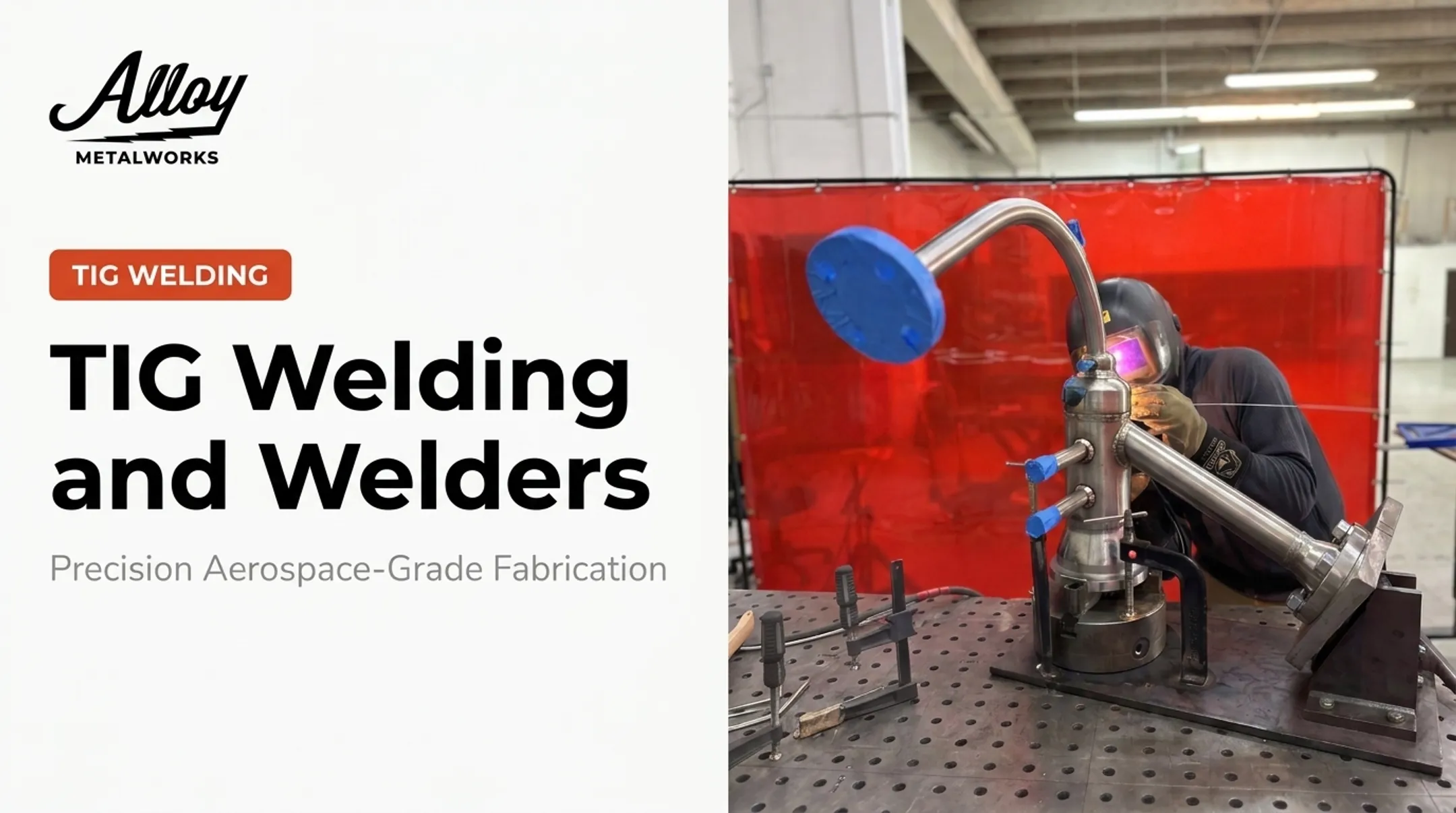
Tube welding is different. Instead of moving in one direction, the welder has to travel around the entire circumference of the joint, repositioning hands and body multiple times per weld. ESAB describes this circumferential requirement as one of the defining challenges of pipe and tube work.
Industries relying on TIG tube welds include:
- Aerospace ground support equipment and flight-critical hardware
- Hydrogen and advanced energy systems
- Sanitary food, beverage, and pharmaceutical piping
- Chemical reactors and process vessels
Manual vs. Orbital TIG
For high-volume or high-purity runs, orbital TIG automates the circumferential movement using a rotating electrode around a fixed workpiece.
Alloy Metalworks runs orbital and cold-wire TIG programs on a Fronius IWave 300 paired with a variable-speed rotator for consistent weld geometry. On projects like an Inconel 617 reactor component, parameters are dialed in manually first, then transferred into the automated system once optimized. That hybrid approach keeps quality high without sacrificing repeatability.

Essential Preparation Before Welding Tubes
Good tube welds are won or lost before the arc ever strikes.
Joint fit-up and alignment come first. Edges must be clean and burr-free, with tight, even alignment. Gaps force extra heat input and invite burn-through or incomplete fusion.
Material-specific cleaning follows:
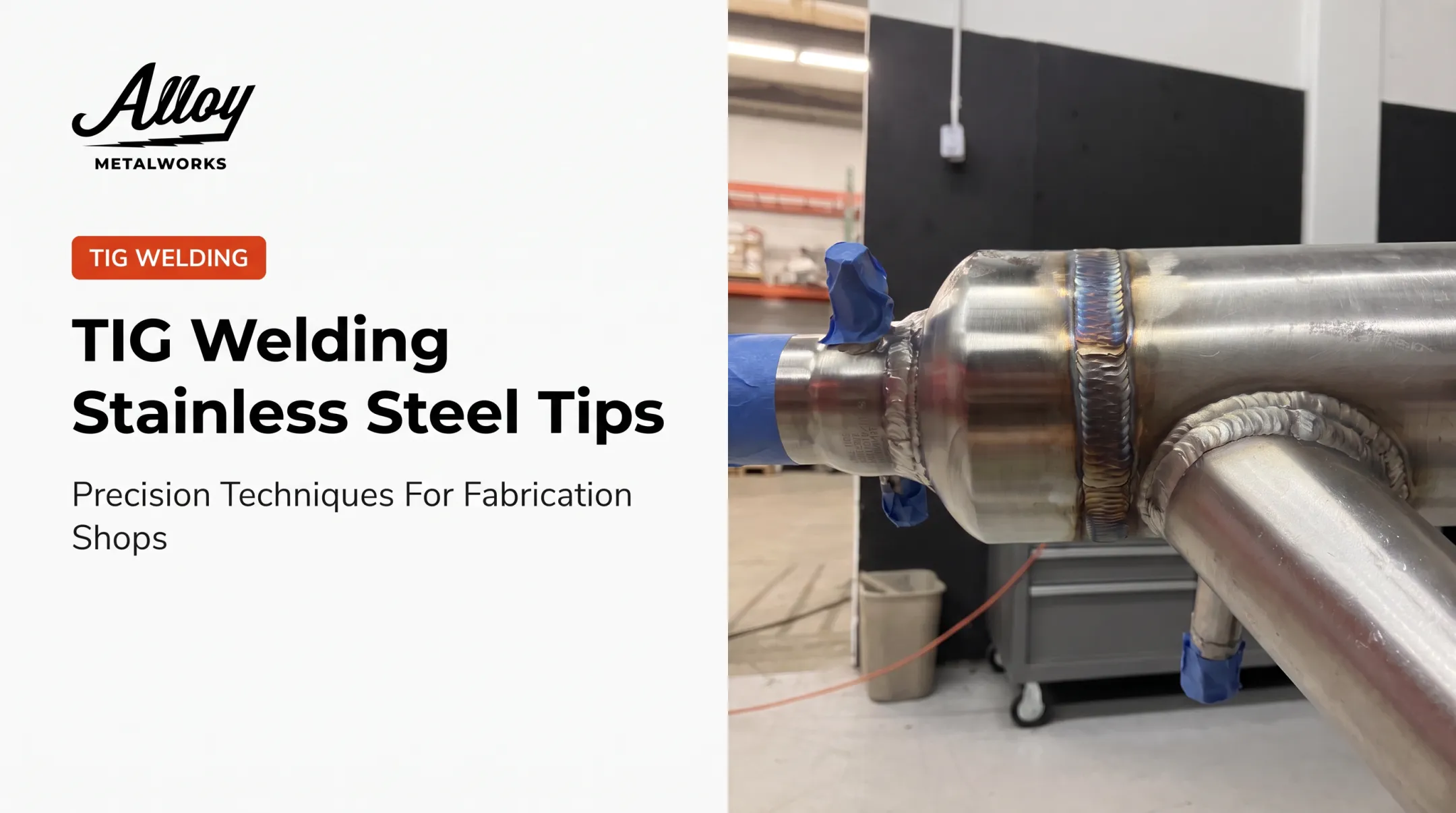
- Stainless steel: Remove mill scale, oxides, dirt, and grease. Miller notes contamination compromises weld integrity outright.
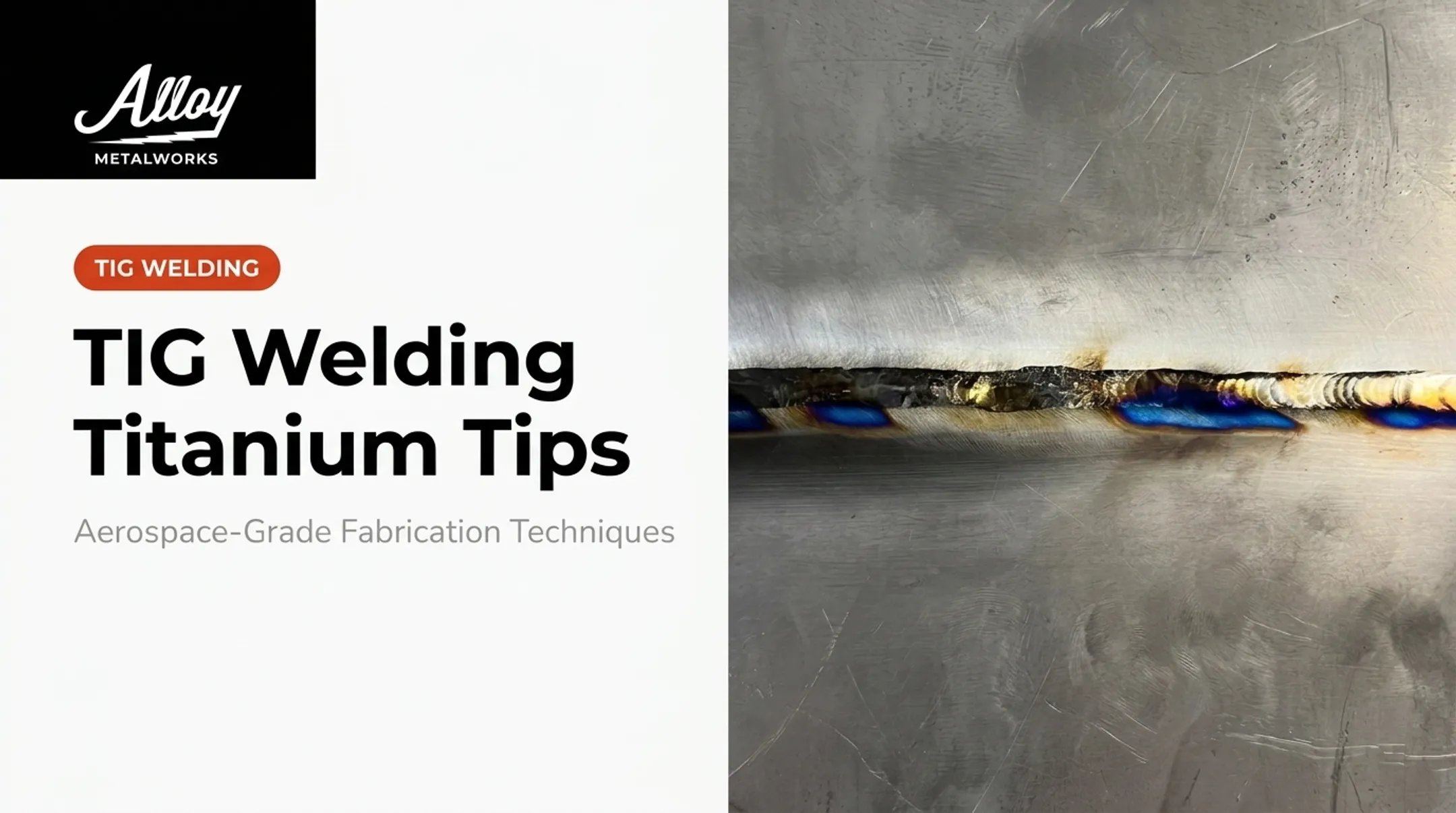
- Titanium: Use a dedicated clean workstation, gloves, and non-contaminating tools; clean with acetone or MEK about one inch back from the joint. Oxidation sensitivity makes this non-negotiable.
- Nickel alloys: Bring ID and OD to bright, shiny metal for about an inch from the prep edge, then degrease (per Haynes guidance).
Purge Gas: Preventing the Root Pass From Failing
The tube interior needs its own shielding. Without a proper back purge, oxygen hits the molten root and causes sugaring — a discolored, oxidized backside that weakens the joint and ruins corrosion resistance.
For titanium, Alloy Metalworks uses custom inert gas chambers and purge setups to counter the metal’s high oxidation risk at elevated temperatures. Nickel-alloy work usually runs a two-stage purge: drop the enclosed volume to an acceptable oxygen level, then hold purge flow through the full weld.
Tack welding finishes prep. Place enough tacks to hold alignment through the full pass, and space them to limit distortion as heat builds.

Core TIG Tube Welding Techniques
Torch Angle and Travel
Miller recommends a torch angle of 15-20 degrees, angled to keep the puddle visible while feeding filler rod. Too steep, and you lose sight of the weld pool. Too shallow, and shielding gas coverage suffers.
Walking the Cup
For circumferential stainless work, many welders "walk the cup" — rocking the ceramic cup edge along the joint in a steady rhythm to maintain consistent standoff and heat around the curve. It's a technique favored in pipe and tube work because it stabilizes arc length without constant manual adjustment.
Filler Feed and Heat Control
Forward torch travel with filler dabbed into the leading edge of the puddle gives better visibility and control than pushing filler ahead of the arc. Combine that with careful heat management:
- Thin-wall tube: Lower amperage and faster travel to avoid burn-through
- Heavy-wall tube: Higher heat input to avoid incomplete penetration
On an Inconel 617 project, Alloy Metalworks found too much heat risked distortion and metallurgical compromise, while too little sacrificed fusion. A Fronius ultra-high-frequency pulse setting maintained a stiff, focused arc at low heat input — improving bead consistency without overheating the part.
Sequencing: Root, Fill, Cap
Tube joints typically run through three passes:
- Root pass: Establishes fusion through the joint; most vulnerable to sugaring and burn-through
- Fill pass(es): Builds weld volume; needs consistent travel speed to avoid uneven buildup
- Cap pass: Final cosmetic and structural layer, checked for uniform width and reinforcement
Check backside penetration and the heat-affected zone after the root pass to confirm proper fusion before moving on. Skip this step, and defects compound through the rest of the weld.

Equipment, Settings, and Consumables for Tube Welding
Amperage depends on wall thickness and material. There's no universal formula. Settings should follow a qualified welding procedure specification (WPS) rather than a rule of thumb. A foot pedal gives real-time amperage adjustment, which is critical for tight turns where heat needs vary moment to moment.
Gas flow rates:
General TIG torch flow typically runs 10-35 CFH, depending on consumables and environment. Argon shielding for GTAW commonly sits at 20-30 CFH.
Tungsten selection:
- 2% lanthanated: stable across high and low amperage, good all-purpose choice
- 2% ceriated: versatile for low- and medium-current work
- Rare-earth tungsten: strong low-current starts, often preferred for automated welding
Cup size should match tube diameter and access constraints. Tight assemblies may demand smaller cups even at the cost of gas coverage.
When gas coverage alone is not enough—especially on titanium—dedicated inert gas chambers and custom purge setups are often necessary. Alloy Metalworks builds these setups specifically to manage titanium's oxidation sensitivity across all grades.

Common Challenges and Defects in TIG Tube Welding
Burn-through and distortion. Thin-wall tubing has little margin for error. Excess amperage or slow travel speed burns through fast. Lower amperage and faster, steady travel reduce the risk.
Oxidation and sugaring. A discolored, brittle backside on the root pass signals inadequate purge gas. Fix it with proper back-purge setup and, if needed, reduced amperage.
Access and positioning. Rollcages, exhaust systems, and reactor piping often force awkward torch angles and limited hand clearance. These jobs reward welders who've built muscle memory for walking the cup in cramped positions.
Passive-layer damage. Excessive heat input or weak shielding also strips corrosion resistance in high-performance alloys. Alloy depletion and oxidation can leave the joint vulnerable long after the bead looks finished—something Alloy Metalworks watches closely on nickel alloys, titanium, and sanitary stainless.
Knowing when to call in a specialist. Practice welds build skill. Flight-critical hardware, sanitary process lines, and pressure-rated systems also need documentation and traceability.
Alloy Metalworks runs a qualified WPS on every job, measures purge quality and heat input, and performs post-weld NDE. That process control supports inspection-ready work under ASME Section IX, AWS D17.1, and AWS D18.1 for aerospace, energy, and process applications.
Frequently Asked Questions
What is TIG tube welding?
TIG tube welding applies GTAW to circumferential tube joints, requiring simultaneous control of torch angle, filler feed, and amperage as you work around the tube's curvature. It's more demanding than flat-plate TIG because of that continuous repositioning.
Is TIG welding the hardest form of welding?
TIG is the most technically demanding common welding process because it requires two-handed coordination and precise control. Tube welding adds another layer of difficulty due to the circumferential movement involved.
What amperage should I use for TIG welding thin-wall tube?
Amperage depends on wall thickness, material, and joint design — there's no universal formula that applies across alloys. Always follow a qualified WPS rather than a generic rule of thumb.
Do you push or pull when TIG welding tube?
Use forward torch travel and dab filler into the leading edge of the puddle. That pull-style technique gives better puddle visibility and control than pushing filler ahead of the arc.
What shielding gas is best for TIG tube welding?
Argon is the standard shielding gas for most TIG tube work. Stainless steel, titanium, and nickel alloys also require interior purge gas to prevent oxidation on the root pass.
When should I hire a certified welding shop instead of TIG welding tube myself?
Flight-critical, sanitary, or pressure-rated tube welds require certified, documented processes under codes like ASME Section IX and AWS D17.1/D18.1. Specialists like Alloy Metalworks provide the traceability and inspection-ready documentation these applications demand.