
This guide breaks down aluminum alloy series, the welding processes that actually work, the certifications that matter, and what drives project cost. Alloy Metalworks, a Colorado-based precision welding shop certified to AWS D1.2 and ASME Section IX, fabricates custom aluminum components for aerospace, energy, and research clients who can't afford a failed weld.
Key Takeaways
- Aluminum’s oxide layer and heat sensitivity make TIG (GTAW) the go-to process for most precision work
- Match filler metal to the alloy series—2xxx, 5xxx, 6xxx, and 7xxx each weld differently
- AWS D1.2 and ASME Section IX are required credentials for aerospace and regulated energy work
- Price tracks alloy complexity, thickness, certification scope, and batch size—plan those up front
Understanding Custom Alloy Welding for Aluminum
Custom alloy welding means matching your process, filler metal, and technique to the specific aluminum grade you're working with, not applying a generic approach borrowed from mild steel. A 5052 marine bracket and a 7075 aerospace fitting behave nothing alike under a torch.
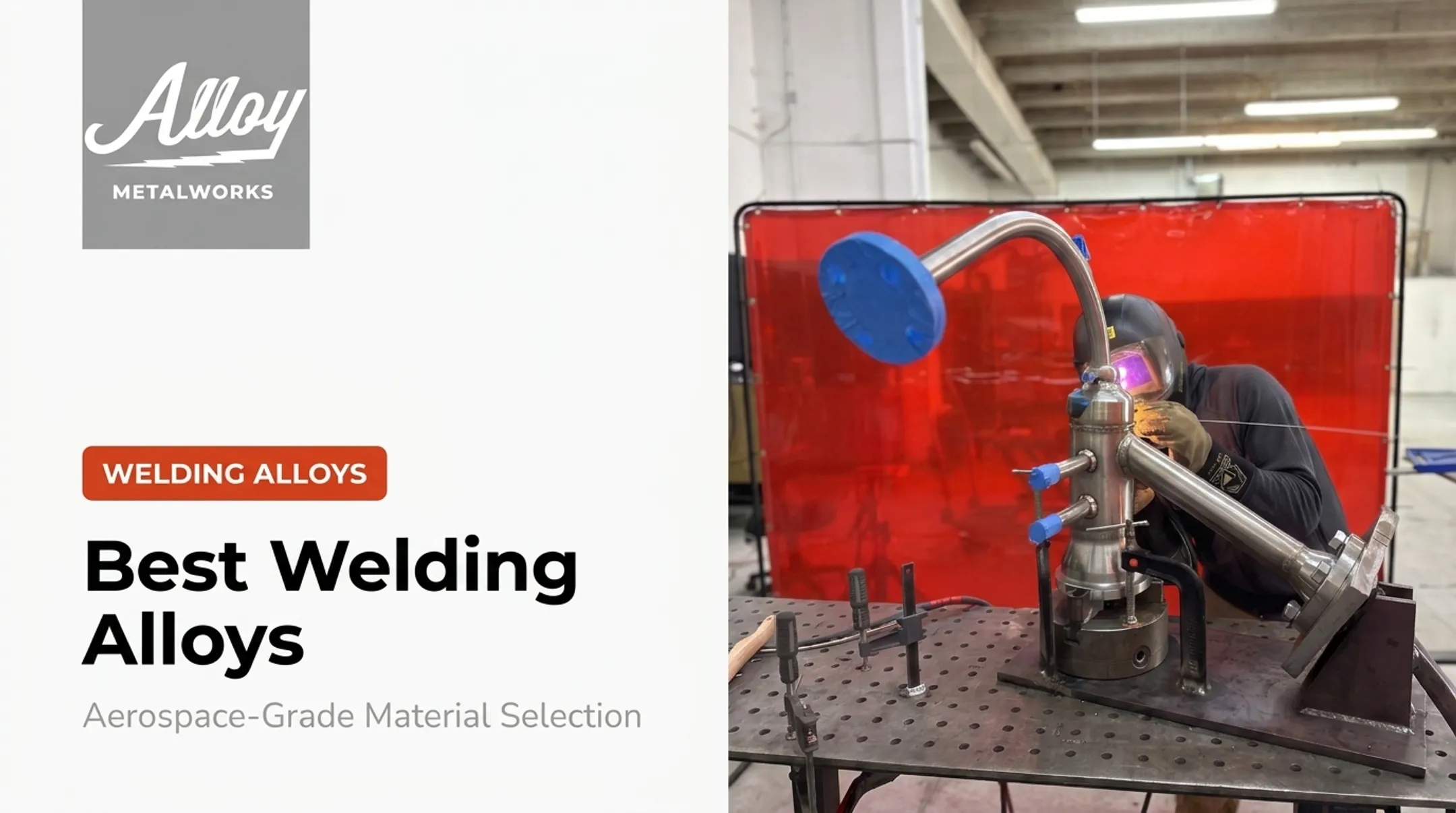
Alloy Metalworks works across the full 1000–7000 aluminum series, pairing each job with the right filler and heat-management strategy before the arc ever starts.
Common Aluminum Alloy Series and Their Welding Challenges
Each alloy family carries its own weldability profile:
- 2xxx series (Al-Cu): Aerospace-grade and strong, but most grades are highly crack-sensitive. 2219 is a notable weldable exception, used extensively on Space Shuttle external tanks.
- 5xxx series (Al-Mg): Common in marine and structural work. Generally weldable, though alloys near 2.5% magnesium content need careful filler selection (typically 5356) to avoid cracking.
- 6xxx series (Al-Mg-Si): The workhorse of structural extrusions and framing. Weldable, but the heat-affected zone softens significantly compared to T6 base material.
- 7xxx series (Al-Zn-Mg-Cu): High-strength aerospace alloy. Most grades, including 7075, are considered non-weldable for structural use. A few exceptions like 7005 and 7039 can be welded successfully.

Why Aluminum Is Difficult to Weld Compared to Steel
Beyond series-specific crack risk and HAZ softening, two physical properties drive nearly every aluminum welding challenge.
The oxide problem: Aluminum melts at roughly 660°C (1,220°F), but its surface oxide layer doesn't melt until around 2,037°C (3,699°F), according to ESAB's guide to aluminum welding. That's a gap of nearly 1,400°C.
The base metal turns liquid long before the oxide budges. Welders need AC TIG polarity or thorough mechanical cleaning to break through it.
The heat sink effect: Aluminum conducts heat about five times faster than steel, according to Lincoln Electric. That heat disperses away from the weld pool instead of staying put, requiring higher amperage and faster travel speeds. Move too slowly, especially on thin sections, and you'll burn through the material.

Welding Processes Used for Custom Aluminum Alloys
TIG and MIG: When to Use Each
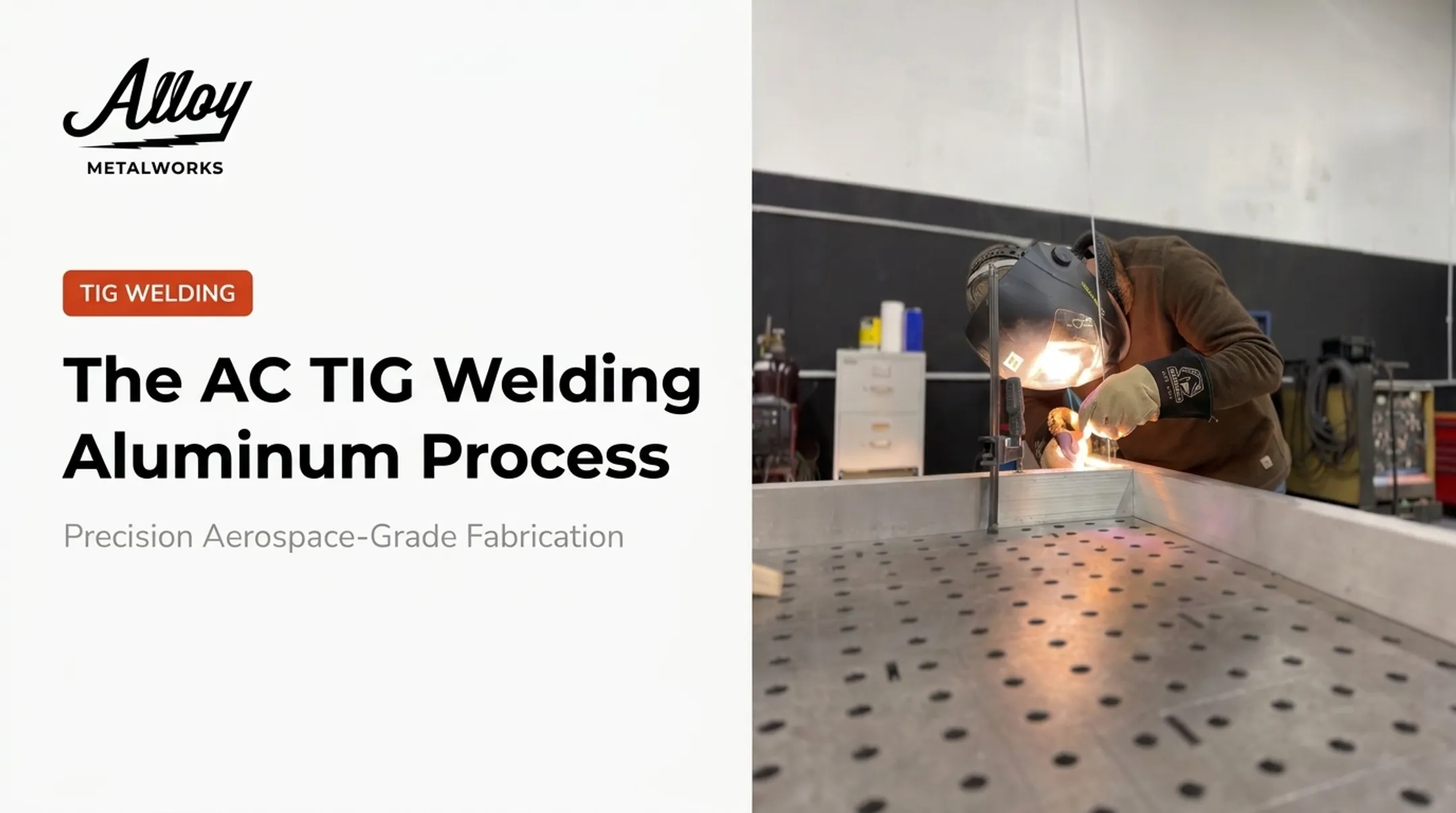
GTAW (TIG) is the standard for precision, code-compliant aluminum work. Use it when the joint needs tight heat control and a clean, inspectable bead.
- Thin sections and detailed fit-ups
- Flight-critical hardware and AWS D17.1 work
- AC TIG cleaning action to break aluminum oxide
GMAW (MIG) is the better fit for thicker sections and higher-volume runs.
- Pulsed MIG to manage heat on thin-gauge parts
- Higher-amperage setups for thick aluminum
- Faster deposition when repeatability matters more than ultra-fine bead cosmetics
Filler Metal Selection: 4043 vs. 5356
Filler choice affects crack resistance, joint strength, and post-anodize appearance:
| Factor | ER4043 (Al-Si) | ER5356 (Al-Mg) |
|---|---|---|
| Weldability | Higher; lower crack sensitivity | Good; more crack-sensitive on some base alloys |
| Shear strength | Lower | Higher |
| Anodize color match | Turns dark gray | Closer color match |

Preventing Contamination and Warping
Alloy Metalworks keeps dedicated grinding discs and Scotch-Brite pads separate from carbon steel consumables. Cross-contaminated abrasives can embed foreign particles in the weld zone, and under AWS D17.1 Class A, visible contamination alone can disqualify a weld.
Standard pre-weld process includes:
- Dedicated, labeled aluminum-only cleaning tools
- Purge gas setups to protect the joint backside from oxidation
- Fixturing that limits distortion during heat cycling
- WPS development with engineering input before fabrication starts
Matched heat input, joint design, and filler selection up front keep distortion down and reduce rework before inspection.
Certifications and Standards Governing Aluminum Welding
Not every aluminum weld needs the same paperwork, but regulated industries demand proof.
- AWS D1.2 governs structural aluminum welding, covering qualification, fabrication, inspection, and workmanship for aluminum structures.
- ASME Section IX qualifies welding procedures and welder performance for pressure-related applications, required under other ASME code sections.
- AWS D17.1 Class A covers flight-critical aerospace components, the strictest D17.1 class, and requires extensive documentation and testing (Fabtech).
- ISO 9001 doesn't certify welds directly, but its quality management framework supports the traceability and documentation regulated clients require.
Alloy Metalworks holds AWS D1.2, ASME Section IX, AWS D17.1 Class A, and ISO 9001. Aluminum welds arrive inspection-ready with the documentation aerospace and energy auditors expect.

Industries That Rely on Custom Aluminum Alloy Welding
Custom aluminum alloy welding shows up wherever weight, corrosion resistance, and certified quality matter most:
- Aerospace and space technology need lightweight, high-strength components where every gram matters. Flight-critical hardware demands AWS D17.1 Class A compliance and welders who understand crack-sensitive alloys like 2xxx and 7xxx.
- Energy sector applications call for corrosion-resistant aluminum assemblies in clean energy hardware. Alloy Metalworks has supported organizations like NREL and Utility Global on pressure-related and process piping projects requiring certified welding.
- Research and prototyping teams often need small-batch, rapid-turnaround aluminum parts. Fortius Metals, for example, had aluminum TIG welds evaluated through radiographic and macroscopic testing, with clean results produced quickly.
Factors That Affect Custom Alloy Welding Costs
Custom aluminum welding costs vary by project. These variables drive most of the difference:
- Alloy type and grade: A crack-sensitive 7xxx aerospace alloy demands more labor and filler control than a straightforward 6xxx extrusion.
- Thickness and geometry: Thin sections risk burn-through and need slower, more controlled technique; complex geometries add fixturing time.
- Certification and inspection scope: Radiographic (X-ray) testing and full documentation packages for D17.1 Class A work raise project cost.
- Batch size: Prototyping and small-batch runs carry higher per-unit costs than production volumes because setup time doesn't scale down.
No credible industry source publishes a universal price benchmark for custom aluminum welding, and for good reason: the variables above shift too much from project to project.
A quote built from your alloy, tolerances, and certification needs gives a far more accurate picture than any published range.
Choosing the Right Welding Partner for Custom Aluminum Projects
Engineering-aware collaboration means involving a welding partner from design through built parts. That early involvement catches problems before metal ever gets cut and cuts downstream rework and missed deadlines.
Questions worth asking a potential welding partner:
- Which certifications do they hold, and do those match your industry's requirements?
- Do they have documented experience with your specific alloy series?
- What documentation and traceability practices do they follow?
- Can they support both prototyping and production-volume turnaround?
Alloy Metalworks answers those questions with a track record across aerospace, energy, and research clients. NREL added the company as an approved pressure-program vendor after the shop fabricated an Alloy 800 HT reactor component rated above 700°C.
Utility Global's Madison Kelley has praised the shop's rapid turnaround on Inconel and stainless piping work. That cross-material, cross-industry experience carries directly into aluminum fabrication, where the same engineering rigor applies.
Frequently Asked Questions
How much does custom alloy welding for aluminum cost?
Costs depend on alloy grade, thickness, certification requirements, and batch volume. Because these variables shift so much between projects, we recommend requesting a project-specific quote.
Can you weld custom alloys?
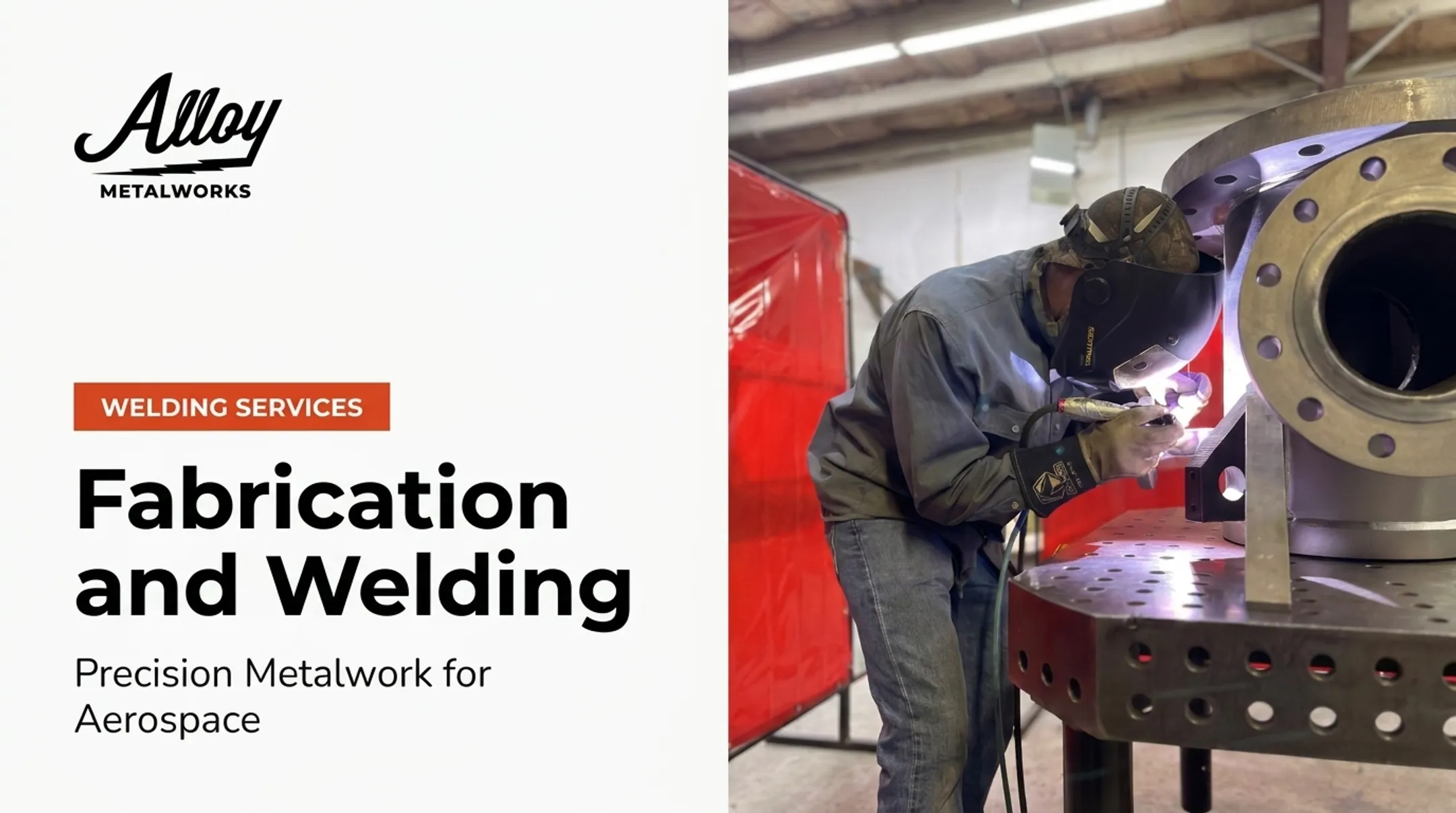
Yes. Alloy Metalworks welds aluminum, titanium, stainless steel, and nickel-based alloys like Inconel and Hastelloy under certified, code-compliant processes.
What is the best welding process for aluminum?
TIG (GTAW) is preferred for precision, code-compliant work, especially on thinner sections. MIG (GMAW) works better for thicker sections and higher-volume production.
Why is aluminum harder to weld than steel?
Aluminum forms a high-melting-point oxide layer that resists fusion. Its thermal conductivity—roughly five times higher than steel—also pulls heat away from the weld pool quickly.
Do aluminum welds need certification for aerospace use?
Yes. Flight-critical aluminum components typically require AWS D17.1 (Class A for the strictest applications) and often ASME Section IX for pressure-related hardware.
How do I know which aluminum alloy is right for my project?
Stress requirements, environment, and budget drive the choice. Early engineering collaboration matches alloy properties to your needs before fabrication begins.