
Manual testing simply can't keep pace. It's slow, prone to human error, and falls apart under high production volumes or demanding R&D timelines — especially when the hardware is mission-critical.
This guide breaks down what ATE actually is, the components that make it work, where it's used across industries, and what buyers should know before specifying or procuring a system.
Key Takeaways
- ATE automates functional, performance, and stress testing with minimal human involvement.
- Core systems combine instrumentation, control hardware, fixtures/probes, and test software.
- Aerospace, energy, semiconductor, and industrial sectors use ATE to hit compliance and safety requirements with repeatable results.
- Enclosures, racks, and test stands for ATE need precision fabrication and certified welding to stay stable and inspection-ready.
What Is Automated Test Equipment (ATE)?
ATE refers to hardware and software systems that automatically test electronic devices, PCBs, semiconductors, and assembled products for functionality, performance, and safety. The system runs those checks without a technician manually wiring up instruments each time.
You'll see ATE, automatic test equipment, and automated testing equipment used interchangeably for the same category of system. The item being tested typically goes by one of three names:
- DUT (Device Under Test)
- UUT (Unit Under Test)
- EUT (Equipment Under Test)
These terms are largely interchangeable depending on the spec you're working from, so confirm which label a given project uses.
ATE isn't a niche investment. Market estimates vary by research firm, but Future Market Insights projects the global ATE market will grow from $8.4 billion in 2025 to $13.6 billion by 2035, a 4.9% CAGR. That trajectory tracks rising demand for faster, more consistent product validation in electronics and related manufacturing.
Key Components of an ATE System
A functioning ATE system is a stack of interdependent parts, not a single machine. Each layer has to work in concert for test results to be trustworthy.
Test Fixtures, Probes, and Handlers
Fixtures and probes are the physical connection between the tester and the device under test. Bed-of-nails fixtures use spring pins to contact many test points simultaneously, offering high speed and coverage but higher upfront tooling cost. Moving-probe systems skip the dedicated fixture but run slower.
Probe and fixture accuracy drive data quality. A misaligned probe or a worn pin doesn't just slow things down. It produces bad data. That's why fixture-integrity diagnostics exist to catch open connections, wiring errors, and missing probes before they corrupt a test run.

Instrumentation
The instrumentation layer stimulates and measures the DUT. Common instruments include:
- Oscilloscopes
- Multimeters
- Signal generators
- Power supplies
- Spectrum analyzers
Semiconductor-focused ATE often expands this list to cover logic, RF, analog, power, mixed-signal, and memory testing in a single platform.
Control Hardware and Software
PCs, FPGAs, and dedicated controllers sequence the test steps, capture data, and generate pass/fail decisions. The software layer sits on top, handling test-plan development, execution, and reporting. Modern platforms are built to be modular, so you can scale from a single test site to dozens without rebuilding the whole system.

Safety, Enclosures, and Structural Support
ATE systems live inside racks, chambers, and enclosures that need:
- Structural rigidity to withstand repeated handling and vibration
- Thermal management for sustained test cycles
- Tight dimensional tolerances so instruments align correctly every time
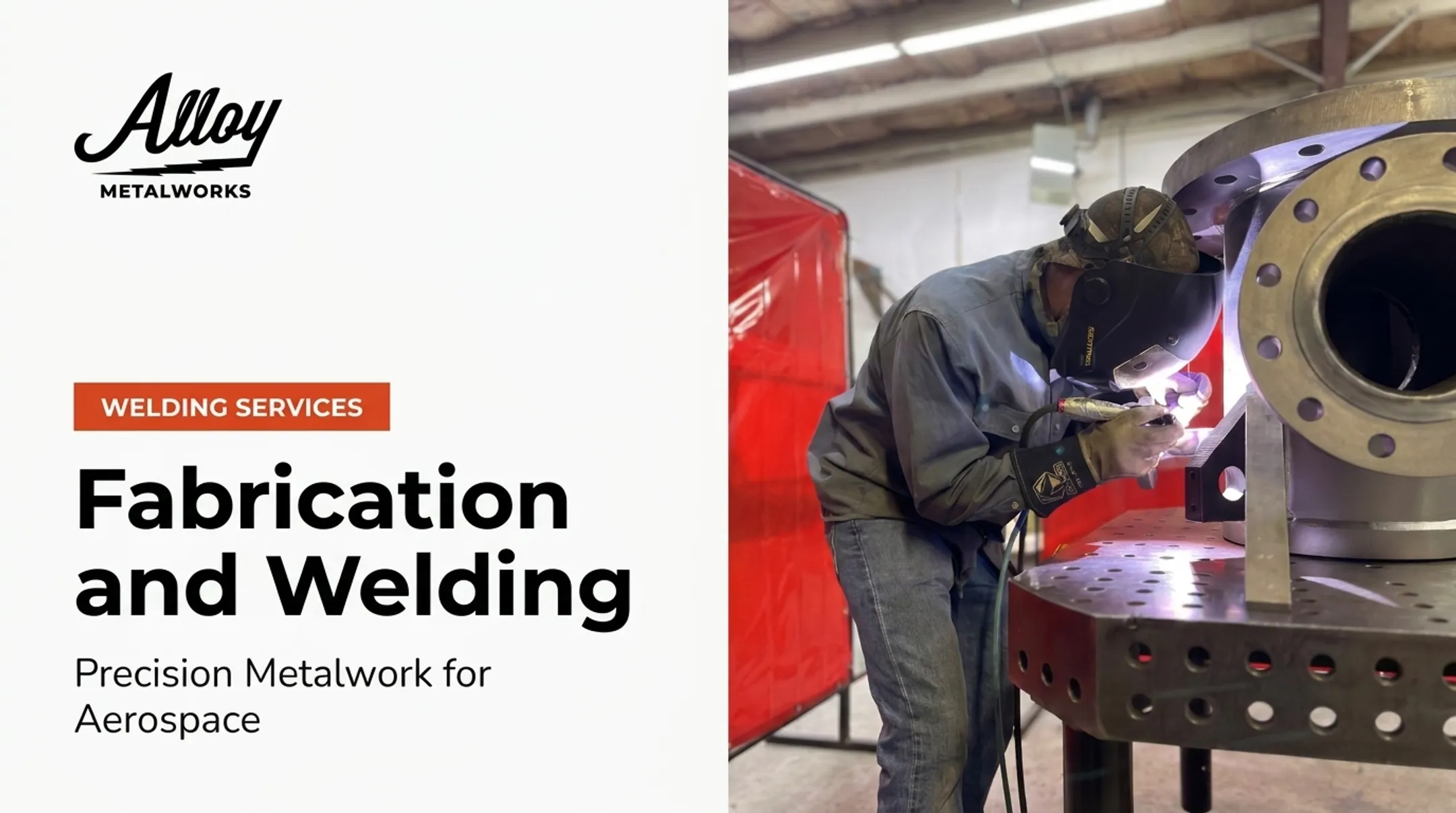
In aerospace and energy testing environments, custom test stands, rack frames, and enclosures often require certified welding and documented fabrication to pass inspection. That structural work has to be engineered in from the start, not bolted on later.
Real-World Applications and Industries Using ATE
ATE shows up wherever a product's failure risk outweighs the cost of testing it thoroughly. A few common applications:
- Functional testing — verifying a device performs to spec under normal and extreme conditions
- In-circuit testing (ICT) and boundary scan/JTAG — validating PCB-level connections and shorts; Teradyne systems scale from a few test points to 15,000+ on complex assemblies
- RF and wireless testing — checking cellular and connectivity standards compliance
- Power and battery validation — critical for EV and energy storage products
- Burn-in and reliability testing — running devices at elevated temperature to flag workmanship failures before they reach the field
Industry Breakdown
| Industry | Why ATE matters |
|---|---|
| Aerospace & defense | Flight-critical hardware, strict traceability requirements |
| Semiconductor | High-volume production demands consistent pass/fail accuracy |
| Automotive/EV | Battery and power system validation at scale |
| Energy | Reliability testing for infrastructure that can't fail silently |
| Medical technology | Regulatory compliance tied directly to patient safety |
| Aerospace and defense test infrastructure carries its own compliance burden. Under AS9100 clarification guidance, only equipment with a calibrated control sticker can be used for acceptance decisions. FAA 14 CFR 145.109(b) requires certificated repair stations to calibrate equipment used for airworthiness determinations. | |
| The test stands and ground support structures holding that equipment need to meet flight-critical fabrication standards, not just electrical standards. That's a structural welding problem as much as a test-engineering one. |

Benefits of Automated Test Equipment
ATE improves speed, cost, and compliance in ways manual setups rarely match:
- Speed and repeatability: Same test conditions apply every time across thousands of units. One NI systems-integrator case study reported a 90% cut in radar test time versus manual desktop-instrument setups.
- Cost efficiency: Fewer manual touchpoints lower labor costs and shorten cycles. A GN Audio case study via NI dropped test-development time from months to weeks while coverage rose 2.5x.
- Traceability and compliance: Automated data logging supports ISO 9001 and industry-specific certifications, giving you a documented record instead of a technician's notebook.
Choosing the Right ATE Partner or Build Approach
Before comparing vendors or fabrication partners, nail down your actual requirements:
- Define throughput goals — how many units per hour or day does the system need to handle?
- Set accuracy needs — what tolerances matter for your DUT?
- Plan data integration — will the system need to feed an MES or ERP platform? Only after that should cost enter the conversation, and it should be evaluated as total cost of ownership, not sticker price. Over the system's lifespan, ownership cost typically includes:
- Fixture design
- Probe replacement
- Calibration schedules
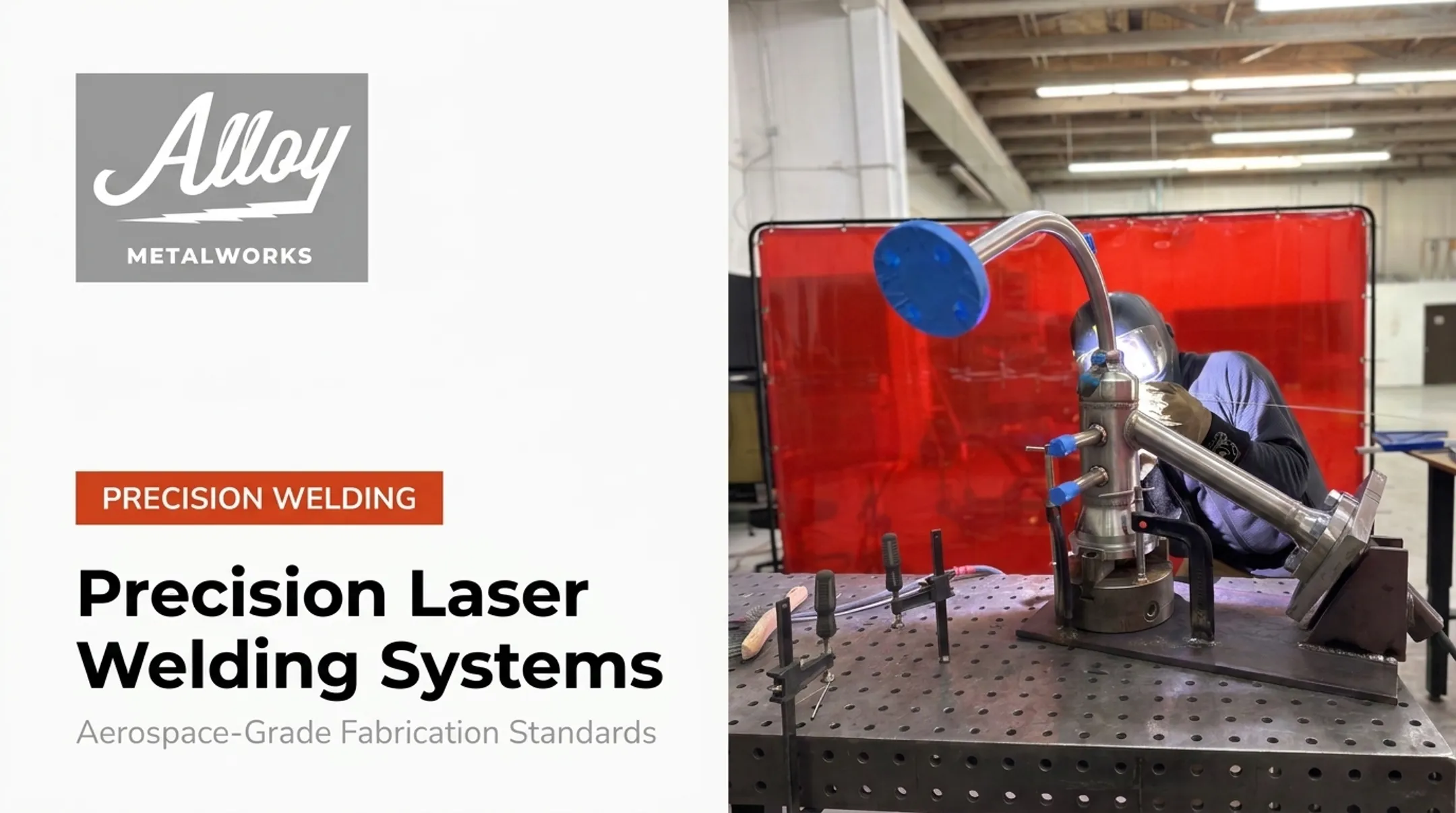
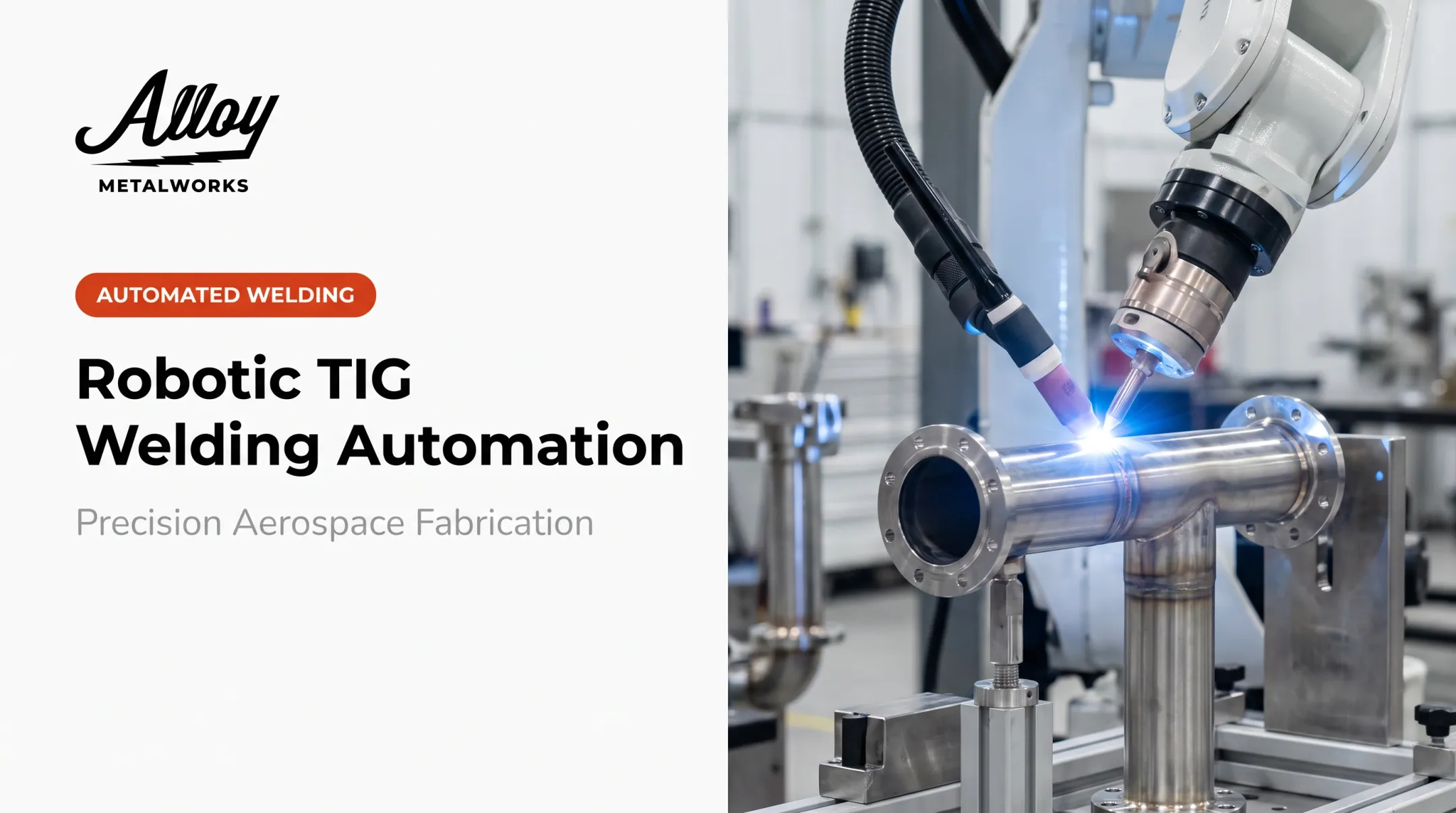
- Maintenance and training For custom or research-grade ATE setups, the fabrication side deserves as much scrutiny as the electronics. This is where Alloy Metalworks fits in. The Colorado-based shop builds inspection-ready structural components, enclosures, and precision-welded assemblies for aerospace, energy, and research applications, including:
- Custom frames and fixtures
- Tooling
- Vacuum chambers for controlled test environments Fabrication runs under ASME Section IX and AWS D17.1 certified welding processes in an ISO 9001-controlled shop, with traceability and documentation built into every step. That matters when ATE infrastructure supports FAA-regulated or safety-critical acceptance decisions—the paperwork carries as much weight as the weld. Clients like NREL and TDA Research have relied on this engineering-aware fabrication for research and energy testing hardware.

Frequently Asked Questions
What are examples of automated test equipment?
Common examples include in-circuit testers, functional test stations, semiconductor testers, RF test systems, and burn-in chambers. They cover different validation stages, from board-level shorts to full-system reliability.
What is the difference between ATE and a data acquisition system?
A DAQ system measures and records signals as an acquisition function. ATE goes further: it actively stimulates the device under test and makes automated pass/fail decisions from the results.
What industries rely most on automated test equipment?
Aerospace/defense, semiconductor, automotive/EV, energy, and medical device sectors are the heaviest users. Each has strict compliance and reliability demands that manual testing can't consistently meet.
How much does automated test equipment cost?
Pricing varies widely by configuration, from entry-level bench testers to high-end semiconductor systems. Cost depends on fixture complexity, pin count, automation level, and software, so most vendors quote to spec rather than publish fixed prices.
Can ATE systems integrate with MES or Industry 4.0 platforms?
Yes. Standards like IPC-2591 (CFX) enable ATE systems to exchange data with manufacturing execution systems, supporting real-time traceability and monitoring across the production floor.
What should I look for in fixtures or structural components for ATE systems?
Look for precise tolerances, durable materials suited to the test environment, and documented, inspection-ready fabrication. This matters most in aerospace and energy applications, where structural integrity and documentation must both stand up to audit.