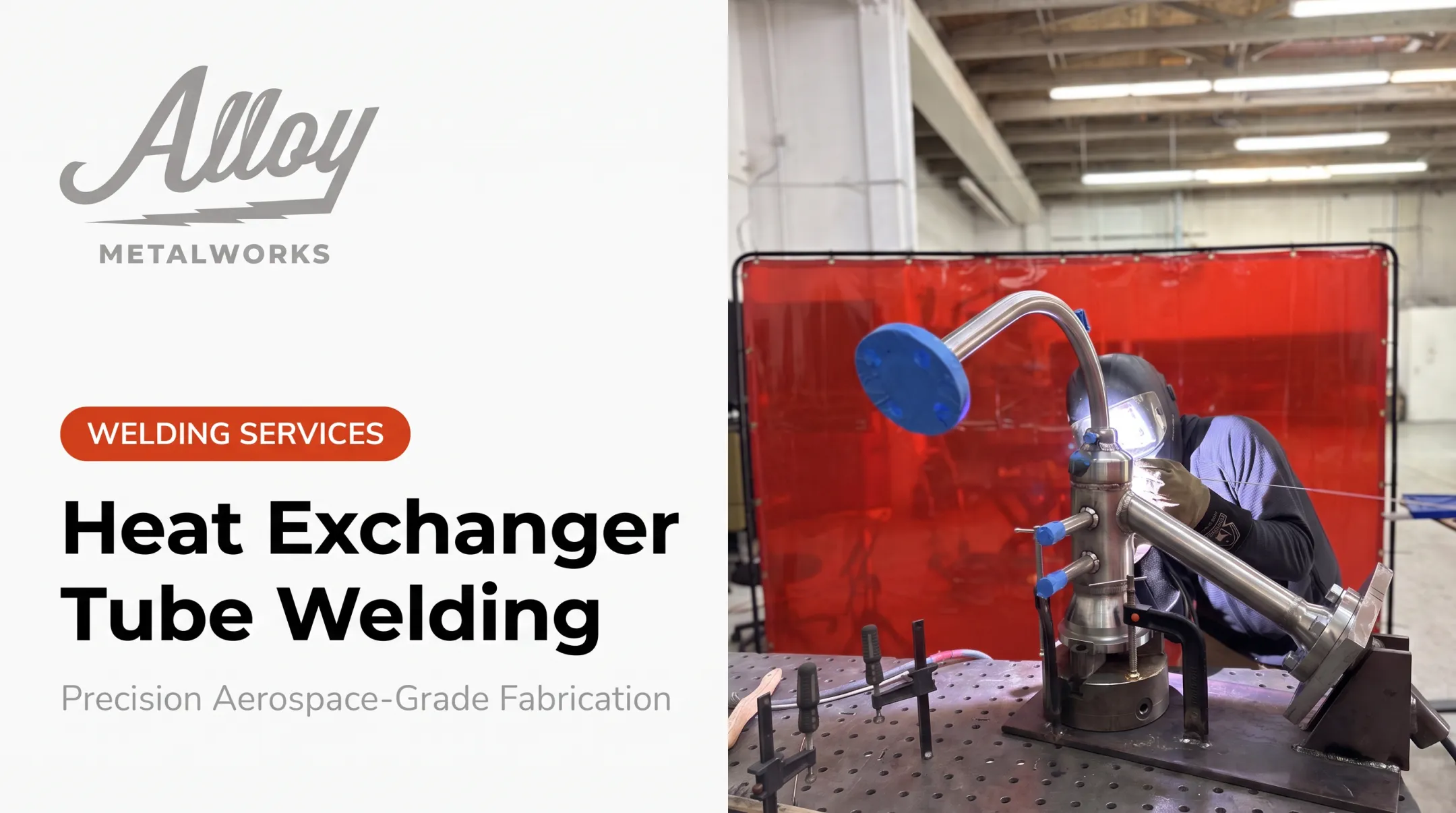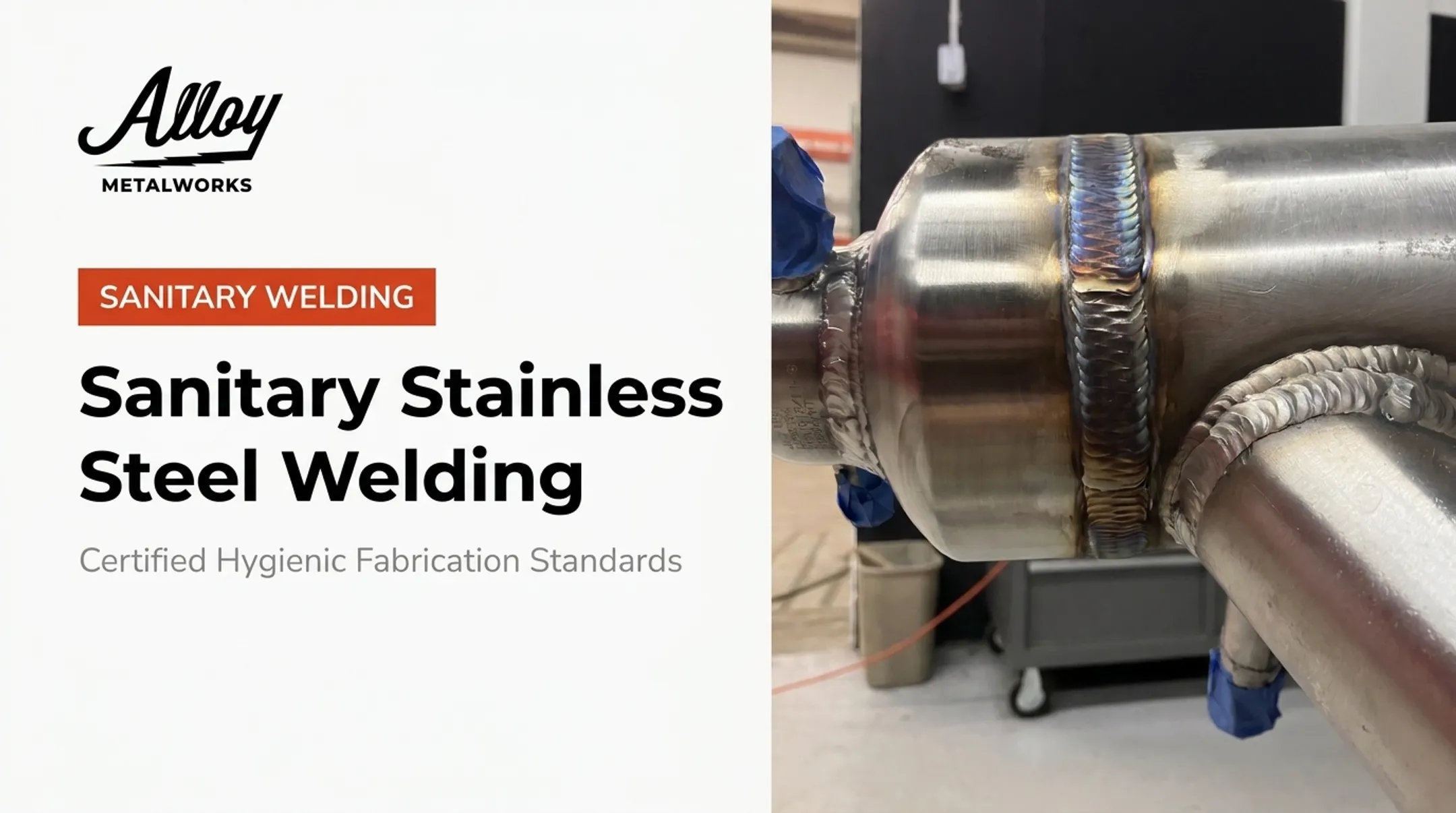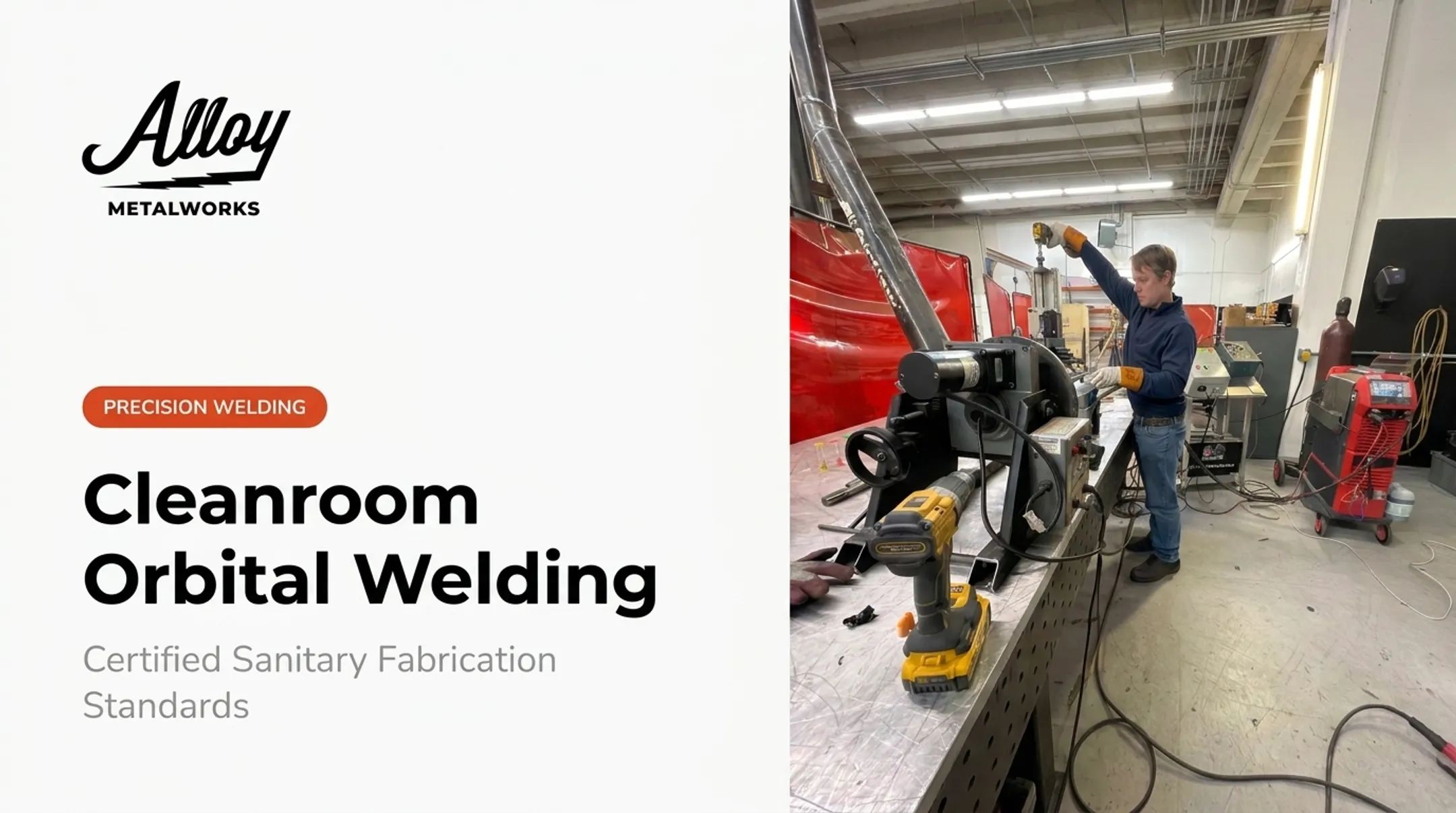

That's why orbital tube welding, an automated GTAW process where the electrode rotates around a stationary tube joint, has become the standard for critical stainless steel systems. It removes the variability that comes from hand-holding a torch for hours at a time.
This article covers how the process works, why stainless steel is so well suited to it, the parameters that determine weld quality, where it's used, and where its limits are.
Key Takeaways
- Orbital GTAW automates electrode rotation around stainless tube joints, cutting the variability of manual TIG welding
- 304L and 316L stainless steel dominate orbital applications due to weldability and corrosion resistance
- Purge gas purity, pulse settings, and joint fit-up are the parameters that separate a good weld from a rejected one
- Equipment costs and joint-specific tooling mean orbital welding pays off most on repetitive, high-stakes work
- Certifications like ASME Section IX and AWS D18.1 signal a fabricator's ability to produce inspection-ready welds
What Is Orbital Tube Welding?
Orbital welding is automated Gas Tungsten Arc Welding (GTAW, also called TIG) where the tube stays put and the electrode travels 360 degrees around the joint. Most stainless tube work is done autogenously, meaning no filler metal, relying on the base material alone to fuse the joint.
Three core components make this work:
- A programmable power supply that stores and recalls weld schedules
- An enclosed weld head that clamps around the tube and rotates the arc
- A shielding gas system that purges oxygen from inside and outside the joint
A microprocessor controls current, timing, and rotation speed, which eliminates the arm fatigue and inconsistent travel speed that creep into manual welding over an eight-hour shift.

Where the Process Came From
Orbital welding isn't new. Roderick Rohrberg developed it in 1960 at North American Aviation to fix fuel and hydraulic leaks on the X-15 rocket plane. The technology later moved into semiconductor cleanrooms and pharmaceutical piping, where leak-free, contamination-free joints matter just as much as they did on an experimental aircraft.
Two Joint Types, One Reason for Tubing
Orbital welding handles two main joint configurations: tube-to-tube (or pipe-to-pipe) and tube-to-tubesheet, common in heat exchangers. Tubing, rather than pipe, is preferred because its outside diameter and wall thickness stay consistent along its length. That consistency is what lets a stored weld program produce the same result, joint after joint.
Why Stainless Steel Is Ideal for Orbital Welding
Not all metals suit automated GTAW equally well. Stainless steel, particularly the 304L and 316L grades, has become the default because it welds predictably and resists corrosion once the joint is complete.
Why 304L and 316L specifically:
- Both are widely fabricated austenitic grades with strong, well-documented weldability
- Matching filler metals are readily available when filler is required
- The "L" designation caps carbon at 0.03% or below, which prevents sensitization (carbide precipitation at grain boundaries) during and after welding
304 vs. 316: Which One Actually Matters
The practical difference comes down to one element: molybdenum. According to the Nickel Institute, 316L is generally more corrosion-resistant than 304L in most environments, and its molybdenum content specifically improves resistance to pitting from chlorides.
For sanitary process lines, chemical processing, or anything near saltwater or cleaning chemicals, that difference is worth the added cost.
304L still holds up fine for less demanding, cost-sensitive applications where chloride exposure isn't a concern.
The Purge Environment Protects the Chromium Layer
Stainless steel's corrosion resistance comes from a thin chromium oxide layer on its surface. Open-air welding heat can burn through that layer, creating a discolored, oxidized condition welders call "sugaring." Orbital welding's enclosed head and inert gas purge prevent oxygen from reaching the molten weld pool, which keeps that protective layer intact.

In regulated sanitary and process work, that oxidation control is a compliance requirement—not a preference. Alloy Metalworks holds AWS D18.1 sanitary welding and ASME Section IX certifications covering code-compliant stainless welding where purge integrity has to hold up under inspection.
Key Process Parameters That Determine Weld Quality
Orbital weld quality depends on several parameters working together, each one documented and repeatable.
Purge Gas Purity and Flow
Both the inside (ID) and outside (OD) of the tube need shielding during the weld. According to Swagelok's orbital welding guidance, standard argon runs 99.95% purity, while ultra-high-purity applications call for 99.999% or higher.
Prepurging the tube with roughly 10 internal volume changes before striking an arc clears residual oxygen and moisture that would otherwise contaminate the weld.
Travel Speed and Pulse Settings
Pulsed GTAW alternates between a low background current and a higher peak current. The pulse cycle controls heat input and bead profile while helping float out inclusions. Non-pulsed welds risk excess heat buildup, especially on thin-wall tubing common in aerospace and semiconductor systems.
Arc Gap and Tungsten Selection
A consistent, narrow arc gap keeps penetration uniform around the full 360-degree rotation. Ceriated or lanthanated tungsten electrodes are the standard choice here, offering stable arc starts without the handling concerns tied to thoriated tungsten.
Joint Fit-Up and Alignment
Misalignment is the leading cause of rejected field welds. Tolerances should stay under 10% of wall thickness. A tube that's slightly out of round or poorly clamped will produce an inconsistent bead no matter how well the machine is programmed.

Weldability Testing and Documentation
Before production starts, a qualified shop runs test coupons on the same material lot and records the results. This weld library becomes the traceable proof that a given procedure will produce inspection-ready welds, not just a guess that it should.
Industries and Applications That Rely on Stainless Steel Orbital Welding
Orbital tube welding shows up wherever leak integrity and cleanliness aren't negotiable:
- Semiconductor and high-purity gas delivery — Ultra-low particulate, leak-free tubing carries process gases through cleanroom environments
- Food, beverage, and pharmaceutical processing — Sanitary, crevice-free welds meet 3-A and ASME BPE standards, where any weld defect can harbor bacteria
- Aerospace, hydrogen energy, and clean energy systems — Flight-critical lines and high-pressure hydrogen systems demand fatigue resistance and consistent penetration
This last category is where Alloy Metalworks spends most of its time. The Colorado-based shop has fabricated stainless and Inconel piping and fittings for Utility Global's decarbonization systems.
It also built an Alloy 800HT thermochemical reactor component for the National Renewable Energy Laboratory rated above 700°C—both jobs delivered with the documented, code-compliant orbital welds regulated energy and research clients require.

Limitations and Considerations of Orbital Welding
Orbital welding isn't the right call for every job. Factor in these constraints before you commit:
- Orbital equipment can cost several times a standard manual TIG setup, according to TWI's orbital welding overview. That spend pays off on high-volume, repetitive joints, not one-off work.
- Weld heads are size-specific: a half-inch head will not fit a two-inch tube. Shops need multiple heads across diameters, and not every joint geometry or field condition suits an enclosed rotating head.
- Automation still needs skilled operators to set parameters, run coupon tests, and troubleshoot when a weld looks wrong.
At Alloy Metalworks, parameters are dialed in manually first, then transferred into the automated system so human judgment stays in the loop before the machine handles the repetitive work.
Choosing the Right Partner for Stainless Steel Orbital Tube Welding
Certifications are evidence that a shop has a documented process behind every weld.
What to look for:
- ASME Section IX — procedure and welder qualification for pressure-retaining components
- AWS D18.1 — the specification governing sanitary welding for stainless tube and pipe systems
- ISO 9001 — a quality management system that controls material traceability, calibration, and nonconformance handling
Certifications alone don't guarantee a reliable weld, though. Ask a potential partner to show their weld procedure development process, their purge and inspection protocols, and their turnaround time on prototype or small-batch runs.
Alloy Metalworks was built around this kind of engineering-aware collaboration. The team works from ASME Section IX and AWS D18.1 credentials, but the stronger proof is project history.
That includes welding stainless and Inconel piping for Utility Global's hydrogen systems, and building reactor components for NREL that had to survive extreme thermal conditions. Certification plus applied experience is what earns trust on flight-critical and high-purity systems.
Frequently Asked Questions
What type of welding is best for stainless steel?
GTAW (TIG), especially in automated orbital form, is the best process for stainless steel tubing. It gives precise heat control and clean, contamination-free welds with minimal spatter.
Is it better to weld 304 or 316 stainless steel?
316 is preferred for corrosive or sanitary environments because its molybdenum content resists chloride pitting. 304 works fine for less demanding, cost-sensitive applications.
Can stainless steel tubing be welded?
Yes. Stainless steel tubing, especially 304L and 316L in annealed condition, is one of the most common materials welded using the orbital process.
What are the limitations of orbital welding?
Main constraints are higher equipment cost, separate weld heads for each tube diameter, and the ongoing need for skilled setup and quality oversight.
What is orbital stainless steel welding?
It is an automated GTAW process where the electrode rotates around a stationary stainless steel tube or pipe joint, producing consistent, repeatable, contamination-free welds.