
Choosing the right welding process (and the right provider) matters more than most people realize. A weld that looks fine on the surface can fail a code inspection, and for safety-critical parts, that's not a minor problem. This article breaks down how TIG welding works, which metals it handles best, what equipment and gas choices matter, what it costs, and when you need a certified professional instead of a hobbyist setup.
Key Takeaways
- TIG welding (GTAW) delivers precise, clean, low-spatter welds using a non-consumable tungsten electrode and inert shielding gas
- Works on nearly all metals—including titanium, Inconel, and Hastelloy—but runs slower than MIG
- Certified TIG welding is required for aerospace, energy, and sanitary work that needs code compliance and full traceability
What Is TIG Welding and How Does It Work?
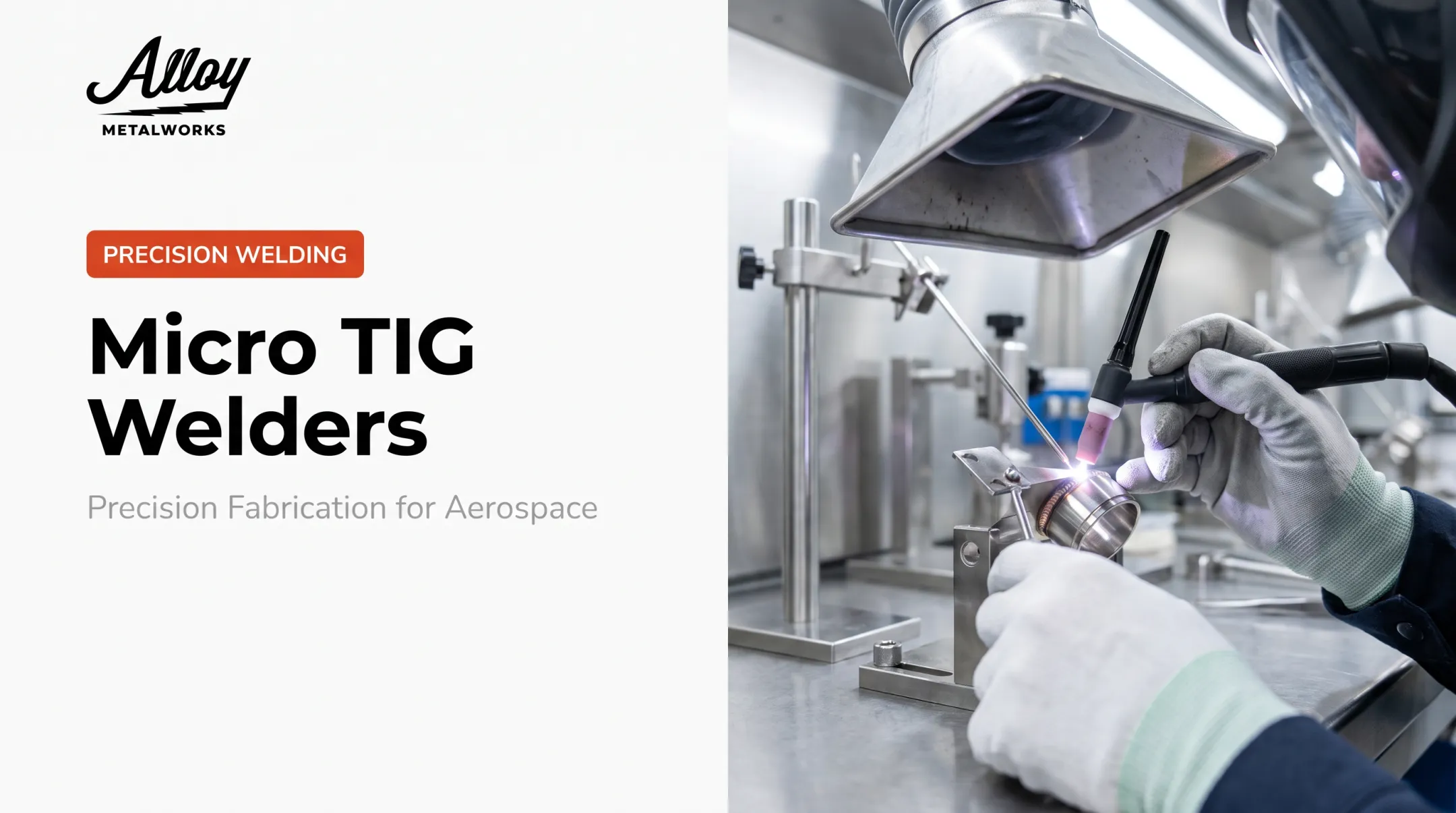
TIG, or Gas Tungsten Arc Welding, joins metal using an arc struck between the workpiece and a non-consumable tungsten electrode. It can run autogenous (no filler) or with a separate filler rod, and inert shielding gas protects the tungsten and weld pool from contamination. The result: no flux slag, minimal spatter, and tight control over heat and filler — which is why TIG dominates thin-material and code-critical work.
A typical weld sequence looks like this:
- Strike the arc between the tungsten tip and the base metal
- Form the weld pool by holding a stable arc length
- Add filler rod (if used) into the leading edge of the pool
- Control travel speed to manage penetration and bead shape
- Modulate heat in real time with a foot pedal or thumb control
The foot pedal is what separates TIG from most other processes. It lets the welder taper amperage up and down mid-weld, critical for controlling heat on thin sections or tapering out a crater at the end of a weld. That real-time control is why Alloy Metalworks relies on precise arc management for aerospace welds, where a single overheated pass can compromise titanium metallurgy.
Shielding gas shapes the same control. Argon is the standard choice for stable arc characteristics; helium is blended in when thicker sections need deeper penetration and more heat into the joint.

Tungsten Electrode Types
Tungsten selection affects arc stability and starting characteristics:
- Pure tungsten – general-purpose, works well on AC for aluminum
- Thoriated tungsten – strong DC performance on steel and stainless
- Ceriated tungsten – good low-amperage starts, versatile across AC/DC
- Lanthanated tungsten – strong AC/DC arc starts across medium-to-high amperage
Constant Current Power Source
TIG machines use a constant-current (CC) power source, not constant-voltage (CV). Because TIG is manual and the welder controls arc length by hand, CC holds amperage steady even when voltage shifts with small torch movements.
That is the opposite of MIG (GMAW), which uses CV output suited to semi-automatic wire feed. When specifying equipment, do not stop at a "TIG" label: confirm CC output, AC/DC capability, amperage range, and duty cycle.

TIG Welding vs. Other Welding Methods
TIG vs. MIG: Which Is Better?
Neither wins outright. It depends on the job.
- TIG delivers precision, a clean finish, and broad metal coverage, including thin and reactive alloys
- MIG is faster, easier to learn, and better suited to thicker material and high-volume production
If you need a code-compliant aerospace bracket in titanium, TIG wins every time. If you're running high-volume mild steel fabrication, MIG gets you there faster.
Those same job constraints shape the Stick comparison too.
TIG vs. Stick
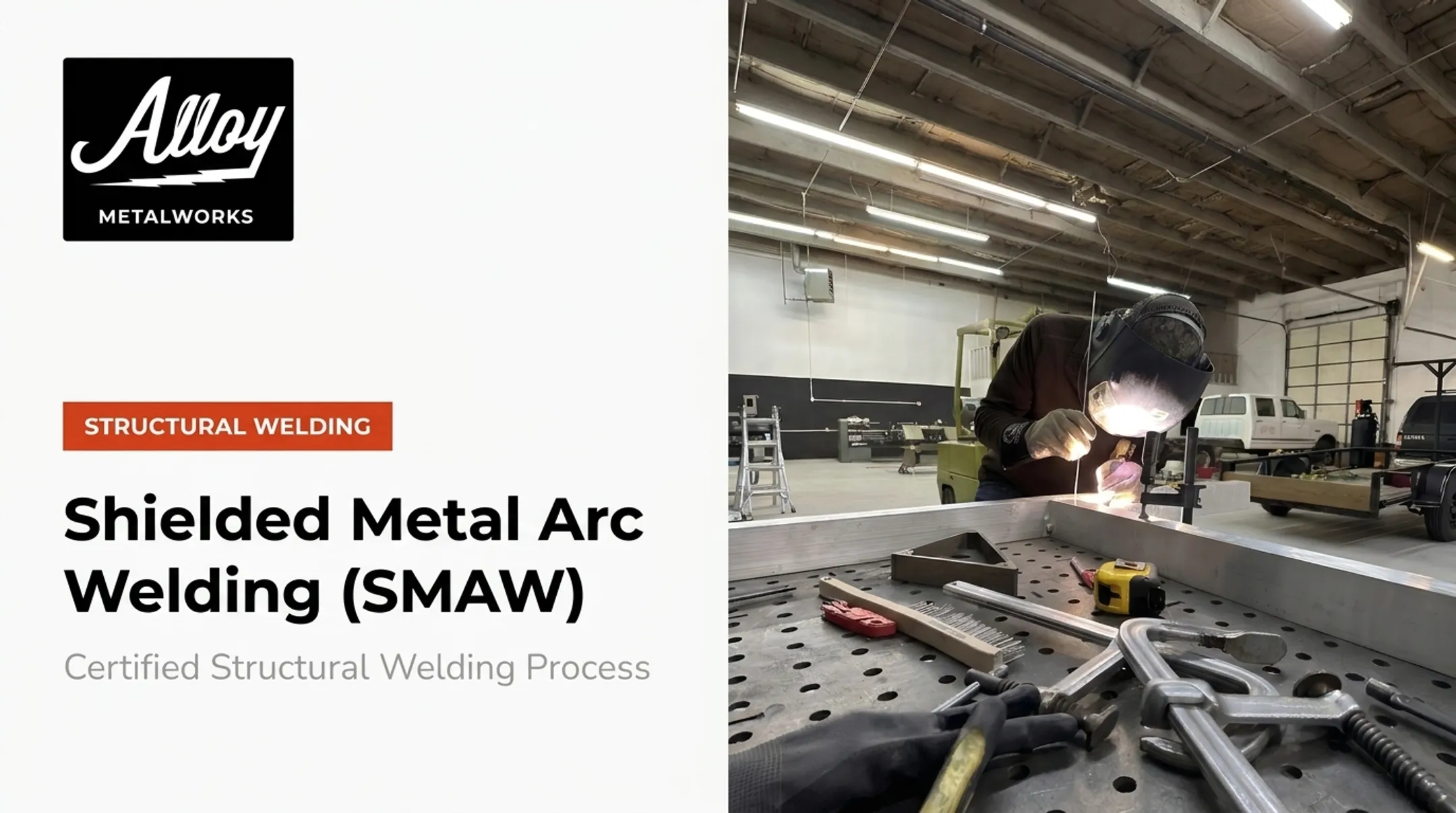
Stick welding (SMAW) is the rugged outdoor option. It holds up in conditions TIG usually won't.
- Tolerates wind, rust, and less-than-perfect fit-up
- Handles thicker structural material more readily
- Can't match TIG's clean, spatter-free bead
- Rarely the right call for thin-gauge or cosmetic work
Welding vs. TIG Welding: Clearing Up the Confusion
"Welding" is the umbrella term covering Stick, MIG, flux-cored, and TIG. TIG is one process in that family—chosen when precision and cleanliness outrank raw speed.

What Metals Can (and Can't) Be TIG Welded?
TIG's biggest strength is versatility. It handles:
- Carbon and stainless steels (304, 316, 347, 17-4, 15-5, Duplex, Super Duplex)
- Aluminum, across the 1000–7000 series
- Titanium, including Grades 2 and 7
- Nickel-based superalloys: Inconel 600, 601, 617, 625, and 718
- Hastelloy and Incoloy 800HT
- Copper and brass
- Certain dissimilar-metal combinations
What's difficult or off-limits? Cast iron is possible but tricky. Its high carbon content (2–4%) makes it brittle and crack-prone during thermal cycling, so TIG is used mainly for crack repair rather than structural fabrication, per TWI's welding guidance.
Dissimilar-metal joints aren't impossible either, but they need careful filler selection and procedure qualification to manage dilution and thermal expansion mismatches.
The Hardest Metals to TIG Weld
Titanium and nickel superalloys sit at the top of the difficulty curve because contamination and cracking risks leave little room for error.
Titanium reacts with oxygen, nitrogen, and hydrogen above 500°C. Contamination embrittles the weld, and moisture causes porosity. That's why TIG welding titanium properly requires inert-gas shielding on both sides of the joint, sometimes using a trailing shield or a full purge chamber.
Inconel and nickel alloys are prone to hot cracking in the weld metal or heat-affected zone. On Inconel 617, the margin is tight: too much heat causes distortion and metallurgical compromise, too little sacrifices fusion. One approach uses an ultra-high-frequency pulse to keep a stiff, focused arc at lower heat input, improving puddle control and bead consistency.
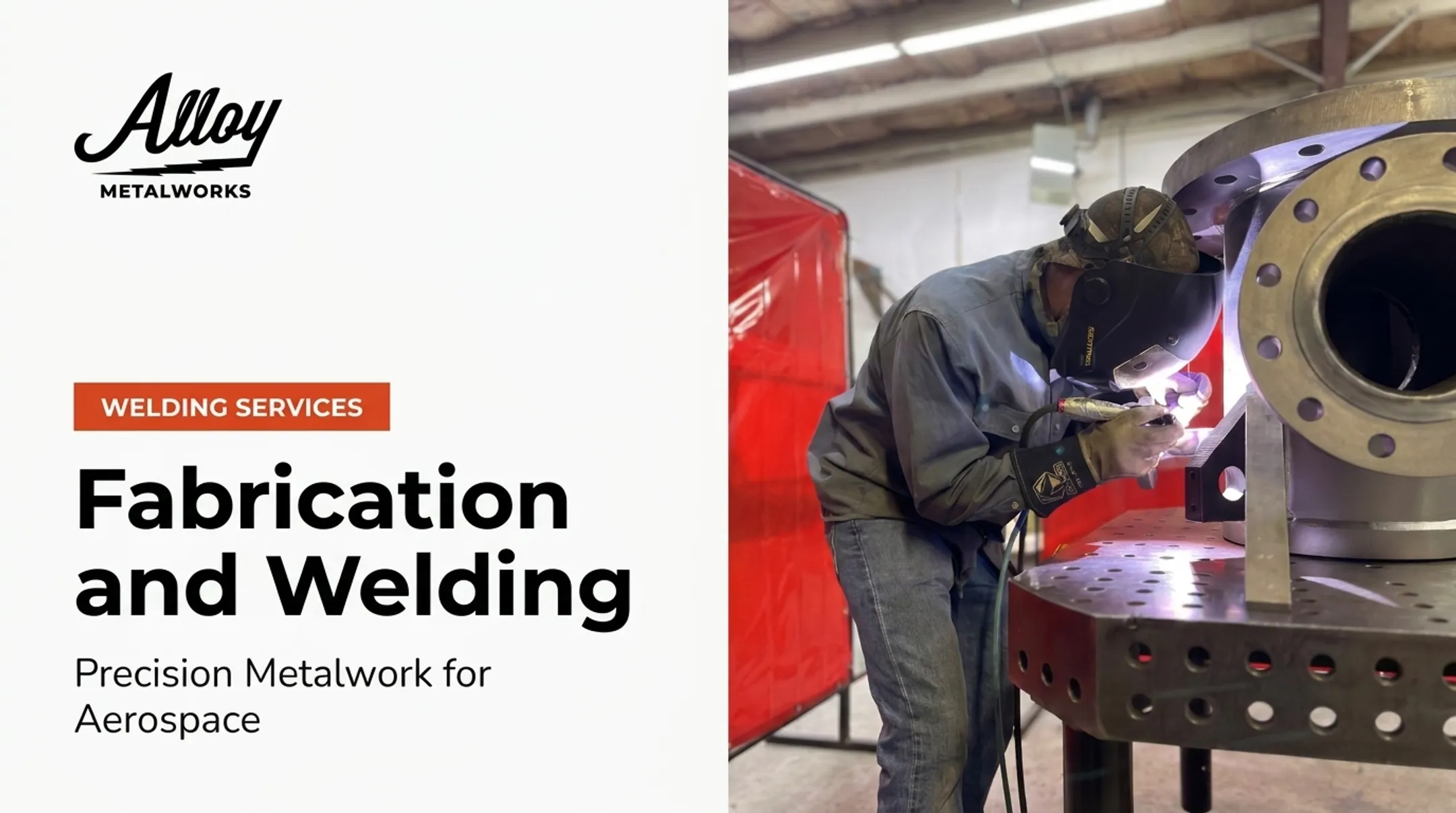
Those same constraints are why Alloy Metalworks welds titanium grades in custom inert-gas chambers and purge setups, and holds ASME Section IX and AWS D17.1 Class A certification for flight-critical nickel alloy, titanium, and stainless assemblies.

Shielding Gas and Equipment Essentials
Do you need 100% argon to TIG weld? Not always, but it's the right default.
- Pure argon handles steel, stainless, and aluminum with stable arc characteristics
- Argon-helium blends add heat and penetration for thicker sections or faster travel speeds
Too much gas flow creates turbulence that pulls air into the shield and contaminates the weld. Set flow high enough for coverage, not so high that the envelope breaks down.
Essential equipment includes:
- TIG torch (air-cooled for work under 250 amps; water-cooled for higher amperage and duty cycle)
- Filler rods matched by AWS classification to the base metal
- Shielding gas regulator and flowmeter
- Welding helmet with the correct filter shade (minimum shade 8 below 150A; shade 10 from 150-500A per OSHA)
- Heavy gloves and flame-resistant clothing
Those same setup controls decide outcomes on sensitive metals. When a titanium weld fails, check torch consumables, gas flow rate and purity, tungsten stick-out, torch angle, and travel speed first. Those fundamentals usually correct the defect before new equipment will.

Cost of TIG Welding and When to Hire a Professional
There's no single national hourly rate for TIG welding. Rates vary widely by material, complexity, region, and certification requirements.
The U.S. Bureau of Labor Statistics reports a $53,750 median annual wage for welders, cutters, solderers, and brazers broadly (May 2025). That figure isn't TIG-specific and shouldn't be used to estimate a quote.
A realistic TIG quote should account for:
- Material and filler cost
- Setup time, including purge or chamber prep for reactive alloys
- Welder qualification and procedure documentation
- Inspection requirements (visual, dye penetrant, radiographic)
- Rework risk on difficult alloys
DIY vs. Certified Welding
Hobbyist TIG welding is fine for a garage project, a repair on your truck, or a custom bracket that never touches a code inspection. It's not fine when:
- The part is going into an aircraft, pressure vessel, or sanitary process line
- A customer or regulator requires ASME Section IX or AWS D17.1 documentation
- Failure could mean a safety incident, not just a return trip to the shop
What a Welding Certification Actually Covers
Many certifications cover a single test at one point in time, on a narrow range of variables. Shops that consistently deliver compliant work back that up with in-house non-destructive testing, ongoing welder qualification, material traceability, and documented procedures—not just a certificate on the wall.
That documentation gap is why regulated buyers look past a wall certificate. Alloy Metalworks, based in Colorado, provides ISO 9001-controlled, inspection-ready TIG welding for aerospace, energy, and sanitary applications, with ASME Section IX and AWS D17.1 Class A certified welders on staff.
On projects such as aluminum TIG welds for Fortius Metals, the team delivered clean welds that passed radiographic testing and macroscopic evaluation without sacrificing traceability. For anyone weighing a hobbyist shop against a certified partner, that documentation trail is usually the deciding factor.

Frequently Asked Questions
How much do TIG welders charge per hour?
Rates vary by experience, material, and code requirements—there's no single national rate. Complex alloys like titanium or Inconel usually cost more because of setup, purge, and inspection demands.
Which is better, MIG or TIG welding?
TIG suits precision work, thin materials, and exotic alloys where finish quality matters. MIG is faster and better suited to thicker materials and high-volume production.
What is the difference between welding and TIG welding?
"Welding" covers the whole family of joining processes, including Stick, MIG, and Flux-Cored. TIG is one specific process within that family, known for precision and control.
What kind of metals can you TIG weld?
TIG handles carbon and stainless steel, aluminum, titanium, copper, brass, and nickel-based superalloys like Inconel and Hastelloy.
What is the hardest metal to TIG weld?
Titanium and nickel-based exotic alloys like Inconel are the most demanding. They require tight heat control, contamination-free shielding, and often a purge chamber.
Do you need 100% argon to TIG weld?
Pure argon is the standard shielding gas for most jobs. Argon-helium blends are used when you need more penetration or heat on thicker material.