
Precision industries, aerospace, energy, pharma, are shifting piping work into controlled shop environments instead. The reason is simple: field conditions create variables shops can eliminate. Weather delays, site congestion, inconsistent inspection access, and welder turnover all disappear when spools are built indoors, on a bench, under a quality system.
The pain points driving this shift are specific:
- Schedule delays from weather and site access conflicts
- Inconsistent weld quality across multiple field crews
- Missing or incomplete documentation for regulated inspections
This article covers what pipe prefabrication actually is, the types of spools and piping classes involved, the step-by-step process, the codes that govern it, and which industries depend on it most.
Key Takeaways
- Shop prefabrication moves cutting, fitting, and welding off-site, reducing weather, access, and quality variables
- Pipe spools built to isometric drawings are the core inspectable, shippable unit of fabrication
- Process, sanitary, and pre-insulated piping each require different certifications and weld procedures
- Documented material and weld traceability lowers inspection risk on regulated projects
What Is Pipe Prefabrication?
Pipe prefabrication is the manufacture of piping sections, called spools, in a workshop rather than at the final installation site. Fabricators work from isometric drawings and P&IDs, not rough field measurements.
The typical workflow looks like this:
- Design review — engineers confirm dimensions, materials, and weld locations against the isometric drawing
- Material procurement — pipe and fittings are sourced with mill test reports for traceability
- Spool fabrication — cutting, fitting, and welding happen on a shop bench
- Inspection — visual and nondestructive testing verify weld integrity
- Marking and delivery — spools are tagged to match drawing numbers and shipped in sequence

Why Shop Fabrication Beats Stick-Built Welding
Field welding, or "stick-built" construction, exposes every weld to wind, dust, temperature swings, and awkward positioning. A shop environment removes those variables entirely. Inspectors can access welds without scaffolding. Fit-up happens on a flat table instead of overhead.
Most spools aren't mass-produced. Each one is typically a one-of-a-kind build tied to a specific line number on a specific drawing. That means the fabricator needs engineering awareness, not just welding skill, to catch errors before metal gets cut.
Alloy Metalworks applies ASME Section IX and ISO 9001-controlled processes across its fabrication work, which means spools arrive inspection-ready with documentation attached, not chased down after the fact.
Types of Pipe Fabrication and Pipe Spools
Fabrication generally falls into three categories:
- Shop fabrication — spools built entirely off-site in a controlled facility
- Field fabrication — welding performed at the installation site when spools can't be transported or won't fit
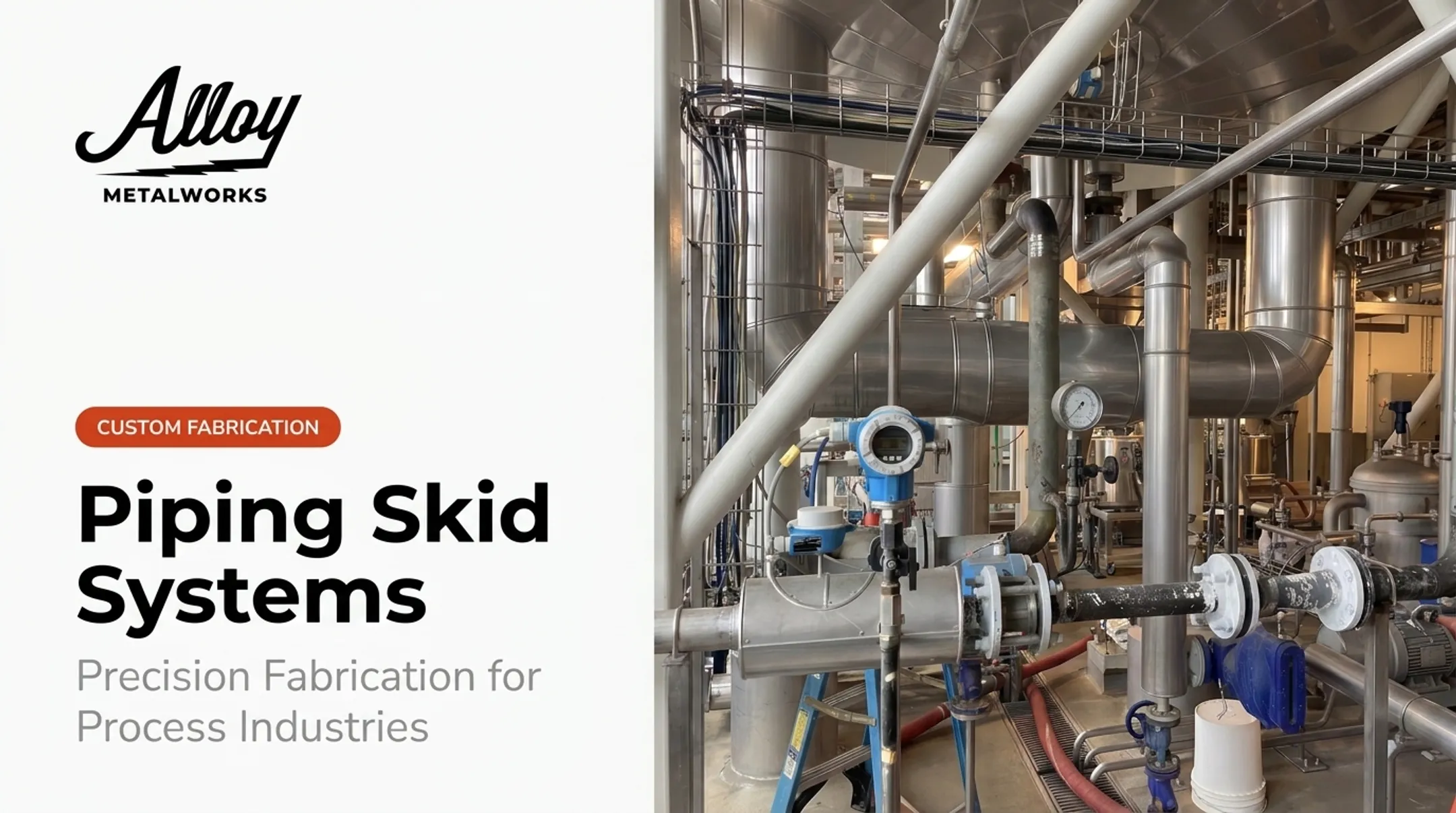
- Modular/skid-based fabrication — entire piping systems pre-assembled on a skid frame, tested, then shipped as a unit
Spool complexity depends heavily on material:
- Carbon steel spools often follow standard fit-up procedures
- Stainless steel sanitary spools require crevice-free welds
- Exotic alloys such as Inconel, Hastelloy, and titanium need specialized purge setups and qualified procedures, since these metals oxidize or crack under conditions carbon steel handles without issue

Marking matters more than people expect. Every spool gets a number that ties back to its isometric drawing, so field crews install the correct piece without re-measuring or guessing. Skip this step and a $50,000 spool can end up as scrap because nobody could confirm which line it belonged to.
Understanding Piping Classes and Types
"How many types of piping are there?" doesn't have one clean answer, but the major categories are:
- Process piping — carries chemicals, gases, or process fluids; governed by ASME B31.3
- Structural/utility piping — supports plant infrastructure, not process fluid transport
- Sanitary piping — used in food, beverage, and pharmaceutical production
- Pre-insulated piping — built for thermal transport applications
What Process Piping Covers
ASME B31.3 governs piping in refineries, chemical plants, pharmaceutical facilities, hydrogen systems, and cryogenic plants. The code covers material selection, design, fabrication, examination, and testing.
Pipe Classes and Pressure Ratings
Pipe "class" typically refers to a pressure and service rating that dictates wall thickness, material grade, and testing requirements.
ASME B16.5 sets flange pressure classes at 150, 300, 400, 600, 900, 1500, and 2500. Each class is rated for different pressure-temperature combinations.
A "Class 3" designation on a project spec usually reflects a project-specific pressure/service tier rather than a single universal code definition. Always check the governing project spec.
Other Piping Categories Worth Distinguishing
Beyond process service and pressure class, two other categories come up often in project scopes.
Pre-insulated pipe is built for above-ground thermal transport, including high-temperature, cold-temperature, and dual-temperature service in buildings, tunnels, and trenches.
Precast concrete pipe sits outside welded metal prefabrication entirely. It serves water and wastewater infrastructure and is a separate manufacturing discipline from metal spools.
The Pipe Prefabrication Process Step-by-Step
Here's the sequence that turns a drawing into a delivered spool:
- Isometric drawing review — confirms dimensions, weld locations, and material specs
- Material sourcing — mill test reports verify chemistry and mechanical properties match spec
- Cutting and beveling — pipe is cut to length and beveled for the weld joint
- Fit-up — components are aligned and tacked before final welding
- Welding — method depends on material and wall thickness, per a qualified Welding Procedure Specification
- NDE inspection — visual, radiographic, or dye-penetrant testing checks weld integrity
- Surface treatment and marking — spools get coated or passivated, then tagged
- Sequenced delivery — spools ship in the order the field crew needs them

Welding method selection
Method choice isn't arbitrary. TIG suits thin-wall stainless and exotic alloys where control matters most. Heavier carbon steel sections often use SAW for productivity. Every choice traces back to a code-qualified WPS, not operator preference.
Documentation that travels with the spool
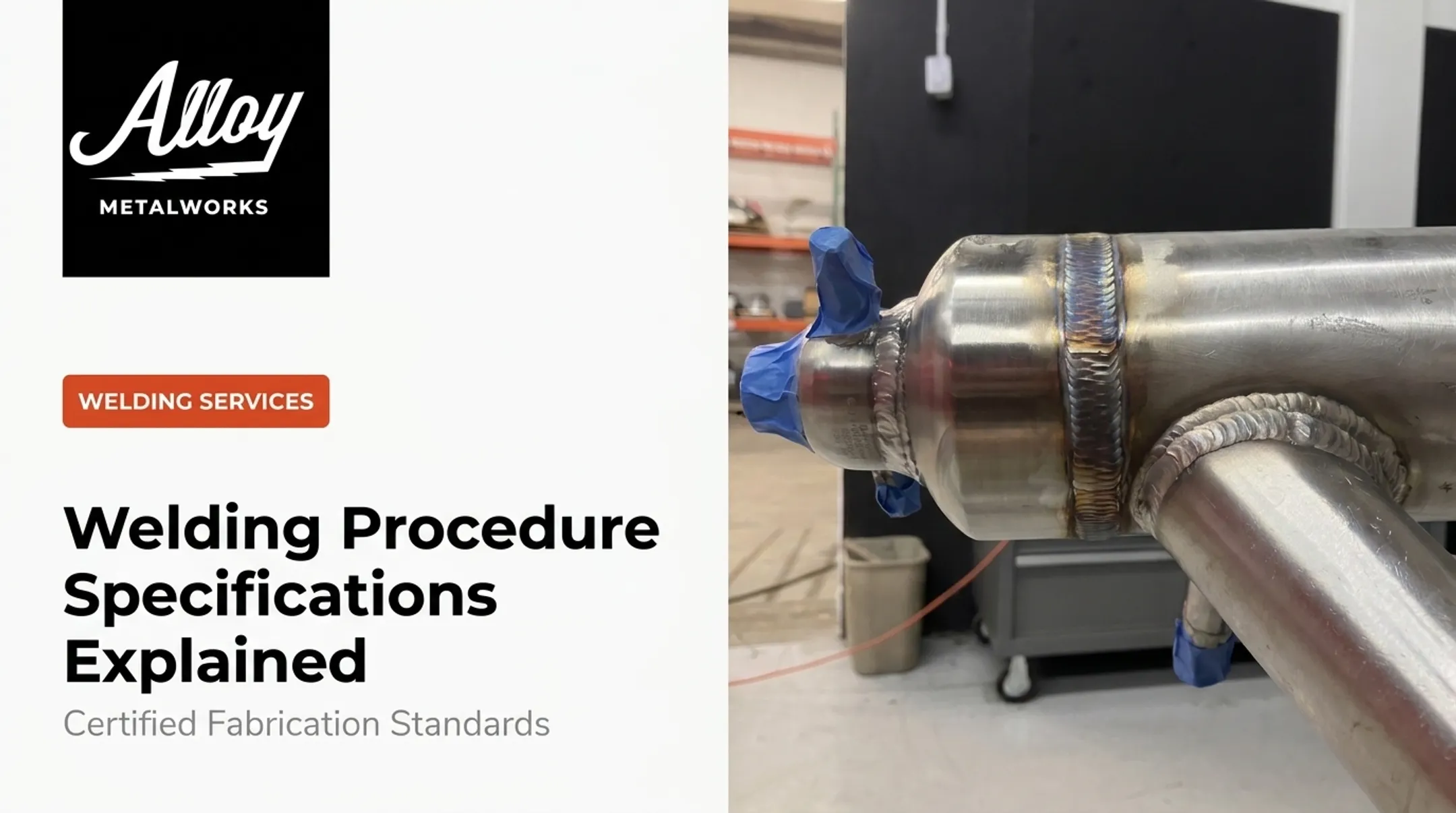
Documentation travels with the spool, not behind it. Weld maps, NDE reports, and material test reports should arrive with the physical piece so an owner's inspector can sign off without chasing paperwork. That discipline shows up when something goes wrong. On one rebuild, a previous contractor's piping welds failed inspection—and the contractor couldn't produce documentation for the welds, procedures, or welder qualifications. The rebuild required visual inspection and magnetic-particle testing to ASME B31.3. In-house borescope and dye-penetrant testing ran ahead of third-party inspection to avoid further delays. Alloy Metalworks builds this documentation discipline in from the start:
- Custom purge setups for titanium welding where oxidation control is critical
- AWS D18.1 coverage for sanitary welds
- Multi-code certification across D1.1, D1.2, and D1.6 for structural and specialty spool builds
Standards, Codes, and Certifications Governing Prefabricated Piping
| Code/Standard | Governs |
|---|---|
| ASME B31.3 | Process piping design, fabrication, testing |
| ASME B31.1 | Power piping systems |
| ASME Section IX | Welder and procedure qualification |
| ISO 9001 | Quality management systems |
| AWS D18.1 | Sanitary/hygienic stainless welding |
In aerospace, energy, and pharma/food processing, certification is how buyers confirm a fabricator can deliver inspection-ready work. A qualified shop maintains full traceability:
- Every weld links to a qualified welder
- Procedures are qualified and documented
- Material heat numbers stay on record
That record set lets third-party inspectors verify compliance without rebuilding the job history after the fact. A shop that can't produce a Material Test Report or Welder Performance Qualification record on request creates risk that shows up months later—during commissioning or audit, not during fabrication.
Industries and Applications Benefiting from Prefabricated Piping
Several sectors depend on prefabricated piping specifically because their tolerances leave no room for field-welding inconsistency:
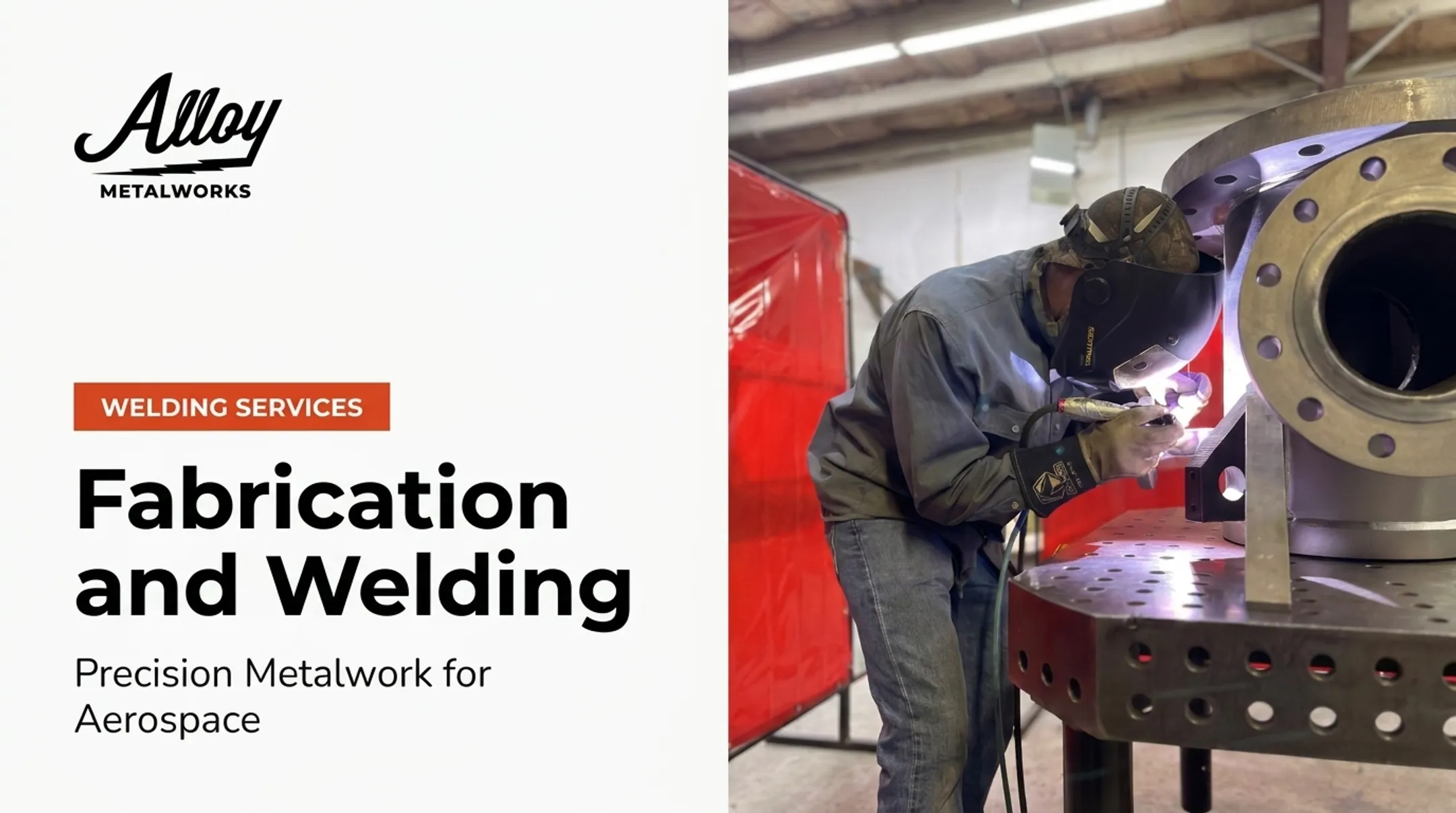
- Aerospace and space technology — flight-critical hardware welded to AWS D17.1, including Class A for the most demanding applications
- Hydrogen and clean energy — piping for fuel cells, energy storage, and hydrogen infrastructure
- Chemical and pharmaceutical processing — ASME B31.3-governed process piping
- Food and beverage — sanitary spools welded to AWS D18.1 and USDA 3-A standards
- Research and advanced manufacturing — experimental systems and prototype equipment

Startups and R&D teams benefit in a less obvious way: prefabrication supports rapid prototyping and small-batch runs without requiring a full production line. A research team building one experimental assembly doesn't need the same infrastructure as a refinery ordering hundreds of spools.
Many of these same applications also call for exotic alloys. Piping in Inconel, Hastelloy, and titanium for cryogenic, hydrogen, or advanced energy work needs welding expertise most general fabrication shops don't carry in-house. Utility Global, for example, worked with Alloy Metalworks on Inconel pipe, fittings, and custom piping assemblies where standard stainless-steel procedures wouldn't hold up.
Frequently Asked Questions
What are prefabricated construction systems?
Prefabricated construction systems build components—including piping, structural elements, and modular units—off-site under controlled conditions, then assemble them at the installation site. The same approach applies to piping spools and full building modules.
What are the different types of pipe fabrication?
The three main approaches are shop fabrication (built entirely off-site), field fabrication (welded at the installation site), and modular/skid fabrication (entire systems pre-assembled on a frame before shipment).
How many types of piping are there?
There is no single fixed number. Major categories include process piping, sanitary piping, structural/utility piping, pre-insulated piping, and specialty alloy piping for extreme service. Each carries different codes and testing requirements.
What is pre-insulated pipe?
Pre-insulated pipe ships with insulation already applied for thermal energy transport. It is common in above-ground, tunnel, or trench installations that need high-, cold-, or dual-temperature control.
What is process piping?
Process piping, governed by ASME B31.3, carries chemicals, gases, and process fluids in refineries, chemical plants, pharmaceutical facilities, and similar industrial settings. The code covers materials, fabrication, and testing requirements.
What is class 3 piping?
Pipe class refers to a pressure and service rating that determines wall thickness, material selection, and required testing. A specific "Class 3" designation depends on the project specification, so it should always be confirmed against the governing spec rather than assumed universal.