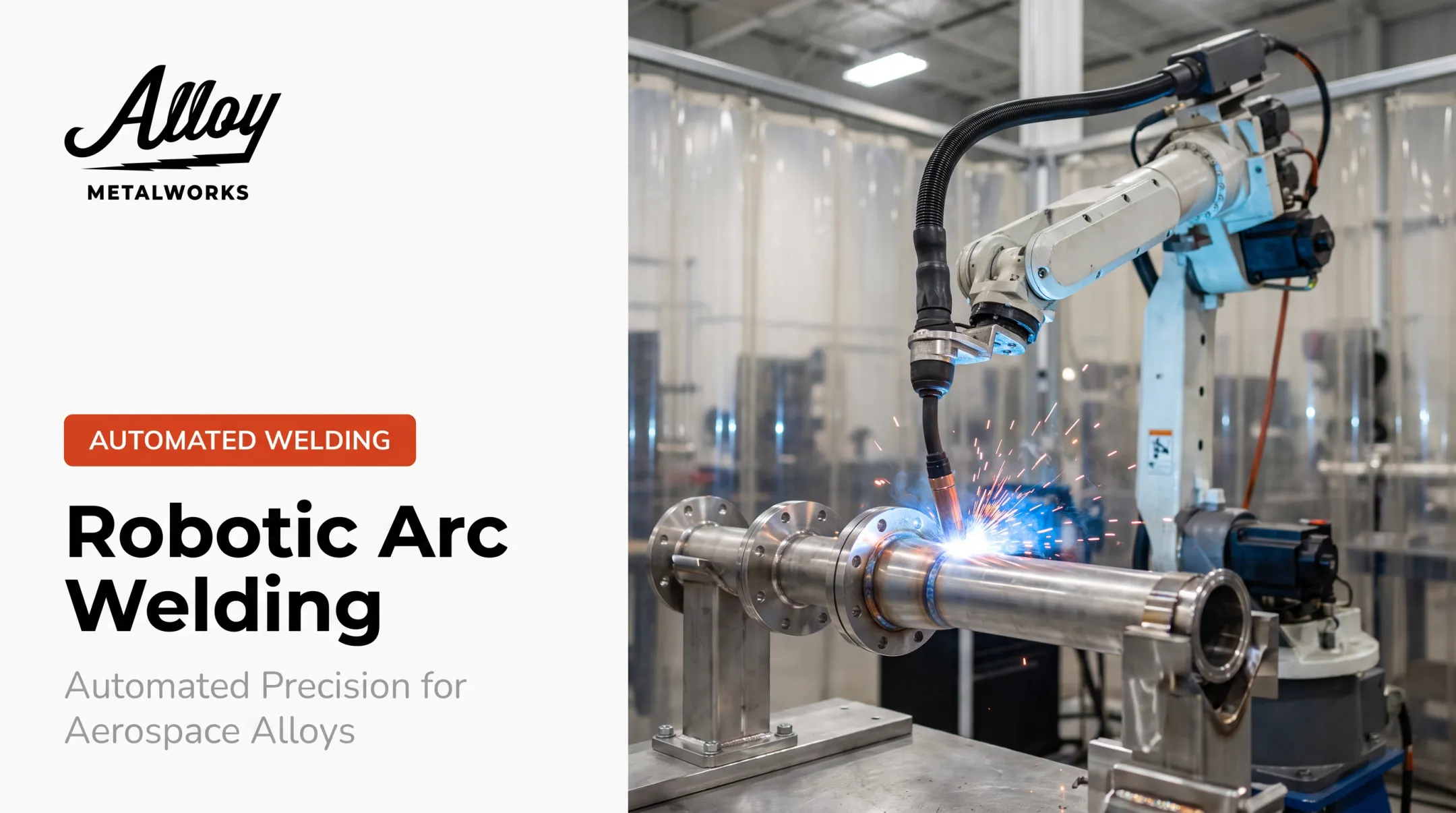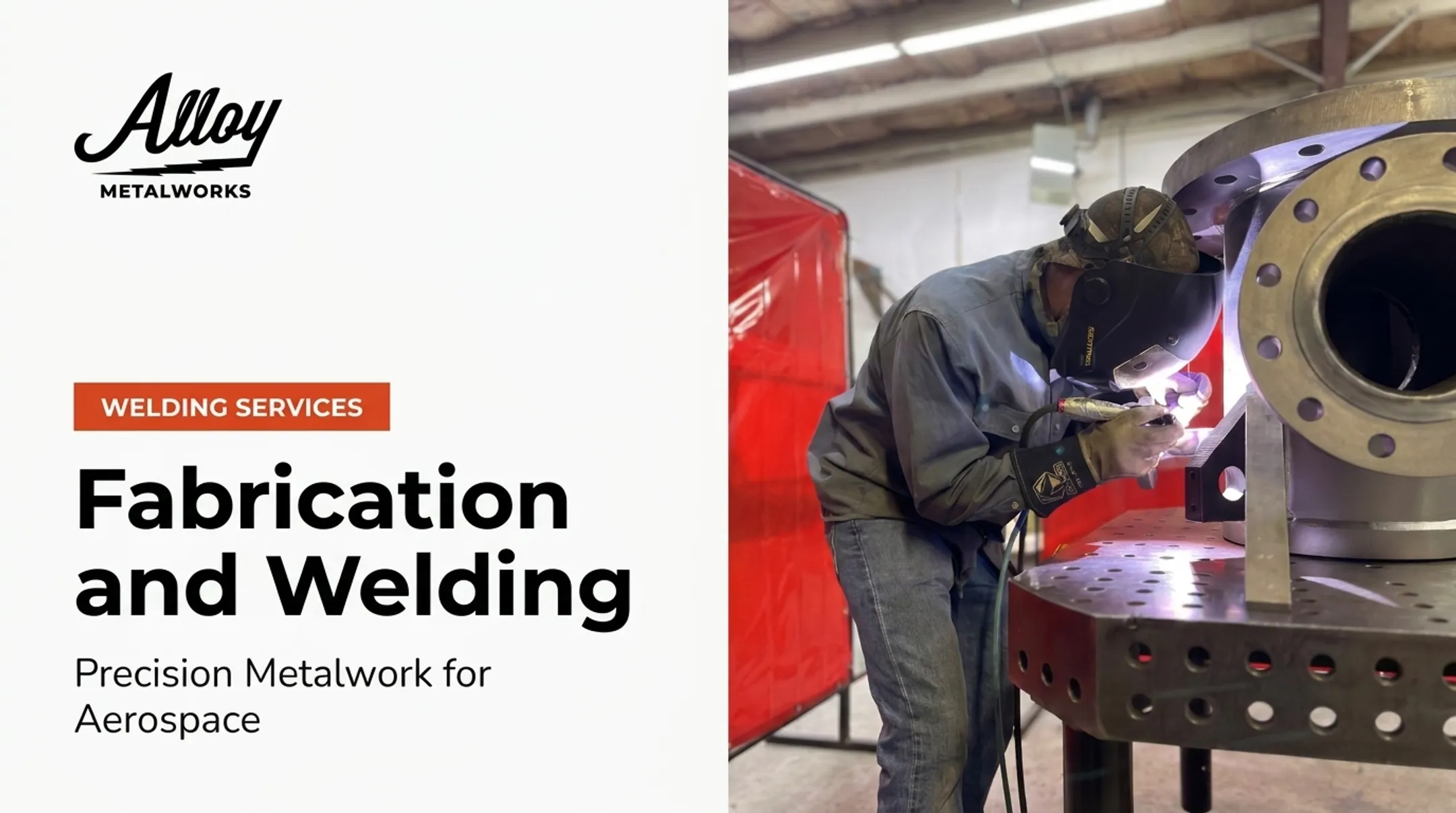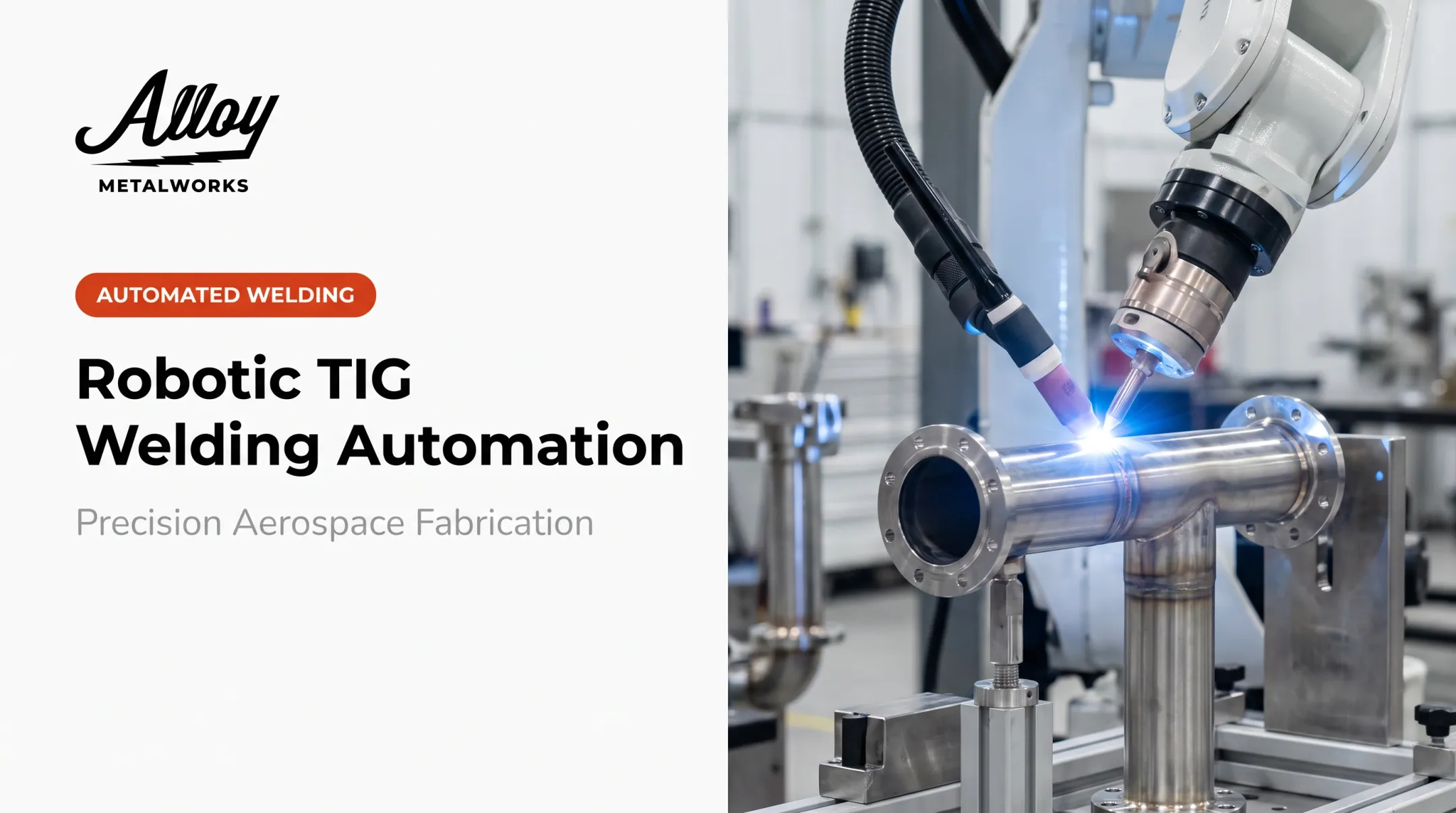

Cobot welding — collaborative robots that work alongside human welders rather than replacing them — has become one answer to that gap. A cobot handles the torch on repetitive joints. A person still handles setup, judgment calls, and anything that doesn't fit a script.
This guide breaks down what cobot welding actually is, what it costs, where it shines, and where certified manual welding remains the only responsible option.
Key Takeaways
- Automate repetitive welds with cobots; humans still handle setup, fixturing, and quality judgment
- Entry-level systems run $52,000-$70,000; full-capability packages reach $150,000+
- High-mix, low-volume runs are the sweet spot when part fit-up stays consistent
- Flight-critical, code-stamped, and exotic alloy welds still require certified manual welders
What Is Cobot Welding?
A collaborative robot, or cobot, is a force-limited robotic arm paired with a welding torch and power source. Instead of writing code, an operator teaches it by guiding the torch through a weld path or setting waypoints on a pendant.
ISO defines collaborative robotics as systems that share a workspace with humans. Safety comes from hand guiding, speed-and-separation monitoring, and power-and-force limiting—so the cell can run without a full cage (ISO, 2016).
Cobots on the market today handle several welding processes:
- MIG (GMAW): general steel fabrication with higher deposition rates
- TIG (GTAW): precision joints on thinner materials
- Laser welding: heat-sensitive or cosmetic parts
- Plasma cutting: prep work often paired with welding cells
Those options matter most when you stack cobots against traditional industrial robots. Industrial systems usually need dedicated programmers, safety fencing, and a fixed cell built around one job.
Cobots vs. Traditional Industrial Robots
| Factor | Cobots | Industrial Robots |
|---|---|---|
| Best fit | Low-to-medium volume, frequent changeovers | High volume, long runs |
| Programming | Teach-by-touch, hours to learn | Skilled programmer, days to weeks |
| Footprint | Compact, often cage-free | Larger cell, usually fenced |
| Speed/payload | Lower | Higher |

NIST research backs this up: cobots hit their sweet spot in high-mix, low-volume work where part variation would otherwise demand custom fixturing for every job (NIST). A fixed industrial robot still wins on the same 5,000-piece run for months. When prototypes, small batches, or weekly changeovers dominate, a cobot fits better.
Key Benefits of Cobot Welding
Arc-on time jumps dramatically. Manual welding typically sees an operator factor around 10-20%, meaning the torch is actually striking an arc for just 60 minutes or so of a 10-hour shift (AWS Welding Digest, 2024).
Cobot cells running dual fixtures can push that figure to 70% or more, according to Universal Robots. Less idle time between welds means more parts out the door.
Beyond speed, cobots deliver:
- Steady travel speed, wire feed, and heat input cut rework
- Less spatter cleanup and less wasted gas and wire from inconsistent technique
- One welder oversees multiple cobot stations instead of one torch at a time
- Less direct arc and fume exposure, plus fewer repetitive strain injuries from long manual runs

That last point matters more given the workforce math. With 80,000 welding jobs projected annually through 2029 (weldingworkforcedata.com), shops that can multiply one welder's output across several stations have a real edge.
None of this replaces ventilation, PPE, or a proper risk assessment. ESAB is clear that welding still carries burn, fume, and eye-injury risks regardless of who (or what) holds the torch.
What Does a Cobot Welding System Cost?
Cobot welding system pricing varies widely based on capability:
- Entry-level systems: $52,000-$70,000 (ABICOR BINZEL, 2025)
- Full packages with power source, torch, cart, and software: $95,000-$150,000
- Multi-process systems (MIG with CMT, laser-capable): $130,000-$180,000

Hardware price is only part of the equation. A cheaper system that can't add a second process or scale to a new part family often means a second vendor purchase later. That path also brings retraining and software compatibility headaches. Buying for scalability upfront usually beats chasing the lowest sticker price.
Most shops recoup the investment within a year through reduced rework, lower consumable waste, and less spatter cleanup labor. That timeline assumes the parts running through the cell stay consistent enough to keep it fed.
Cobot Welding vs. Certified Precision Welding: Where Each Fits
Cobots are excellent at repetitive, well-fixtured welds on standard materials and simple geometries. But they don't remove the need for code compliance, and they can't replace a certified welder's judgment on parts where the stakes are high.
Certified manual welding remains essential for:
- Flight-critical and aerospace hardware under AWS D17.1 Class A
- Pressure vessels and code-stamped assemblies under ASME Section IX
- Sanitary and hygienic process piping under AWS D18.1
- Exotic alloys like Inconel, Hastelloy, and titanium, where heat control and joint access often exceed what a repeatable robot path can handle
These codes require qualified procedures, documented personnel qualification, and traceable inspection records — obligations that don't disappear because a robot moved the torch.

Inconsistent part fit-up, complex joint geometry, and one-off prototypes also tend to favor a skilled human. A cobot performs best when the part shows up the same way every time. Prototypes rarely do.
Alloy Metalworks takes on that work as a compliance-driven precision welding partner certified to ISO 9001, ASME Section IX, and AWS D17.1. The Colorado-based team supports aerospace, energy, and research clients on nickel-based superalloys like Inconel and Hastelloy, titanium, and sanitary stainless assemblies that fall outside what a cobot can reliably handle.
Fabrication Lead Randy Zavala, with over 20 years of hands-on precision welding experience, leads the exotic-alloy and code-stamped work automation isn't built for.
Many shops end up running both: cobots for volume production runs, certified welders for anything that needs a stamp or a signature on a weld procedure.
Choosing the Right Welding Process for Your Materials
Process selection depends on material and geometry, whether you're running a cobot or a manual torch:
- MIG (GMAW) — best for general steel fabrication, thicker sections, and structural welds needing higher deposition rates
- TIG (GTAW) — preferred for precision joints, tight access, and materials where heat control matters more than speed
- Laser welding — suited to thin, heat-sensitive, or cosmetic parts; produces a narrower heat-affected zone than TIG, which helps limit distortion on light-gauge material
Reduced heat input from laser welding minimizes distortion, but it doesn't eliminate it. Solidification shrinkage and residual stress still matter, especially on aluminum.
Aluminum, stainless steel, titanium, and nickel-based alloys each carry different distortion and cracking risks. Material choice should drive both the welding process and the decision between cobot automation and certified manual welding.
Frequently Asked Questions
How much does a cobot welder cost?
Entry-level systems start around $52,000-$70,000, while full multi-process packages run $95,000-$180,000. Total cost of ownership, including scalability, matters more than the initial sticker price.
What is a cobot used for in welding?
Cobots handle repetitive, well-fixtured welds on consistent parts. Human welders still manage setup, fixturing, and quality decisions the robot can't judge on its own.
Which welding method is best for aluminum?
TIG and laser welding are generally preferred for aluminum because they offer better heat control and reduce the distortion risk common with faster, higher-heat processes like MIG.
Can cobots replace certified welders for aerospace or pressure vessel work?
No. Code-stamped, flight-critical, and exotic alloy welds still require certified human welders working to documented, qualified procedures under standards like AWS D17.1 and ASME Section IX.
How long does it take to learn to program a cobot?
Most experienced welders learn teach-pendant programming in hours, not days. Universal Robots notes some tasks can be programmed in as little as 30 minutes with the right setup.
Are cobot welders safe to operate without safety cages?
Force-limiting technology allows cage-free operation in many cases, but a documented risk assessment is still required. PPE, fume extraction, and arc protection remain necessary regardless of guarding.