
This article covers both meanings but focuses on the code-driven definition, since that's where the compliance risk lives. Engineers and procurement teams often specify the wrong weld class, leading to rework, failed inspections, or paying premium prices for work that didn't need Class A rigor.
We'll break down what Class A welding actually means, how it stacks up against Class B and C, why it matters in regulated industries, and how to vet a qualified partner.
Key Takeaways
- AWS D17.1 Class A applies to flight-critical, pressurized, or rotating components where failure isn't an option
- Visual defects alone can disqualify a weld, even if it passes X-ray and mechanical testing
- Class B and Class C welds carry progressively lower inspection and documentation requirements
- "Class 3" welding refers to a joint position code, not a quality classification
- Verifying actual certifications matters more than trusting a vendor's marketing language
What Is Class A Welding?
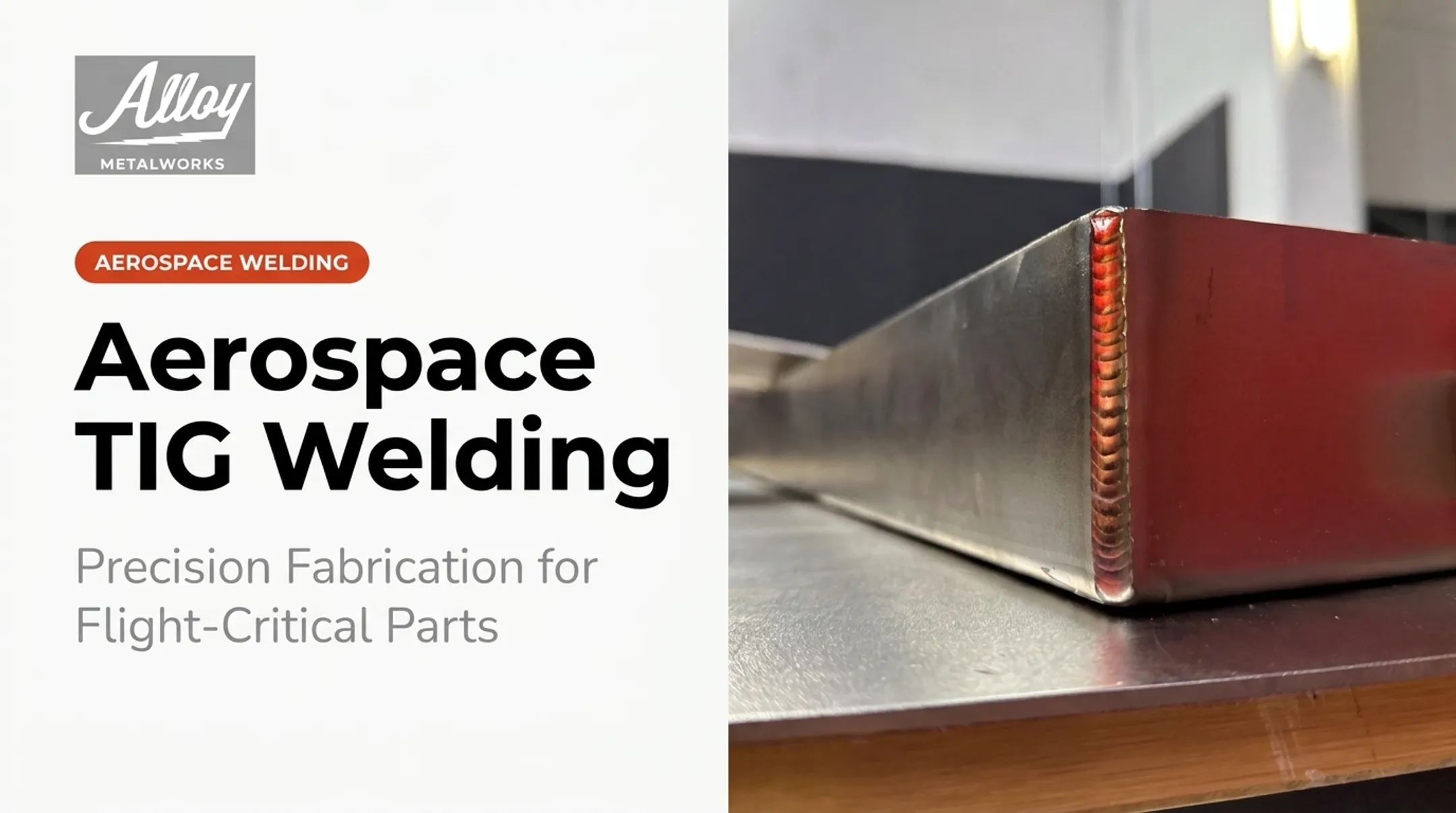
At the code level, Class A welding refers to AWS D17.1/D17.1M, the specification for fusion welding aircraft and space hardware. It covers aluminum, nickel, iron, cobalt, magnesium, and titanium alloys, along with the personnel qualification, procedure qualification, fabrication, and inspection requirements that go with them.
Class A is the highest-consequence classification under this system. It's reserved for welds where failure could compromise a critical system entirely, not just reduce its effectiveness.
The acceptance criteria are strict enough that a weld can pass destructive mechanical testing and radiographic inspection and still get rejected. Minor visual contamination, discoloration, or surface irregularities is enough to disqualify it outright.
Documentation typically includes:
- Welder and procedure qualification records (WPS/PQR)
- Material traceability back to heat and lot
- Non-destructive testing protocols (radiographic, dye penetrant)
- Complete inspection and acceptance records

Class A in General Fabrication vs. Aerospace Codes
Some fabricators use "Class A" informally to describe a smooth, polished cosmetic weld finish, such as architectural or automotive-adjacent work. That is a different standard from AWS D17.1 Class A. If a vendor says "Class A" without naming a code, ask which one they mean. The confusion is common enough that it is worth clarifying on every quote.
True Class A work also shows up often on exotic alloys because those metals serve high-temperature, high-stress aerospace and energy systems. Inconel, Hastelloy, and titanium are common examples.
Inconel 617, for instance, demands tight heat control: too much heat causes distortion and metallurgical compromise; too little sacrifices fusion. That narrow process window is exactly why Class A qualification exists.
Class A vs. Class B vs. Class C Welds
The AWS classification system is consequence-based, not a sliding scale of "how good does it look."
| Class | Consequence of Failure | Typical Use |
|---|---|---|
| A | Loss or compromise of a critical system | Flight-critical structures, pressure vessels, rotating assemblies |
| B | Reduced system strength or effectiveness | Structural but non-flight-critical components |
| C | No structural or performance effect | Internal, non-critical, or as-welded parts |

Class A is the top tier: failure can take out a critical system, so inspection, documentation, and welder qualification are non-negotiable.
Class B welds sit in the middle. They still require qualified procedures and welders, but the consequence of a defect is lower: think structural brackets or internal supports rather than pressurized flight hardware.
Class C welds are the least stringent. Many are left as-welded, following a written procedure rather than one qualified through destructive testing. Cosmetic repairs and ground-support equipment often fall here.
What About "Class 3" Welding?
This one trips people up. "Class 3" (as in 3G, 3F) refers to a welding position code (vertical groove, vertical fillet), not a quality classification at all.
Don't confuse position codes with the A/B/C consequence-based system. A welder can be qualified in the 3G position and still work a Class A, B, or C part. They're two separate axes entirely.
The practical difference between classes comes down to cost and lead time. Class A work requires qualified WPS/PQR documentation, full NDT, and traceability — all of which take longer and cost more than Class C's minimal finishing requirements.
Why Class A Welding Matters for Aerospace and High-Performance Industries
Class A welding exists wherever failure carries catastrophic consequences: safety, mission, or financial. Flight-critical structures, pressure vessels, and rotating assemblies all fall into this category because there's no acceptable failure mode.
Certifications like AWS D17.1 and ASME Section IX give regulators, OEMs, and end customers documented assurance of consistent weld quality. That documentation moves parts through inspection without delays and protects everyone downstream when a weld needs to be traced back.
A strong quality management system makes Class A requirements manageable by turning them into repeatable steps:
- Identify the variables
- Measure them
- Control them
- Adjust when necessary
Without that structure, Class A becomes a guessing game.
Alloy Metalworks holds AWS D17.1 Class A certification for flight-critical hardware, alongside ASME Section IX and ISO 9001. That combination supports aerospace, energy, and research clients who need inspection-ready welds the first time, not after three rounds of rework.
How Class A Welds Are Achieved
Class A status depends on a chain of qualification steps that all have to hold up together.
- Freeze the design requirements. Material, joint geometry, position, and acceptance criteria get locked into the drawing and contract before welding starts.
- Qualify the procedure and the welder. The WPS gets validated through PQR testing, and each welder or operator must be qualified for the specific variables used on the job.
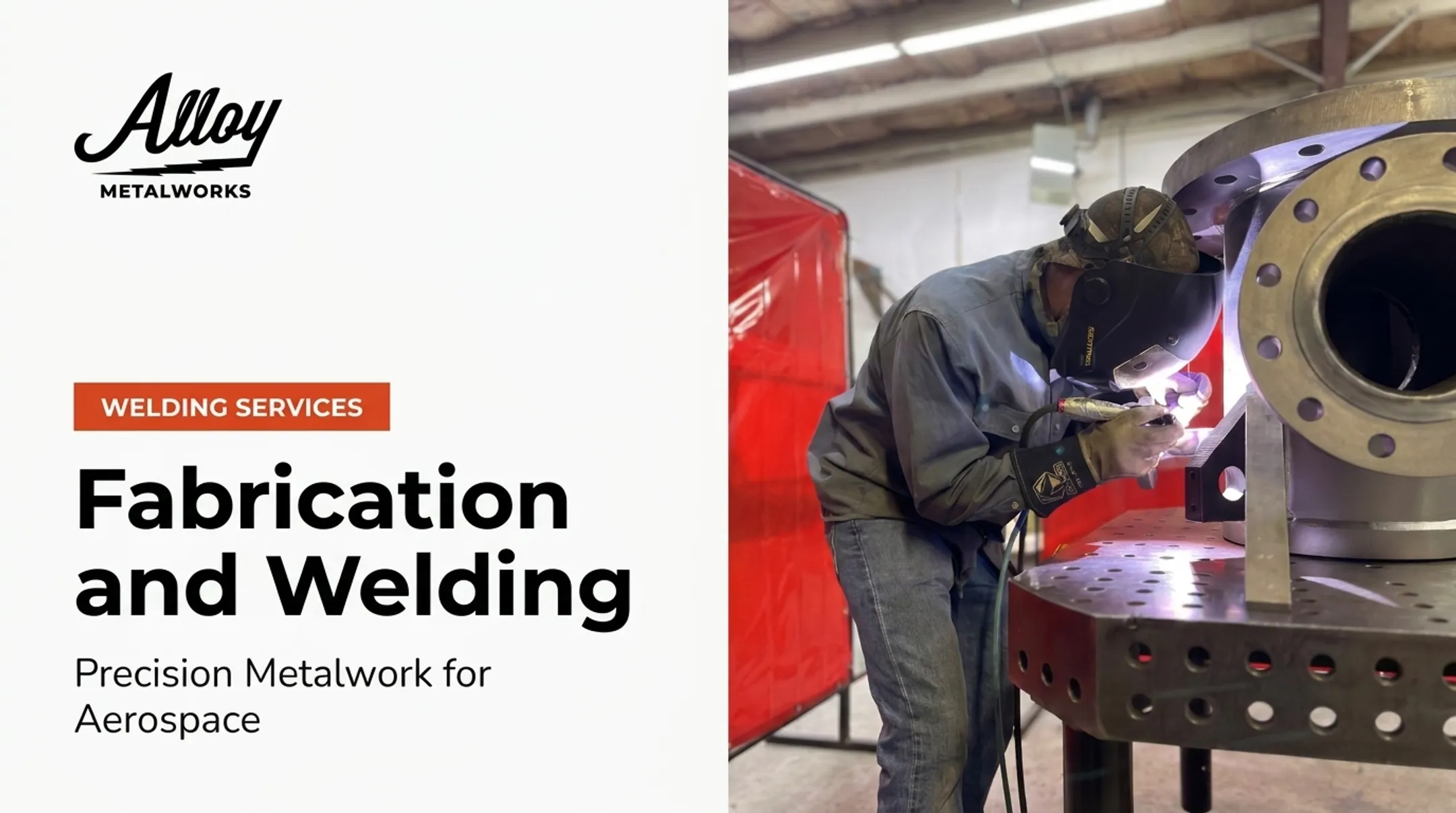
- Control the environment. Titanium oxidizes at elevated temperatures, so shops use custom inert gas chambers and purge setups to keep an oxygen-free environment that preserves strength and corrosion resistance.
- Inspect thoroughly. Visual inspection comes first, followed by the specified NDT : radiographic, dye penetrant, or other methods depending on the application.
- Complete destructive testing where required. Bend tests and similar destructive methods verify what non-destructive inspection can't catch alone.
Shielding gas flow rate and purity, tungsten stick-out, torch angle, travel speed, and weld cleanliness all factor into whether a weld holds up under Class A scrutiny. Small deviations matter. One titanium sample only passed both destructive and non-destructive Class A testing after small adjustments to these variables. That level of control leaves little room for approximation.

Industries That Rely on Class A Welding
Class A welding shows up wherever the cost of failure is unacceptably high:
- Aerospace and space technology — flight-critical structures, ground support equipment, testing hardware
- High-performance energy — hydrogen systems, fuel cells, thermochemical reactors
- Advanced manufacturing — high-performance metals and complex assemblies
- Research and prototyping — experimental equipment built to the same rigor as production hardware
U.S. aerospace and defense generated $995 billion in total economic activity in 2024, supporting more than 2.2 million direct and indirect jobs. At that scale, qualified welding capacity is foundational infrastructure.
Alloy Metalworks' client base reflects this pattern. The National Renewable Energy Laboratory (NREL) added Alloy Metalworks to its pressure program as a preferred vendor, and the shop fabricated an Alloy 800 HT component for an NREL thermochemical reactor operating above 700°C.

Work with Utility Global on hydrogen and decarbonization technology follows the same logic: when failure isn't an option, Class A welding is a requirement.
Choosing a Certified Class A Welding Partner
"Class A quality" as a marketing phrase means nothing without documentation behind it. Before signing a contract, verify:
- Actual certifications — AWS D17.1, ASME Section IX, and ISO 9001 on file, not just claims of meeting them
- Documentation practices — WPS, PQR, and welder qualification records available on request
- Traceability systems — material heat and lot identity, inspection status, and nonconformance handling
- Engineering collaboration — input on weld joint design and procedure development, not print-only execution
A shop that can't produce a completed PQR or explain its NDT plan isn't ready for Class A work, regardless of what's printed on their website.
Alloy Metalworks is a Colorado-based fabricator holding ISO 9001 and AWS D17.1 Class A certification. The team pairs engineering-aware collaboration with audit-ready documentation for aerospace, energy, and research clients. The goal on every project is straightforward: pass inspection the first time, and keep mission-critical components on schedule.
Frequently Asked Questions
What are the differences between Class A and Class B welds?
Class A welds meet the strictest inspection and acceptance standards for flight-critical applications and other uses where failure would be catastrophic. Class B welds are less stringent, typically covering structural but non-critical components where failure reduces performance rather than causing catastrophic loss.
What is a Class C weld?
Class C is the least stringent classification, often left as-welded with minimal finishing or inspection. It's suited for internal or non-critical components where a defect wouldn't affect structural integrity or performance.
What is Class 3 welding?
"Class 3" typically refers to a welding position code, like 3G for vertical groove welds, not a quality classification. Don't confuse it with the A/B/C system — position and quality class are separate requirements.
What certifications should I look for in a Class A welding provider?
Look for AWS D17.1, ASME Section IX, and ISO 9001 as baseline credentials. Ask the provider to produce actual qualification records, not just certificates, to confirm the credentials apply to your specific application.
How much more does Class A welding cost compared to lower classes?
Class A work requires more rigorous qualification testing, inspection, and documentation than Class B or C, which increases both cost and lead time. The exact premium depends on material, complexity, and the inspection protocol required.