
Introduction
A weld that passes inspection at room temperature can still crack open at -196°C (-321°F). That's the uncomfortable truth behind cryogenic welding. Failures show up as catastrophic leaks, ruptures, or worse in aerospace, energy, and research systems.
NIST defines the cryogenic region as temperatures below roughly -150°C (-238°F), and its own testing confirms that certain steels become brittle under these conditions. Standard fabrication practices don't account for this.
This guide covers what cryogenic welding actually requires, which materials and codes matter, and how to choose a welding partner who won't leave you exposed to compliance delays or field failures.
Key Takeaways
- Toughness at extreme cold—not tensile strength alone—keeps cryogenic welds from brittle fracture
- Austenitic stainless steels, aluminum alloys, titanium, and nickel-based alloys dominate cryogenic service
- ASME Section IX and AWS D17.1 certifications separate qualified providers from general fabricators
- Documentation gaps fail inspections as often as defective welds
What Is Cryogenic Welding?
Cryogenic welding means joining metals intended for service well below -50°C (-58°F), often down to -196°C (-321°F) for liquid nitrogen or colder for liquid hydrogen and helium systems. The work uses TIG, MIG, or another qualified method, applied with material, procedure, and inspection standards matched to extreme low-temperature duty.
Strength is rarely the limiting factor. Ductility and impact toughness in the weld and heat-affected zone (HAZ) govern cold-service performance. As temperatures drop, many metals shift from ductile to brittle behavior, and a weld that looks perfect on a visual or room-temperature tensile test can still fracture suddenly in cold service.
That's the trap. A weld can pass every standard check and still be wrong for the application.
Industries relying on cryogenic welder services include:
- Aerospace and space propulsion (liquid hydrogen/oxygen systems)
- Hydrogen and clean energy infrastructure
- Industrial gas storage and transport
- Research labs and quantum computing (cryostats, dewars)
- Food, beverage, and pharmaceutical cold-chain processing
Why Standard Welding Practices Fall Short
Ordinary carbon steel and unqualified weld procedures often become brittle in cold service. ASM International describes cryogenic-grade steels as capable of retaining toughness down to -269°C (-452°F), but that holds only for alloys specifically qualified for it, not standard carbon steel run through a generic procedure.
There's no single "brittleness temperature" that applies across all carbon steel grades. It depends on chemistry, grain structure, heat treatment, and weld condition. That's exactly why procedure-specific qualification matters more than assumptions about what "should" work.

Materials Commonly Used in Cryogenic Fabrication
Material selection is where most cryogenic projects succeed or fail before a single arc is struck.
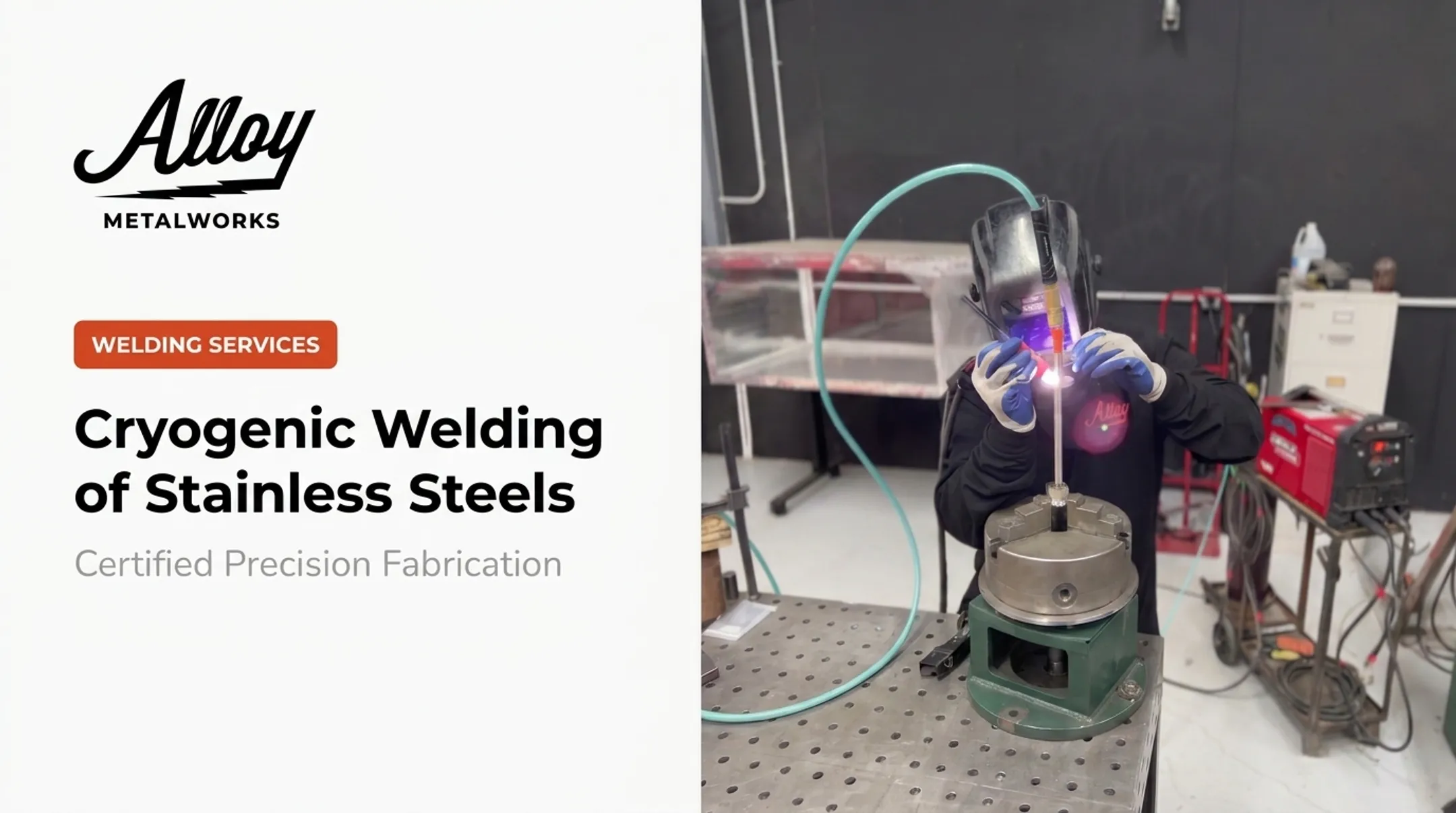
Austenitic stainless steels (304L, 316L) These retain ductility and corrosion resistance at cryogenic temperatures, making them a default choice for LNG piping and storage vessels. ASM International notes austenitic stainless steels maintain high toughness from room temperature down through cryogenic ranges, a rare combination in structural metals.
Aluminum alloys (5083, 5086) Aluminum offers a strong strength-to-weight ratio for tanks and lightweight structures. NASA has documented 5083 in liquid hydrogen storage tank applications since the 1960s. Its 2025 cryotank research still lists aluminum alloys among the leading candidates for LH2 service at -253°C.
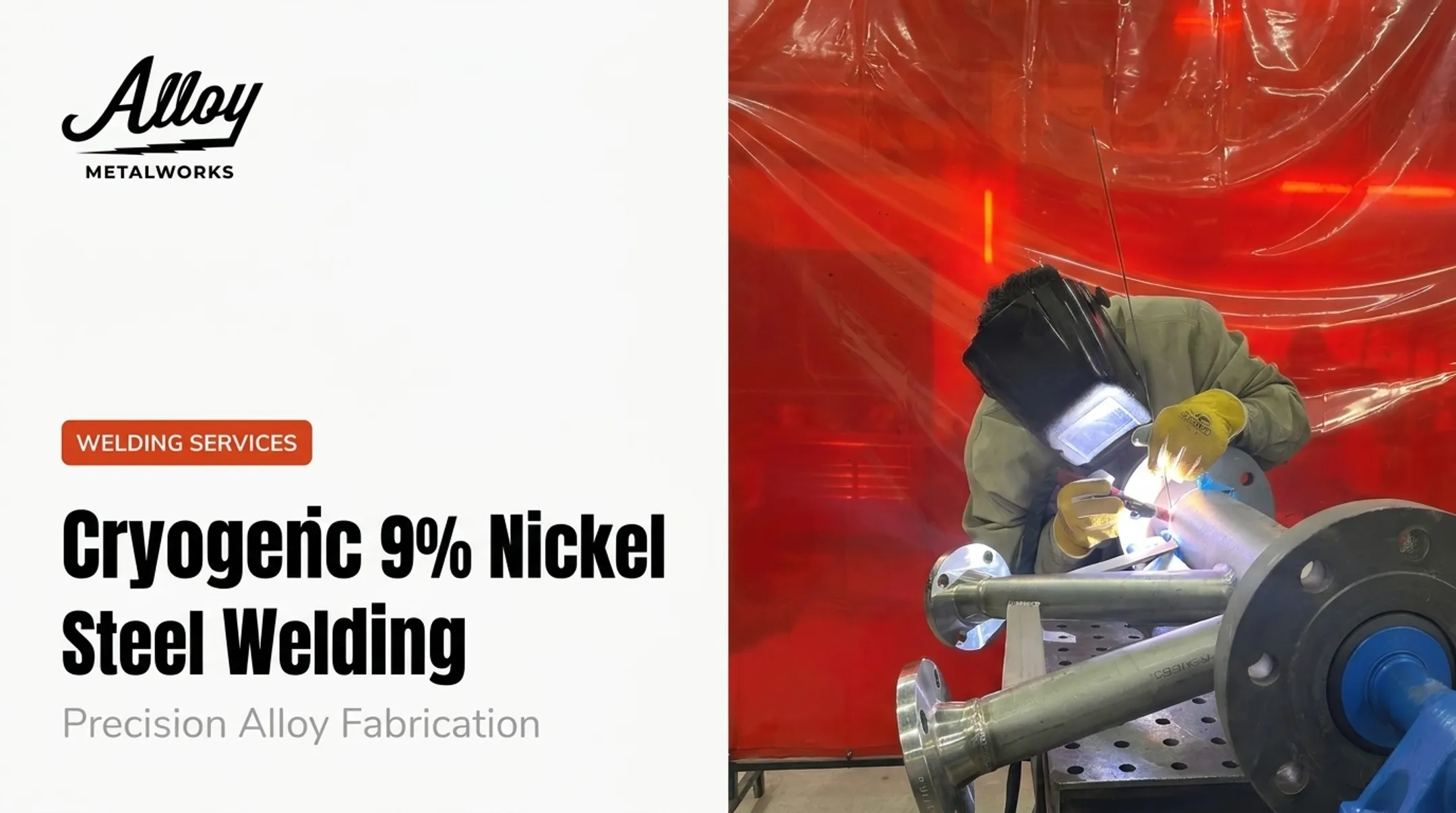
Nickel-based alloys and 9% nickel steel Inconel and similar alloys handle high-performance, high-pressure cryogenic and chemical reactor environments. Special Metals documents Inconel 718 for service from -423°F to 1300°F, including cryogenic tankage and rocket components. Separately, 9% nickel steel has been recognized under the ASME Code for cryogenic use since 1954. It remains widely used in oxygen and nitrogen storage vessels.
Titanium Titanium requires controlled inert gas or purge welding environments to prevent oxidation and embrittlement. It is highly reactive at elevated temperatures during welding, so contamination control is mandatory for a sound weld.
Alloy Metalworks builds custom inert gas chambers and purge setups for titanium work, and welds Inconel, Incoloy, Hastelloy, and Monel for the same class of high-demand applications.
One rule that applies across every material: filler metal must match or exceed the base metal's toughness requirements. Choosing filler for ease of welding instead of performance is how avoidable failures happen.

Codes, Certifications, and Quality Standards to Look For
Certifications prove that a provider's procedures and personnel have been tested against the exact failure modes cryogenic service creates.
| Standard | What It Governs |
|---|---|
| ASME Section IX | Qualifies welding procedures (WPS) and welder performance for pressure-retaining components |
| AWS D17.1 Class A | Highest-integrity requirements for flight-critical aerospace hardware |
| AWS D1.6 / D1.1 / D1.2 | Structural stainless and aluminum welding codes for support structures |
| ISO 9001 | Documented, traceable, audit-ready quality management |
ASME Section IX qualifies the procedure, not the pressure vessel design itself. Pair it with the applicable construction code for the actual component.
Impact testing matters more than most buyers realize. Charpy V-notch testing verifies that a weld and its heat-affected zone retain adequate toughness at the design's minimum service temperature. Without this data, a "certified" weld is only certified for room-temperature conditions.
Procedure qualification records (PQR) and full material traceability prevent downstream inspection failures. Alloy Metalworks has seen this firsthand: a previous contractor's welds failed inspection because documentation for the welds, procedures, and welder qualifications simply didn't exist.
The rebuild required full ASME B31.3 inspection, magnetic-particle testing, and in-house borescope and dye-penetrant verification. That rework would not have been necessary if the original documentation had been in order.

Common Applications of Cryogenic Welder Services
Cryogenic welder services show up wherever joints must stay leak-tight, tough, and inspection-ready at extreme low temperatures. The same discipline spans flight hardware, clean energy, labs, and sanitary process lines.
Aerospace and space technology
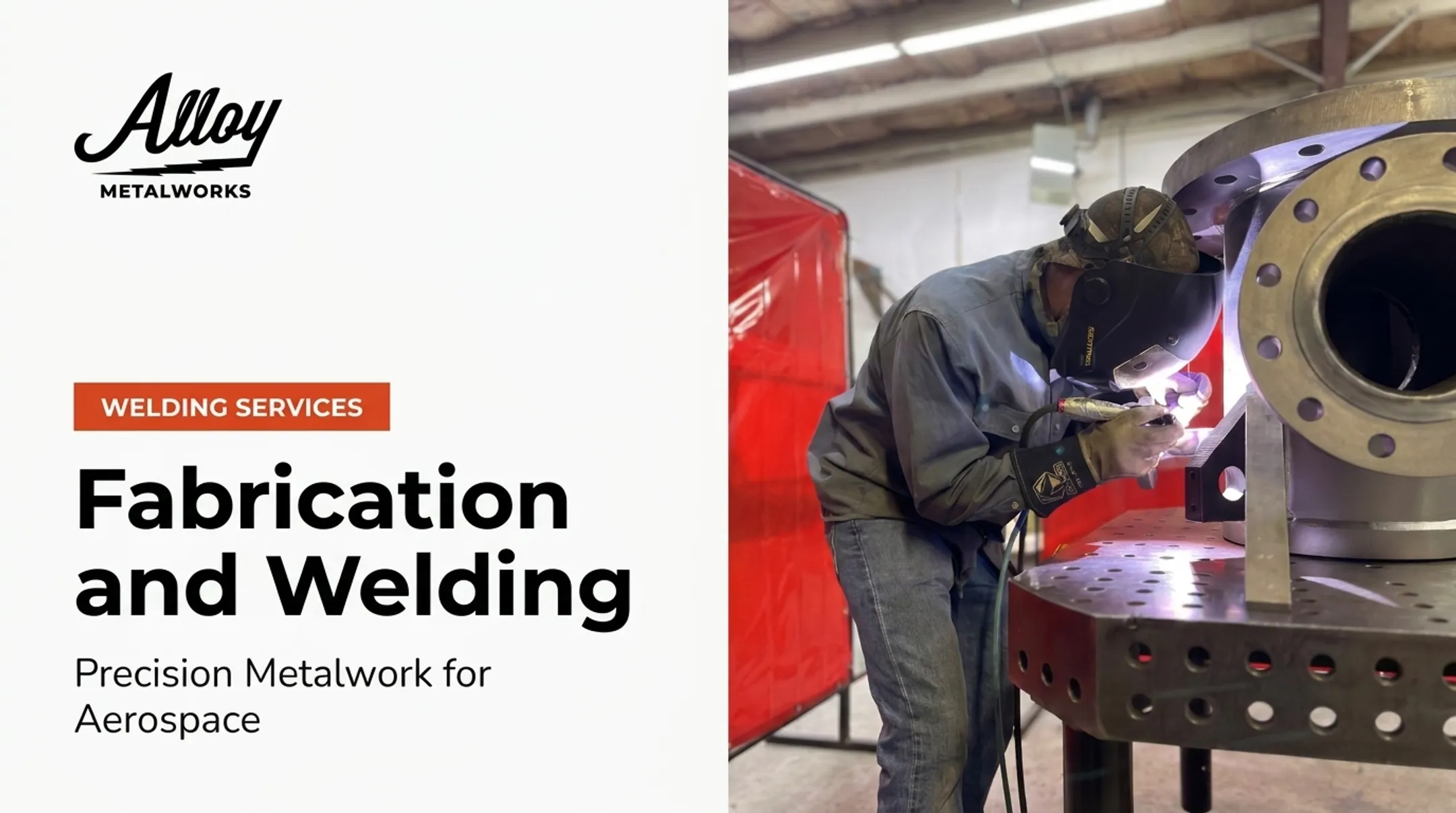
Fuel tanks, ground support equipment, and flight-critical components for liquid hydrogen and oxygen systems. NASA's Space Launch System core-stage liquid-hydrogen tank shows what welding at this scale and criticality looks like in practice.
Hydrogen and clean energy
Fuel cell components, hydrogen storage vessels, and decarbonization equipment. The Department of Energy notes hydrogen must be stored at cryogenic temperatures; it boils at -252.8°C (-423°F) at atmospheric pressure. That requirement drives precise, qualified containment welds.
Research, quantum computing, and industrial gas
Cryostats, dewars, and specialized lab equipment need precision fabrication so joints hold vacuum and stay stable through repeated thermal cycles.
Food, beverage, and pharmaceutical
Sanitary stainless steel systems built to AWS D18.1 and USDA 3-A standards protect cold-chain processing integrity where hygiene and leak-tight joints both matter.
Alloy Metalworks has supported several of these sectors directly, including hydrogen and clean energy work with organizations like Utility Global and NREL, plus fabrication for research-focused clients such as TDA Research.

Choosing a Qualified Cryogenic Welding Partner
Not all "certified" welding shops are certified for your application. Here's what to verify before signing off:
- Match certifications to application — Aerospace, energy, and sanitary work each demand different code compliance. General welding experience alone isn't sufficient.
- Confirm engineering collaboration capability — Can the provider support problem-solving from design through build, or only execute drawings handed to them?
- Request documentation samples — Ask for QMS records, traceability logs, and inspection-readiness protocols before committing.
Partners who clear those checks protect schedule and compliance before metal is cut. Alloy Metalworks, an FAA Certified Repair Station based in Colorado, supports aerospace, energy, and research clients with ASME Section IX and AWS-certified welding of cryogenic and exotic alloys, from prototyping through production.
The team, led by Technical Director Chris Gavitt, works alongside engineers and project managers to develop weld procedures and validate processes before fabrication begins. That early collaboration reduces the chance of costly rework later.
Frequently Asked Questions
What is cryogenic gas used for?
Cryogenic gases like liquid oxygen, nitrogen, hydrogen, and helium power aerospace propulsion, industrial processing, medical equipment, and clean energy systems. Each requires specialized storage and welded containment built for extreme cold.
Why is toughness more important than strength in cryogenic welding?
Brittle welds can crack suddenly under stress at low temperatures, even if they meet room-temperature strength specs. Impact toughness testing, like Charpy V-notch, verifies performance where it actually matters.
Can standard carbon steel be used for cryogenic applications?
Generally, no. Carbon steel typically becomes brittle at low temperatures and isn't suitable for cryogenic service without special alloying or heat treatment.
What certifications should a cryogenic welding provider have?
Look for ASME Section IX, AWS D17.1, and ISO 9001 as key indicators. These confirm qualified procedures, aerospace-grade rigor, and documented quality control.
Is TIG or MIG welding better for cryogenic-service metals?
TIG (GTAW) is typically preferred for precision, thin sections, and clean root passes—especially in aerospace aluminum. MIG suits thicker sections and higher-volume production runs.
What industries rely most on cryogenic welding services?
Aerospace, hydrogen and clean energy, research and quantum computing, and food/pharma cold-chain processing are the primary sectors depending on qualified cryogenic welding capability.