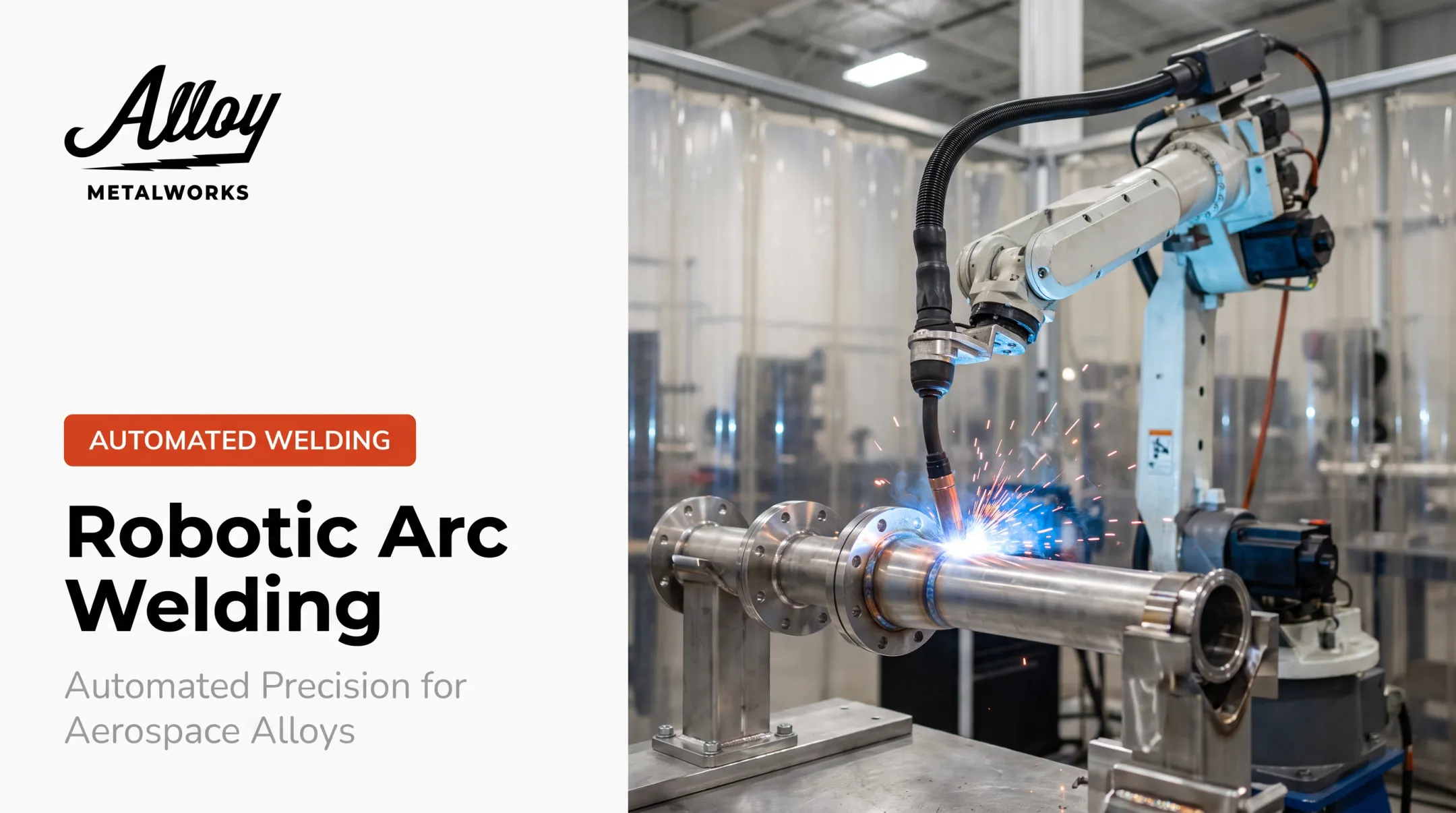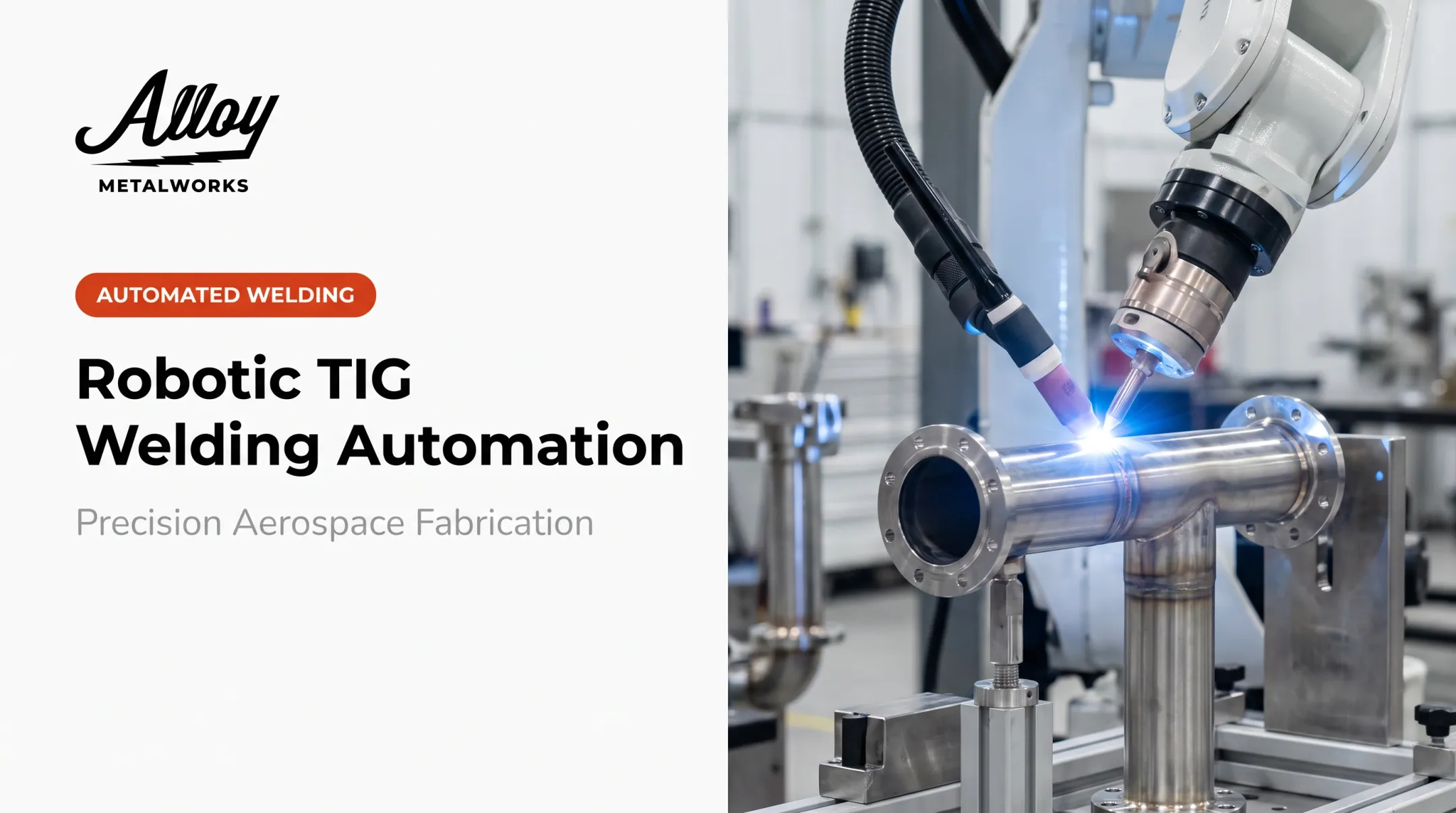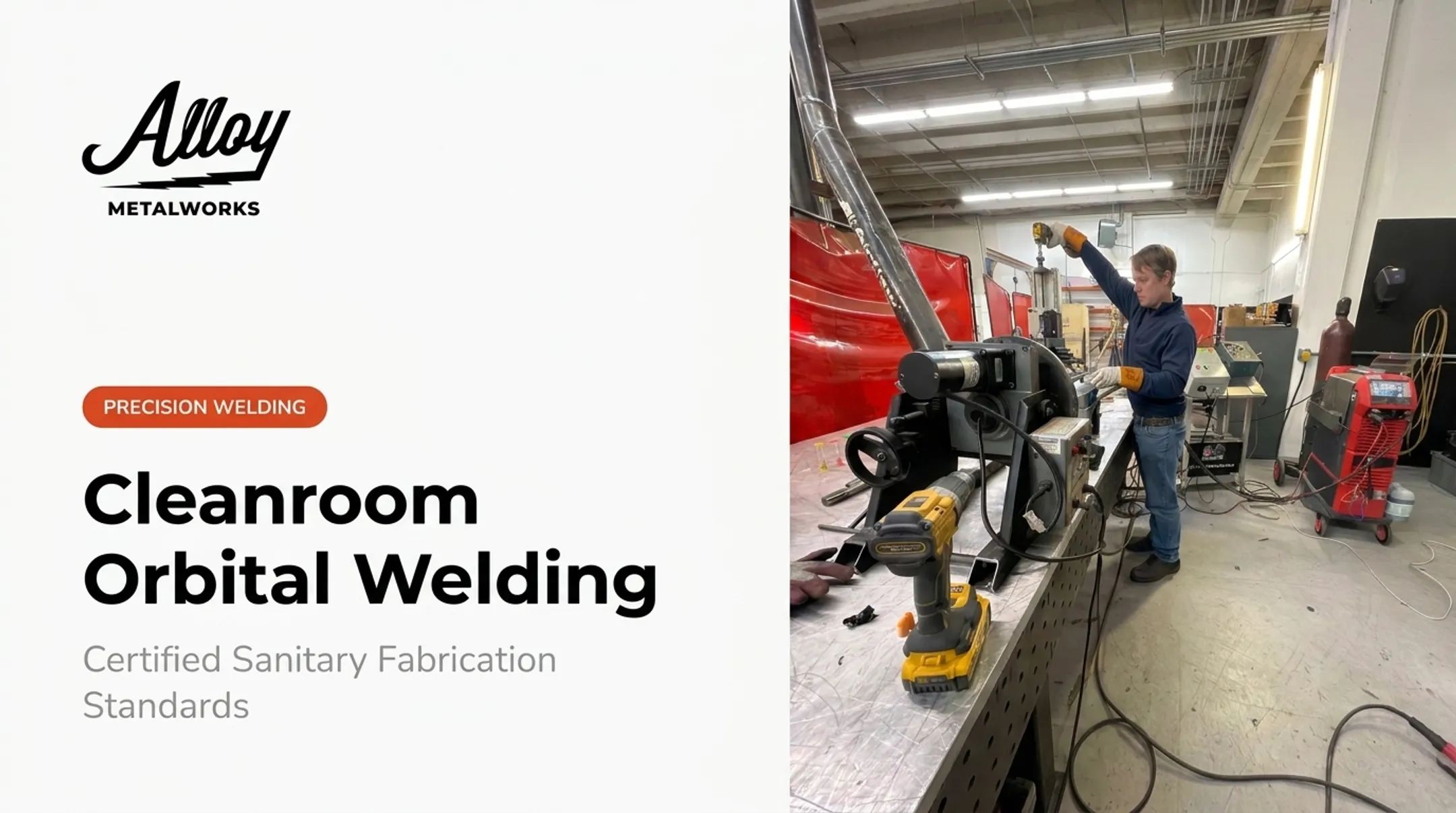

Many shops struggle with inconsistent finishes between parts, skilled labor shortages, costly rework, and gaps in compliance documentation. The Manufacturing Institute projects US manufacturers may need as many as 3.8 million additional employees by 2033, with roughly half of those roles going unfilled. That labor gap touches finishing departments just as hard as any other production stage.
This article covers the technology behind automated finishing, where it delivers the most value, which industries depend on it, and how to figure out if it's the right move for your operation.
Key Takeaways
- Robotic finishing raises consistency, throughput, and worker safety versus manual grinding and polishing
- Grinding, deburring, polishing, buffing, and passivation now run reliably on robot cells
- Aerospace, energy, and sanitary manufacturers use automation to lock in traceability and documented compliance
- Manual expertise still matters most for programming, quality validation, and one-off complex parts
What Is Automated and Robotic Metal Finishing?
Two different approaches fall under this umbrella, and they solve different problems.
PLC-controlled process lines manage chemical and thermal finishing steps: passivation tanks, chem film systems, anodizing baths. These lines use programmable logic controllers, gantry or rail-mounted transport, and sensors that track temperature, pH, conductivity, and flow. Every recipe and run gets logged automatically.
Robotic finishing cells use articulated arms fitted with end-of-arm tooling, servo spindles, and force-compliance devices. The compliance tooling is the key innovation here. It lets the robot maintain consistent contact pressure even as it follows a curved or contoured surface, something that used to require a steady human hand.

Both approaches share one advantage: automatic data logging. For shops working under ISO 9001 or FAA Part 145 quality systems, that logged data becomes part of the inspection-ready documentation auditors expect to see.
Types of Metal Finishing Techniques Suited to Automation
Not every finishing step is a good automation candidate yet, but many are:
- Grinding and deburring — well-established for robotic arms with force sensing
- Polishing and buffing — common on tube and sheet applications
- Graining — used for architectural and appliance-grade surfaces
- Edge rounding — increasingly built into fully automated lines
- Passivation and chem film/anodizing — handled by tank-line automation rather than robotic arms
- Mass finishing (vibratory/barrel) — increasingly automated for high-volume deburring in medical and precision work
Buffing automation has less independently documented performance data than grinding or polishing, so expect more variability in outcomes for that step.

Key Benefits of Automating Metal Finishing
Consistency and Reduced Rework
Manual finishing quality depends on the operator's fatigue level, experience, and consistency from part to part. Robotic cells remove that variable.
A 2024 case study from Cohesive Robotics reported processing time 30% lower than manual finishing, with rework and scrap reduced by up to 90%. That's a supplier-reported result, not an independent industry benchmark, but it illustrates the scale of improvement possible when force-controlled tooling replaces hand-finishing.
Throughput Gains
Dual-robot cells can work independently or in tandem on the same part, expanding capacity without adding a second shift. Lincoln Industries documented improved consistency, capacity, and ergonomics from a dual-robot tube-polishing setup, though it didn't publish exact parts-per-hour figures. Don't assume every automated line will hit a specific throughput number. Validate with your own part geometry and cycle-time testing.
Safety and Reduced Exposure
Grinding, polishing, and buffing generate abrasive dust that OSHA regulates under 1910.94 ventilation requirements. Chromium exposure from stainless and nickel alloy grinding falls under a strict 5 micrograms per cubic meter permissible exposure limit. Automation keeps operators away from:
- Airborne abrasive dust and chromium particulates
- Repetitive strain from hours of manual polishing
- Chemical exposure in passivation and anodizing lines
Cost Efficiency
Force-controlled servo spindles maintain constant contact pressure, which reduces uneven wear on abrasive media and belts. The same Cohesive Robotics case reported abrasive-media wear down by 30%. Automatic wear compensation also extends tool life compared to manual pressure application, which tends to be inconsistent.
Audit-Ready Documentation
For regulated industries, automated data logging is often required. Every recipe, temperature setpoint, and cycle gets recorded automatically, supporting the kind of traceability that ISO 9001 and FAA Part 145 quality systems demand during audits.

Choosing the Best Finish for Your Metal Parts
There's no single "best" finish. The right choice depends on cosmetics, load performance, corrosion resistance, or a specific code requirement.
Common finish categories:
| Finish Type | Typical Use | Example Application |
|---|---|---|
| Mirror/polished | Cosmetic, high-visibility | Aerospace skins |
| Brushed/grained | Cosmetic, durable | Architectural panels, appliances |
| Matte/blasted | Functional, non-reflective | Structural or hidden components |
| Passivated/electropolished | Corrosion resistance, sanitary | Process piping, medical devices |
Robotic systems tend to hold tighter tolerance on finish uniformity than hand-finishing, especially on contoured or complex geometries where a human hand's pressure naturally varies.
Finish method only gets you halfway — the alloy dictates how abrasives and chemistry behave. Aluminum, stainless steel, titanium, and nickel alloys each respond differently:
- Titanium: surface roughness affects fatigue life — rougher finishes shorten performance in titanium alloys
- Stainless steel: passivation typically follows ASTM A967/A967M
- Aluminum: anodizing often falls under MIL-PRF-8625
For flight-critical or pressure-critical parts, finish specs must align with codes such as AWS or ASME. At Alloy Metalworks, that alignment includes:
- AWS D17.1 Class A for flight-critical hardware
- ASME Section IX across applicable welding procedures
Getting the finish spec wrong on these parts isn't cosmetic — it's a certification failure.

Industries Relying on Automated and Robotic Finishing
Automated and robotic finishing shows up where surface quality, repeatability, and documentation are non-negotiable:
- Aerospace and space technology: Finish quality affects fatigue life on flight-critical parts. Under AWS D17.1 Class A, visual contamination alone can reject a weld that already passed mechanical and radiographic checks—automation keeps that surface condition consistent.
- Energy systems: Hydrogen equipment, fuel cells, and thermal/chemical process hardware need finishes that survive aggressive service. ASME Section IX-qualified work pairs well with robotic finishing when corrosion resistance and repeatability both matter.
- Sanitary and regulated manufacturing: Food and beverage, pharmaceutical, and biotech lines require documented finishing under USDA 3-A and AWS D18.1. Robotic processes make traceability practical because every pass follows the same controlled path.
Research labs and advanced manufacturers use the same approach for prototypes and small-batch hardware when manual variation would put inspection results at risk.
When Manual or Hybrid Finishing Still Makes Sense
Automation isn't always the right call. Some jobs still need a skilled hand more than a programmed cell.
Manual or hybrid finishing usually wins when you face:
- Low-volume or one-off production runs
- Highly custom or prototype geometries
- Complex alloys such as Inconel or titanium, where metallurgy or access limits full automation
- Final touch-up after automated bulk finishing
Hybrid setups earn their keep here: automate the repeatable steps, then bring in manual finishing where geometry or material behavior makes a fixed line impractical.
Alloy Metalworks operates this way by design. The Colorado-based shop pairs precision welding, fabrication, and finishing with direct engineering collaboration. Aerospace, energy, and research clients get inspection-ready parts without locking into a single automated line.
Fabrication Lead Randy Zavala brings more than 20 years of hands-on experience in complex geometric builds and precision finishing. That judgment is hard to code for a true one-off.
The same pattern shows up in Alloy's welding parameter development. For Inconel 617, the team dialed in heat input and arc control manually first, then transferred those parameters into an automated Fronius system. Manual expertise built the foundation; automation locked in the repeatability.

How to Evaluate an Automated Finishing Investment
Before committing capital, work through these questions:
- What's your part family and volume? High-mix, low-volume work rarely justifies a dedicated robotic cell.
- What finish standard are you targeting? Cosmetic tolerance and functional/code-compliant tolerance require different equipment specs.
- What documentation and traceability do you need? Regulated industries need automatic data logging built in from day one, not bolted on later.
- Does it align with your existing QMS? Automation investments should support your ISO 9001 or industry-specific certification structure, not create a parallel system.
Run representative sample parts through candidate equipment before finalizing any spec. A robotic cell that handles a flat panel well may struggle with a compound curve. Force-compliance tooling helps, but it doesn't replace real-world testing on your actual geometry.
Frequently Asked Questions
What are the different types of metal finishing techniques?
Grinding, deburring, polishing, buffing, graining, passivation, and anodizing are the most common techniques. Many of these are now robot-compatible, particularly grinding and polishing with force-controlled tooling.
What is the best finish for metal?
The best finish depends on the application, material, and required standard. Cosmetic parts prioritize appearance, functional parts prioritize performance, and flight-critical or pressure-critical parts must meet specific code requirements.
Can robots finish complex or curved metal parts as well as flat ones?
Yes, with the right tooling. Force-compliance devices let robotic arms follow contours while maintaining consistent pressure, achieving tighter uniformity than hand-finishing on complex geometries.
Does automating metal finishing require replacing existing production lines?
No. Automation can often be added incrementally, starting with a single process station like deburring or polishing before expanding to additional steps.
Is robotic finishing cost-effective for small batch or prototype work?
Usually not. Manual or hybrid finishing tends to be more practical and cost-effective for low-volume, highly custom parts where programming time would outweigh the benefit.
How does automated finishing support compliance documentation?
Automated lines log recipe parameters, cycle times, and process data for every run. That creates traceable, audit-ready records for quality certifications like ISO 9001 and FAA Part 145.