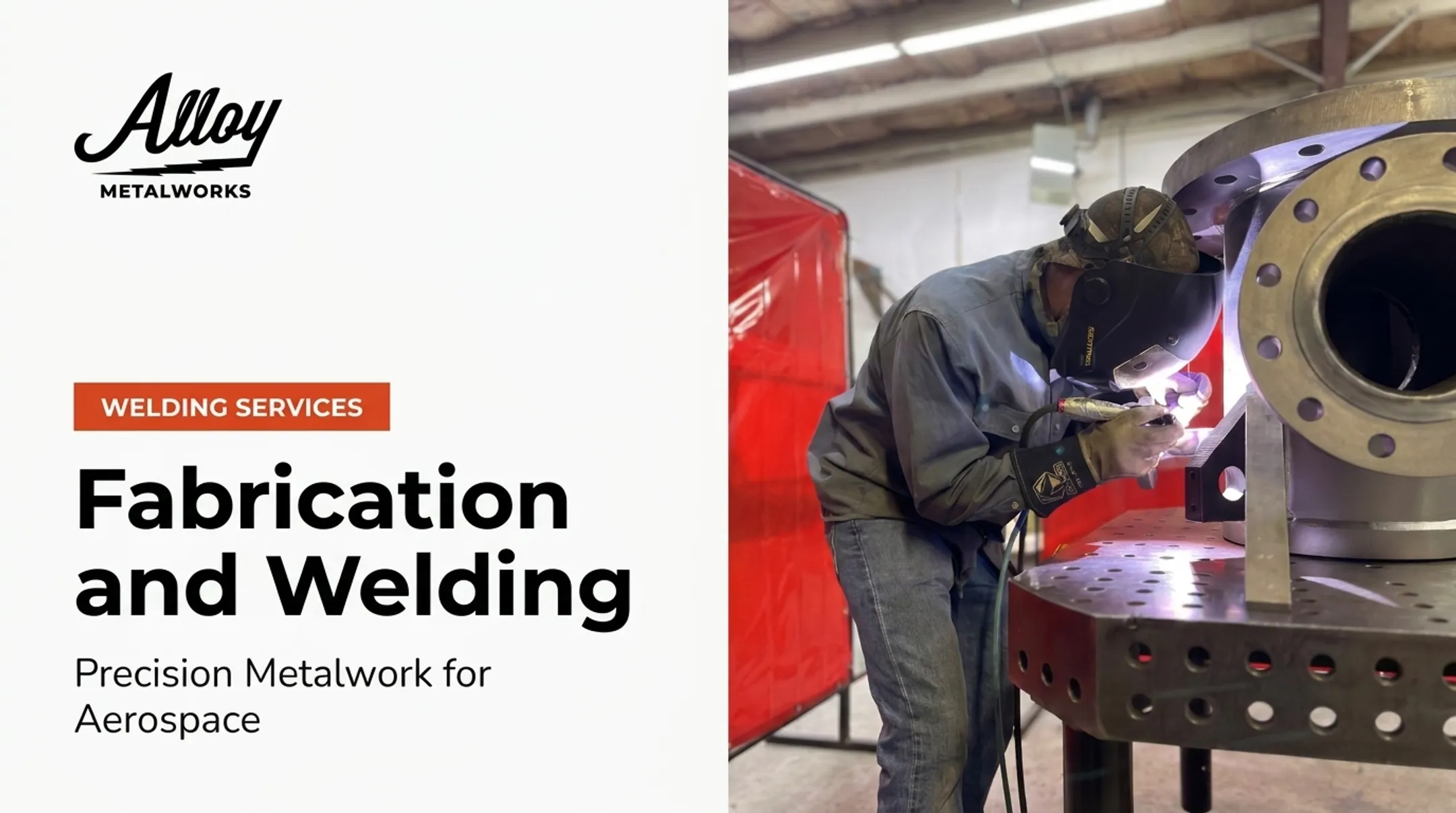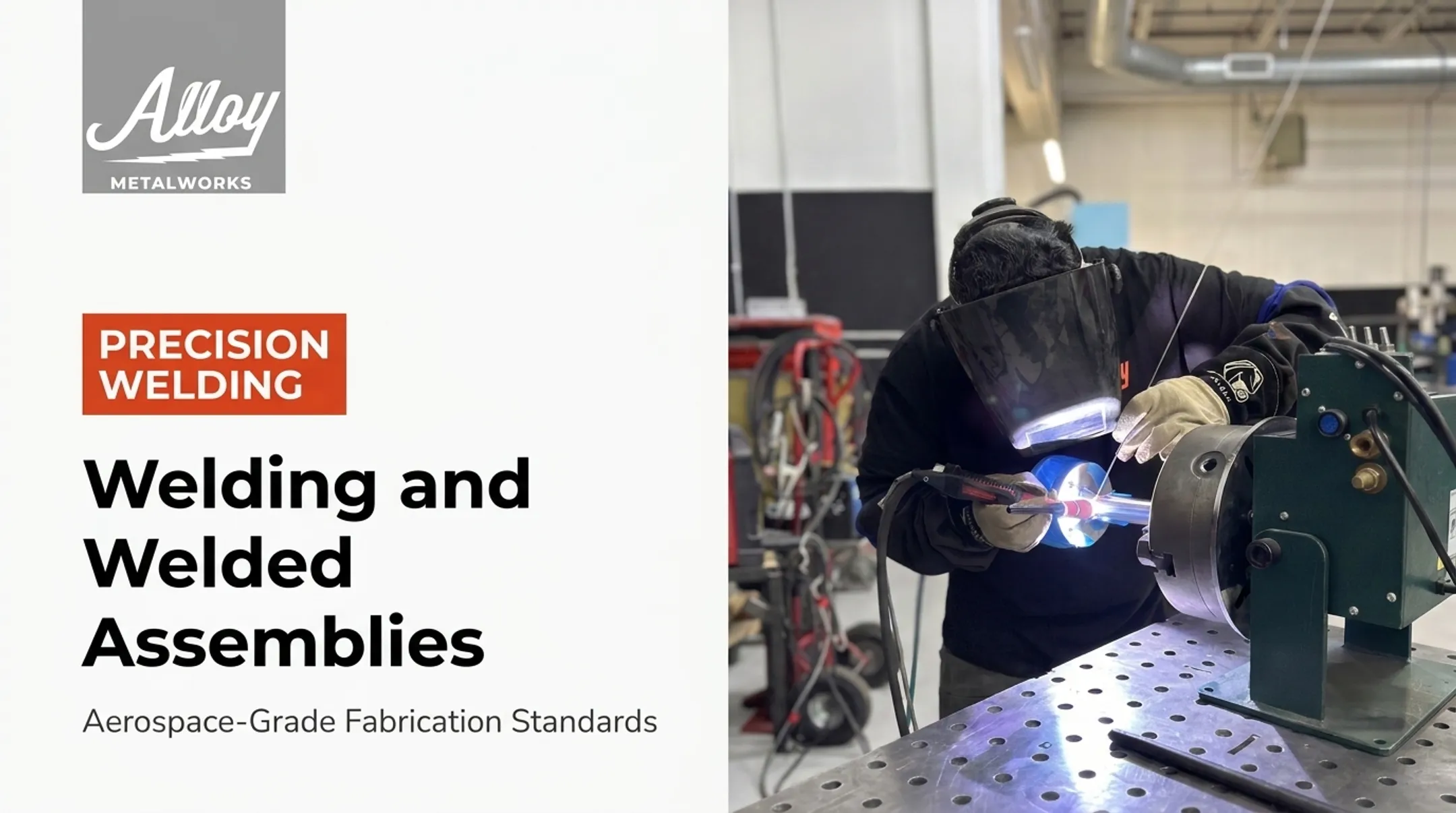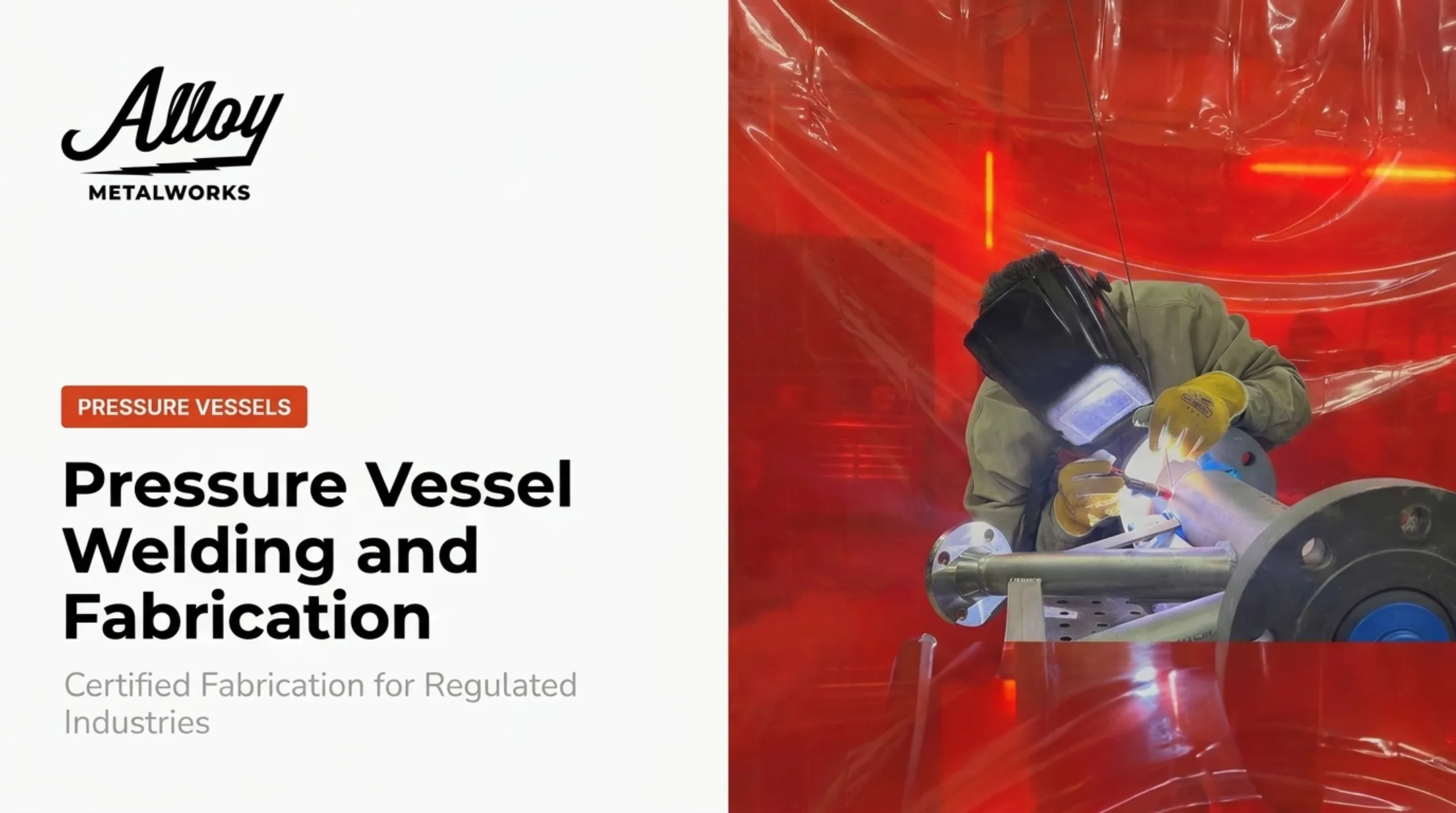

Many engineering and procurement teams struggle with the same problem: finding a fabricator who can handle exotic alloys, meet code requirements, and produce documentation that survives an audit. This guide breaks down what modern custom fabrication actually involves, the codes that govern it, the materials that demand specialty skill, and how to vet a partner before you hand over a critical project.
Key Takeaways
- Modern fabrication pairs CAD and engineering collaboration with ASME Section IX and AWS-certified welding
- Specialty alloys like Inconel, titanium, and Hastelloy need controlled environments and alloy-specific procedures
- ISO 9001 and FAA Part 145 signal controlled processes, not marketing language
- Documentation and traceability prevent failed inspections and expensive rework downstream
What Is Modern Custom Fabrication and Welding?
Custom fabrication is the process of designing, cutting, forming, and welding metal into parts or assemblies built to a client's exact specifications. Unlike mass production, it's built around one-off builds, prototypes, or small batches rather than repetitive runs off an assembly line.
A 3D CAD model helps visualize a part, but it isn't fabrication documentation on its own. Each component still needs its own qualified procedures, tooling setup, and inspection records. Shops that treat CAD as a communication tool between engineers and welders, not just a drawing exercise, tend to catch problems before metal ever gets cut.
That approach reflects a larger shift: fabrication has moved from pure trade skill to engineering-aware manufacturing. At Alloy Metalworks, critical controls happen before welding starts, not after a part fails inspection:
- Weld procedure development
- Heat-input and distortion control
- Contamination-risk mitigation
Why Engineering Collaboration Matters Early
Bringing engineering into the process early avoids a common and costly mistake: designing something that looks correct on paper but can't actually be welded to spec. Weld-joint design, material selection, and process validation need to happen in parallel with drafting, not after.
Types of Steel Fabrication and Welding Codes You Should Know
Fabrication generally falls into three buckets: structural, sanitary/hygienic, and precision/aerospace-grade work. Each runs on a different set of codes, and picking the wrong one can sink a project's compliance from day one. Structural welding codes cover load-bearing steel and metal assemblies:
- AWS D1.1/D1.1M — carbon and low-alloy structural steel
- AWS D1.2/D1.2M — aluminum structural alloys (excludes pressure vessels and piping)
- AWS D1.6/D1.6M — stainless steel structural assemblies Sanitary welding standards govern anything touching food, beverage, or pharmaceutical product:
- AWS D18.1/D18.1M — austenitic stainless tube and pipe in hygienic systems (qualifications, fabrication, visual exam, documentation)
- USDA 3-A standards — surface finish, drainage, and cleanability so equipment can be cleaned without harboring contamination Flight-critical and pressure work operates under stricter margins:
- AWS D17.1/D17.1M — fusion welding of aluminum-, nickel-, iron-, cobalt-, magnesium-, and titanium-based alloys for aircraft and space hardware
- ASME Section IX — welding, brazing, and fusing qualifications for pressure vessels and piping Under AWS D17.1 Class A, visual contamination alone can disqualify a flight-critical weld, even when mechanical or radiographic testing looks fine. A titanium weld coupon can fail inspection from purple or blue discoloration alone, regardless of joint strength. Picking the wrong code creates a certification failure waiting to happen. One rebuild Alloy Metalworks handled came after a previous contractor's piping system failed inspection because they couldn't produce documentation for the welds, procedures, or welder qualifications. The rebuild was inspected to ASME B31.3 standards from the ground up.

Key Techniques and Capabilities in Modern Fabrication Shops
Welding exotic alloys isn't the same skill set as welding mild steel, and shops that treat it that way run into trouble fast.
Precision Welding of High-Performance Alloys
Titanium becomes highly reactive above 550°C. Above that threshold, the weldment needs shielding from air, and both base and filler metals must be scrupulously clean to avoid contamination. This is why Alloy Metalworks builds custom inert gas chambers and purge setups specifically for titanium. Without controlled shielding, oxidation shows up as discoloration, and under codes like D17.1 Class A, that discoloration alone can fail an otherwise sound weld. Nickel- and cobalt-base alloys like Inconel and Hastelloy present a different challenge. Surface oxides melt at far higher temperatures than the base alloy, so they must be stripped before welding and between every pass. These alloys also tend toward crater cracking, which means low heat input and stringer beads matter more than in conventional steel work.

Complex Geometry and Finishing Work
Beyond the welding itself, modern shops need capability in:
- Complex geometric builds and precision sheet metal work for tight-tolerance parts
- Finishing and polishing that affects both corrosion resistance and inspection readiness
- Prototyping, small-batch runs, and full production under one roof Randy Zavala, Alloy's Fabrication Lead, has spent over 20 years on exactly this combination — complex geometry, precision sheet metal, and finishing — including work on Incoloy chemical reactor systems and aerospace ground support structures.
Why Quality Systems and Documentation Matter
ISO 9001 and FAA Part 145 are evidence of controlled processes, not decorative credentials. ISO 9001:2015 sets requirements for a documented quality management system. FAA Part 145 requires an FAA-acceptable quality-control system that ensures article airworthiness, with personnel required to actually follow it.
Rework is expensive and common. A 2011 TWI industry survey found average repair rates of 1-3% across oil & gas and power projects, with peaks up to 25% at specific weld locations and outliers as high as 55%.

The main drivers a controlled process is built to catch early:
- Welder skill gaps
- Poor accessibility at the joint
- Bad fit-up before welding
Alloy Metalworks operates under ISO 9001 and FAA Part 145 QMS, pairing code-compliant welding with audit-ready documentation and traceability. The goal stated plainly on the company's own process page: pass inspection the first time. That outcome is the difference between a part shipping on schedule and one bouncing back for a second or third round of rework.
Industries Relying on Modern Custom Fabrication
Each industry puts pressure on a different part of the fabrication process:
| Industry | Core requirement |
|---|---|
| Aerospace & space tech | Flight-critical tolerances, D17.1 Class A compliance |
| Hydrogen & clean energy | Pressure-rated systems, exotic alloy resistance |
| Food, beverage & pharma | Sanitary hygiene, cleanability, D18.1 and 3-A standards |
| Advanced manufacturing & research | Custom tooling, experimental assemblies, rapid iteration |
Demand is rising fastest where the stakes are highest. The U.S. aerospace and defense sector alone posted more than $955 billion in sales in 2023, a 7.1% jump year over year, with the workforce growing nearly 5%. That growth is pulling more fabrication work into environments where tolerance for error is near zero.

Alloy Metalworks has supported this range directly:
- Alloy 800HT component for an NREL thermochemical reactor running above 700°C
- Reactor repairs for TDA Research completed ahead of schedule
- Ongoing hydrogen and clean energy work for clients like Utility Global
How to Choose the Right Fabrication Partner
Before signing on with a fabricator, check for these:
- Relevant certifications — AWS codes, ASME Section IX, ISO 9001, and FAA Part 145 if aviation work is involved. Ask for the certificate and its scope, not just a logo on a website.
- Engineering collaboration, not just welding execution — Support for weld procedure development, joint design, and process validation matters more than shops that only execute a handed-off drawing.
- Turnaround capability — Rapid development cycles matter for prototyping and research work. Utility Global's Madison Kelley specifically credited Alloy Metalworks' expedited service with saving a project timeline.
- Documented quality systems — A fabricator who can produce a Quality Manual and traceable records reduces your risk on regulated or high-stakes work.
A partner who checks these boxes costs less in the long run, even if the quote isn't the cheapest one on the table.
Frequently Asked Questions
What are the different types of steel fabrication?
The main categories are structural, sheet metal, sanitary/hygienic, and precision or aerospace-grade fabrication. Each uses different codes and tolerances depending on the application.
What certifications should a custom fabrication shop have?
Look for AWS structural and specialty codes (D1.1, D1.2, D17.1), ASME Section IX for pressure work, ISO 9001 for quality management, and FAA Part 145 for aviation-related fabrication.
What metals are hardest to fabricate and weld?
Titanium, Inconel, and Hastelloy top the list. They require controlled environments, precise heat input, and alloy-specific procedures to avoid contamination and cracking.
How is custom fabrication different from standard manufacturing?
Custom fabrication builds tailored, one-off or small-batch parts to exact specifications. Standard manufacturing runs repetitive production of identical parts at volume.
Why is documentation important in metal fabrication?
Documentation proves traceability and inspection-readiness. Without it, parts can fail audits or inspections even if the weld itself is sound, forcing costly rework.
Can custom fabrication shops support prototyping and production?
Yes. Modern shops like Alloy Metalworks span prototyping, small-batch runs, and full production fabrication, often under the same quality-controlled process.