
Introduction
Manufacturers are running out of welders. The American Welding Society projects 320,500 new welding professionals will be needed by 2029, with roughly 80,000 openings a year and over 157,000 current welders approaching retirement.
That gap alone explains why robot installations in North American manufacturing rose 12% to 41,624 units in 2022. Shops are turning to robotic arc welding to keep production moving without waiting on scarce labor.
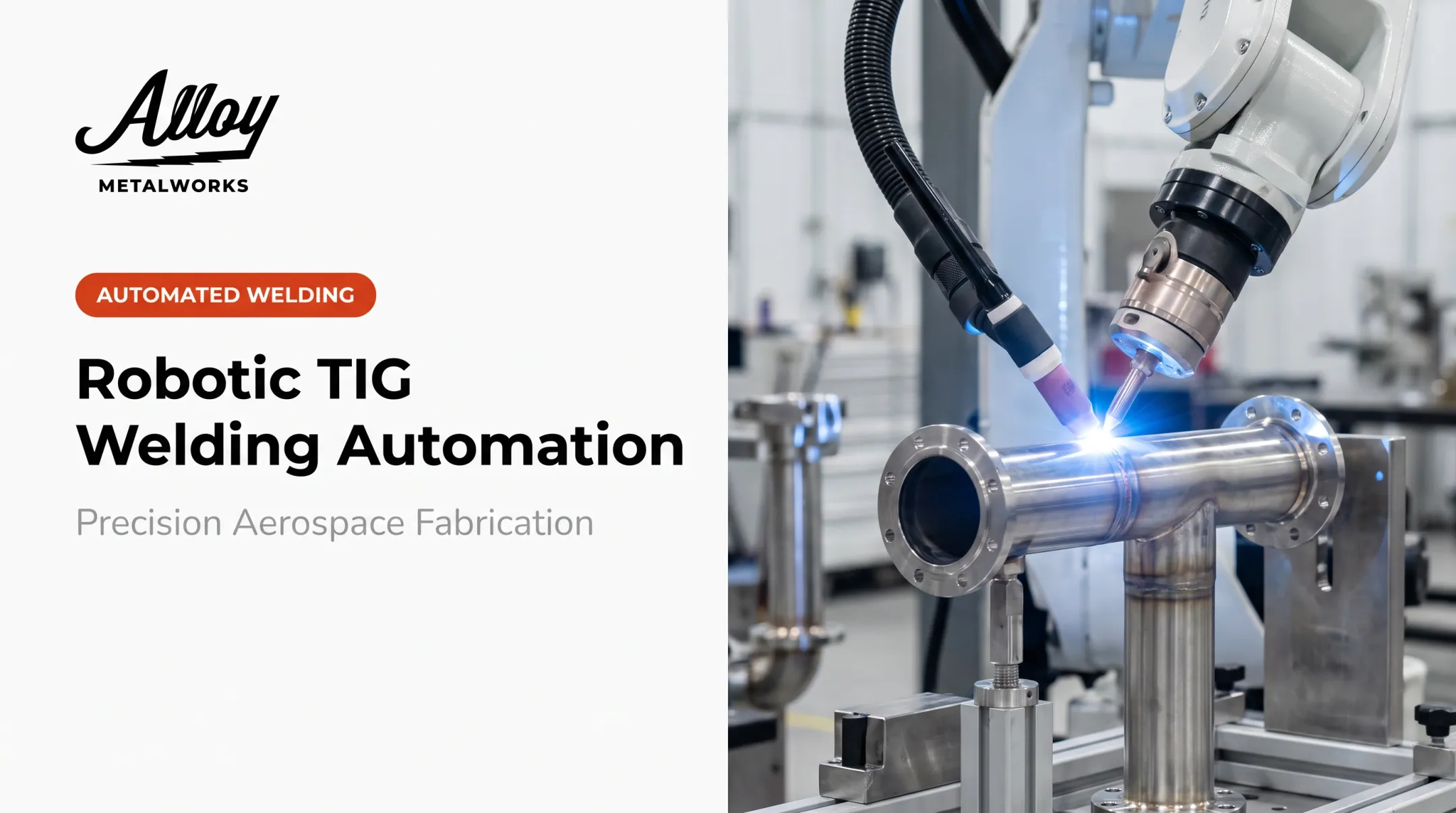
Robotic arc welding pairs traditional processes like MIG, TIG, and plasma with a programmable robotic arm. The robot holds torch path, arc length, and travel speed with a precision no human hand can sustain shift after shift.
This article covers the types of robotic arc welding, real benefits, honest costs, and the specific situations where certified manual welding still beats the robot.
Key Takeaways
- Robots automate GMAW, GTAW, and plasma welding for faster, more consistent high-volume production
- Turnkey systems typically cost $50,000–$1.2M+, before programming and maintenance
- Robots excel at repetitive work but struggle with one-off parts, tight tolerances, and exotic alloys
- Flight-critical and code-compliant welds often still need certified manual welders
What Is Robotic Arc Welding?
Robotic arc welding uses a programmable robot arm to guide a welding torch along a fixed path while controlling voltage, wire feed, and travel speed. Once programmed, the robot reproduces that exact weld thousands of times without drift.
The system relies on servo-driven joints, a motion controller, and a welding power source working in sync. Each rotation and translation is scripted; the power source adjusts amperage and voltage according to the programmed procedure.
"Arc welding" specifically means MIG, TIG, plasma, and stick processes. Laser and resistance welding use different heat sources. In Alloy Metalworks' shop work, laser welding tends to complement TIG rather than replace it on precision jobs.
Core Components of a Robotic Arc Welding Cell
Every cell needs the same basic building blocks:
- Robot arm – articulated, linear track, or a combination
- Power source – controls amperage, voltage, and pulse profile
- Wire feeder – delivers consumable electrode at a programmed rate (GMAW)
- Torch or electrode holder – fixed or servo-adjustable
- Fixturing – holds the part in exact, repeatable position
- Controller – stores and executes the weld program

Where Robotic Arc Welding Fits in Modern Manufacturing
The skilled trades shortage is the biggest driver of adoption right now. Fewer apprentices are entering welding programs while veteran welders retire, and shops need a way to keep output flowing.
But robots don't replace welder judgment. They execute decisions a welder already made during procedure development. Someone still has to dial in the parameters, qualify the joint, and decide when a robot is even the right tool.
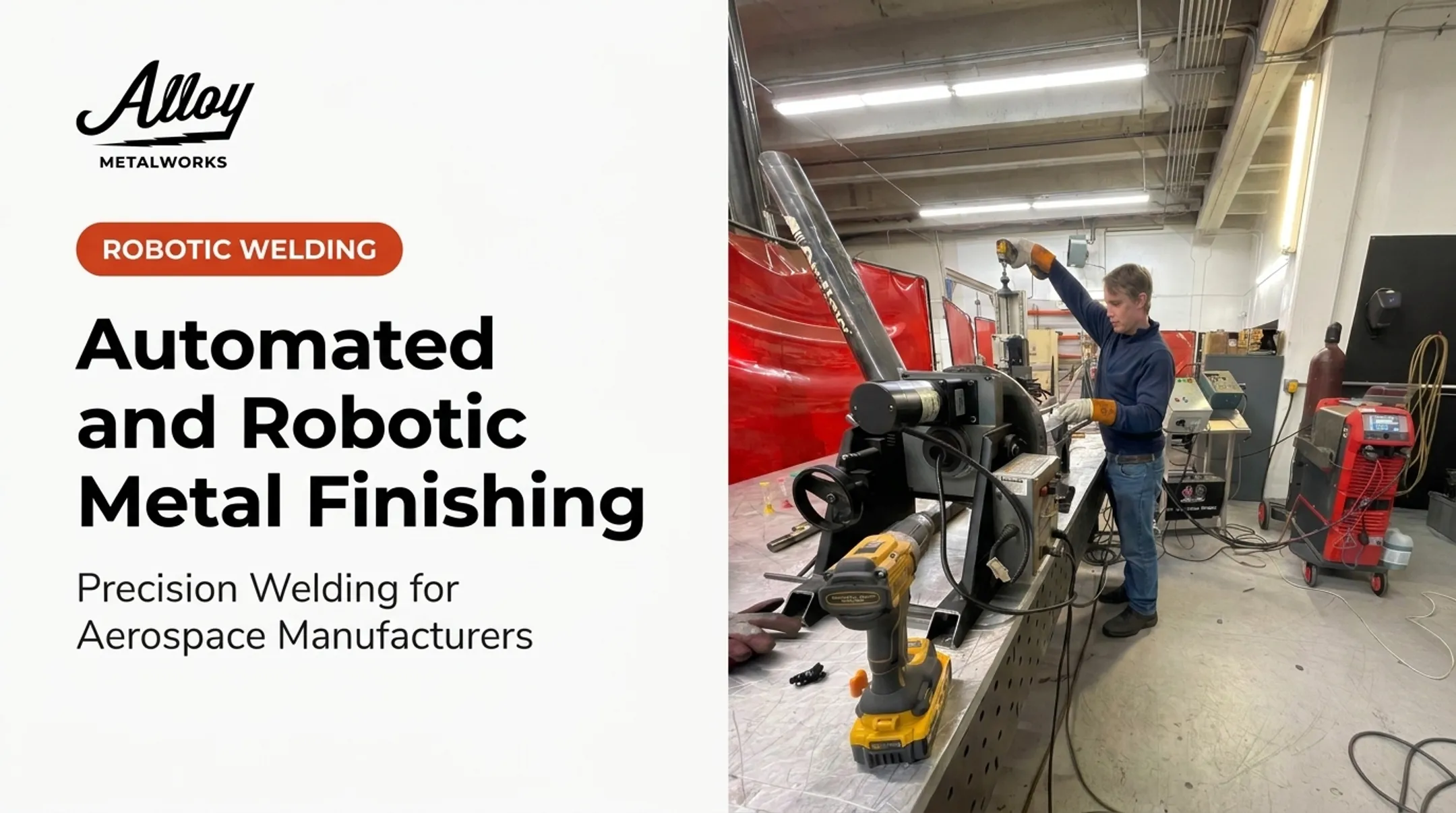
Alloy Metalworks saw this firsthand building an orbital welding system for Inconel 617. The welder's manually set parameters transferred directly into the automated Fronius system; the robot did not invent them.
Types of Robotic Arc Welding Processes
Different arc processes suit different materials, joint geometries, and production goals.
GMAW/MIG: Fast and forgiving of minor fit-up variation. Best for carbon and stainless steel structural work, especially high-volume runs where speed matters more than a mirror finish. Pulse-spray MIG variants extend this approach to thicker sections.
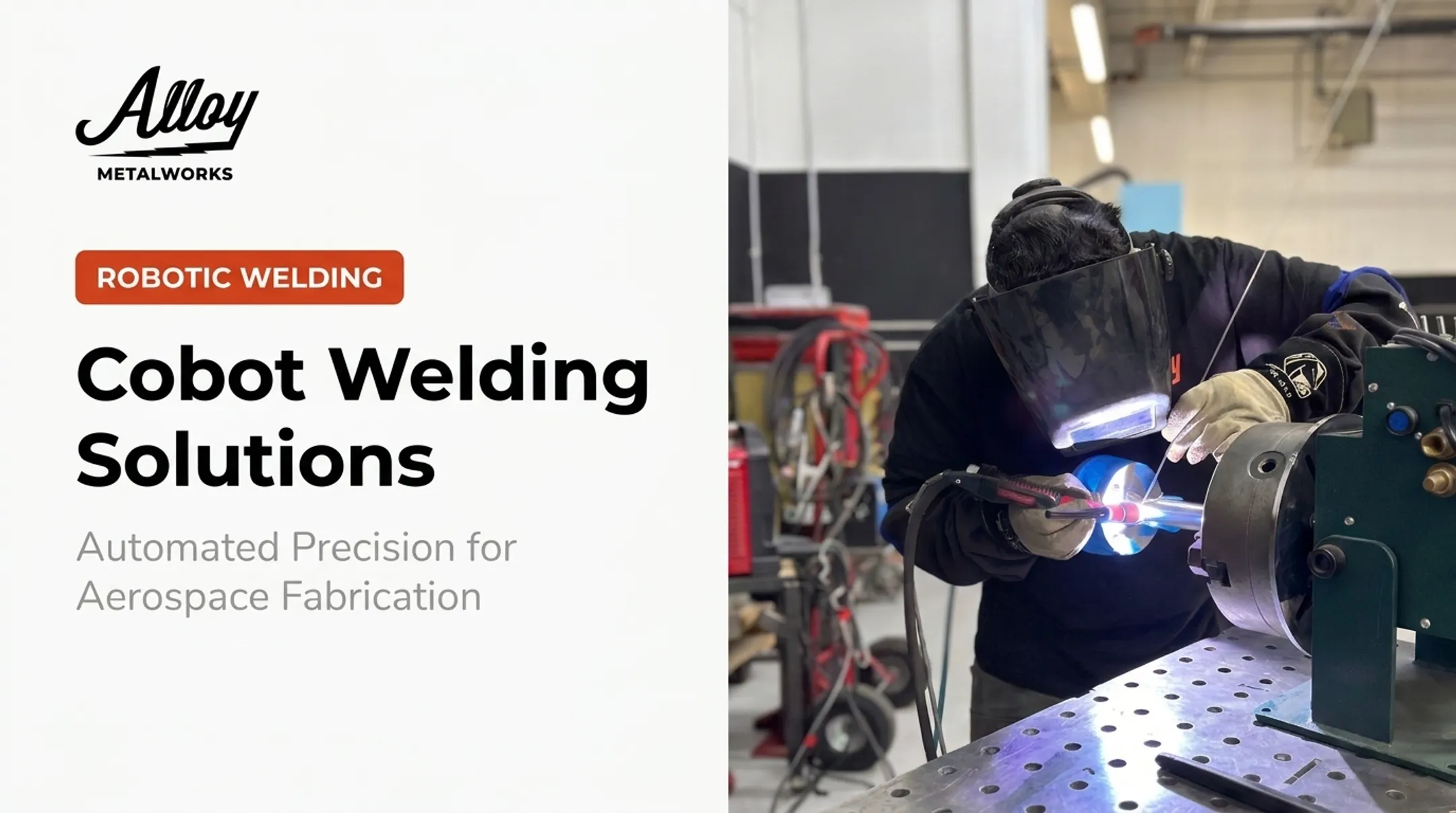
GTAW/TIG: Slower but far more precise. TIG lays clean, controlled beads on aluminum, titanium, and nickel-based superalloys, where arc length control drives weld quality. Robotic arc voltage control holds consistent torch height even on out-of-round parts.
SMAW/Stick: Versatile across metals, but rarely automated. Consumable electrode changes and slag removal do not lend themselves well to robotic cells.
Plasma Arc Welding: A constricted arc produces a tighter, more focused jet than standard TIG. Related to GTAW, it delivers deeper, more controlled penetration for specific joint designs.

Cell hardware shapes what each process can reach:
- Articulated arms handle complex 3D geometries
- Linear tracks extend reach for long seams
- Rotary positioners rotate the part instead of the torch, which is critical for orbital welds on tube and pipe
Benefits of Robotic Arc Welding
The case for automation comes down to three things: consistency, throughput, and safety.
Consistency is the big one. A robot reproduces identical voltage, wire feed, and travel speed on part one and part ten thousand. There's no operator fatigue, no shift-to-shift variation, no "good day, bad day" effect.
Throughput climbs fast in the right application. In a widely cited FANUC case study on The Will-Burt Co., robots were 3-4 times more efficient than manual welding and added 240-320 welding hours per week per system. That's a specific result, not a universal guarantee — your mileage depends heavily on part complexity and cycle setup.
Safety improves because operators step back from arc flash, fumes, and radiant heat. That's not a minor perk when you're trying to retain skilled staff in a tight labor market.

Robotic Arc Welding Costs and Speed Considerations
The upfront number is only part of the bill.
| System Type | Typical Cost Range |
|---|---|
| Basic turnkey cell | $50,000 – $200,000+ |
| Pre-engineered cell | $130,000 – $250,000 |
| Custom cell | $250,000 – $600,000+ |
| Complex multi-robot line | $600,000 – $1.2M+ |
These figures come from KC Robotics' cost breakdown and CLOOS North America.
Hidden costs to plan for:
- Installation and integration downtime while the line is offline
- Training and ramp-up time for operators and programmers
- Per-part programming time — every new geometry needs a new program
- Ongoing maintenance, service, and consumables
There's no verified industry-standard maintenance percentage, so budget it as a line item based on your vendor's service schedule, not a rule of thumb.

Cost is only half the decision; throughput is the other. Robots can weld several times faster than manual welders on repetitive work. The actual multiplier still depends on part complexity, fixturing accuracy, and how much changeover time eats into your cycle.
Don't buy a system based on a single benchmark from someone else's shop floor.
When Precision Manual Arc Welding Still Wins
Robots need consistent fit-up. Feed a robot a part with a joint gap that's off by a millimeter, and you get a rejected weld — the robot can't adapt mid-pass the way a human can.
That limitation matters most in:
- Complex, one-off, or low-volume parts where programming time never pays back
- Out-of-position joints that shift geometry mid-weld
- Exotic alloys like Inconel, Hastelloy, and titanium, where heat input and arc control require constant human judgment
Industries with the tightest tolerances often need code-compliant, inspection-ready welds performed under specific certifications — AWS D17.1 for flight-critical hardware, ASME Section IX for pressure-retaining components, and AWS D18.1 for sanitary process systems.
Those requirements are why shops like Alloy Metalworks still lean on certified manual arc welding. The Colorado-based team pairs engineering-aware collaboration with inspection-ready work for aerospace, energy, and advanced manufacturing clients.
They routinely weld Inconel 600, 601, 617, 625, and 718, plus Hastelloy and titanium Gr2/Gr7. For clients such as Utility Global, weld quality on Inconel and stainless steel was the deciding factor.

Smart shops rarely pick only one approach. Many run a hybrid model: robots handle high-volume repetitive welds, while certified manual welders take prototypes, complex assemblies, and troubleshooting. Alloy’s Inconel 617 orbital welding setup follows that path. A manual welder dialed in the parameters first, then those settings moved into the automated system for repeatable production.
Frequently Asked Questions
How much faster is a robotic welder than a human welder?
Robots weld continuously without fatigue and often finish repetitive welds several times faster than manual welders. The exact gain depends on part complexity, fixturing quality, and process type; gains of 3-4x are common on well-fixtured repetitive work.
How much do robotic welders cost?
Systems typically range from $50,000 for a basic turnkey cell to well over $1 million for complex multi-robot lines. Budget separately for programming, training, and ongoing maintenance.
What is the difference between robotic arc welding and manual arc welding?
Robotic welding delivers programmed repeatability on consistent, well-fixtured parts. Manual welding brings real-time adaptability and judgment for variable fit-up, out-of-position joints, and complex geometries.
Can robots weld exotic alloys like titanium or Inconel?
Yes, with proper shielding gas control and dialed-in parameters. However, tight tolerances and code certification requirements often still favor experienced manual welders, especially for flight-critical or pressure-retaining parts.
Is robotic arc welding worth it for small manufacturers?
It depends on production volume, part repeatability, and whether contracts justify the upfront investment. Low-volume or highly variable work rarely pays back the programming and integration cost.
What certifications matter for arc welding quality assurance?
Look for AWS D1.1 for structural steel, ASME Section IX for pressure equipment welding qualifications, AWS D17.1 for aerospace, and ISO 9001 for overall quality management.