
It's achievable. It's also unforgiving. Weld the wrong pair without the right process, filler, or prep, and you get cracking, corrosion, or an intermetallic layer so brittle it fails the first time it's stressed.
This guide breaks down the metallurgy, the methods, and the combinations that actually work, so you know what to expect before metal ever touches an arc.
Key Takeaways
- Melting-point gaps, thermal expansion mismatch, and electrochemical compatibility control whether two base metals can be welded
- Pairs like titanium-steel and aluminum-copper can't be fusion welded—use brazing or solid-state methods instead
- Filler metal typically matches the lower-strength base metal; preheat follows the higher-strength one
- A certified fabricator cuts rework risk, failed inspections, and compliance issues
What Is Dissimilar Metal Welding and Why It's Used
According to ScienceDirect's materials science reference, dissimilar metal welding means joining two different base metals or alloys into one permanent weldment. Instead of picking one material and compromising, engineers combine two, each doing the job it's best at.
Common reasons teams choose this route:
- Cutting cost by using expensive alloys only where corrosion resistance or heat tolerance is actually needed
- Reducing weight by pairing aluminum sections with steel structural members
- Isolating corrosion-prone zones with stainless or nickel-alloy cladding
- Combining structural strength with specialty properties like electrical or thermal conductivity
NASA's early work on this is instructive. A 1967 NASA report on dissimilar joining documented cryogenic assemblies combining 2219 aluminum with 321 stainless steel, plus stainless-clad aluminum for engine firewalls and water-storage tanks.
The same logic drives today's aerospace, hydrogen energy, and chemical processing work. These industries routinely need performance-critical assemblies where two metals do two different jobs.
At Alloy Metalworks, this shows up constantly in energy equipment and aerospace assemblies where nickel superalloys, stainless, and dissimilar combinations all land in the same weldment.
Key Metallurgical Factors That Determine Weldability
Before choosing a process, you need to understand why some pairs weld cleanly and others crack, warp, or corrode.
Melting Point Differences
A wide gap between melting points is one of the biggest obstacles. Pure aluminum melts around 1,221°F, while steel needs roughly double that heat. Weld them together with a standard fusion process, and the aluminum liquefies or burns away long before the steel even begins to fuse.
Thermal Expansion Mismatch
Every metal expands and contracts at its own rate when heated and cooled. Pair two metals with very different expansion coefficients, and the joint develops residual stress as it cools. That stress later shows up as cracking or distortion. Lincoln Electric links weld distortion directly to this expansion-contraction cycle.
Galvanic and Electrochemical Corrosion
Dissimilar metals in contact create a mini battery when moisture or an electrolyte is present. AMPP (the Association for Materials Protection and Performance) defines this as galvanic corrosion: the less-noble metal becomes an anode and corrodes faster than it would alone. The galvanic series ranks metals by nobility. The further apart your two metals sit on that scale, the greater the corrosion risk at the joint.
Dilution and Intermetallic Phases
When base metals mix too much during fusion, they can form brittle intermetallic compounds. ASM's corrosion research confirms this happens specifically when steel, copper, magnesium, or titanium is fusion welded to aluminum — the resulting phases are prone to hot cracking under load.
Heat-Affected Zone Behavior
The heat-affected zone (HAZ) next to a dissimilar weld often behaves nothing like either base metal. It can turn brittle or lose toughness, which is why methods like electron beam welding are valued for keeping HAZ size to a minimum.

Choosing the Right Welding Method for Dissimilar Metals
Not every dissimilar pair calls for the same process. Matching the method to the metallurgy is the difference between a sound joint and a failed one.
Fusion Arc Welding (TIG/MIG)
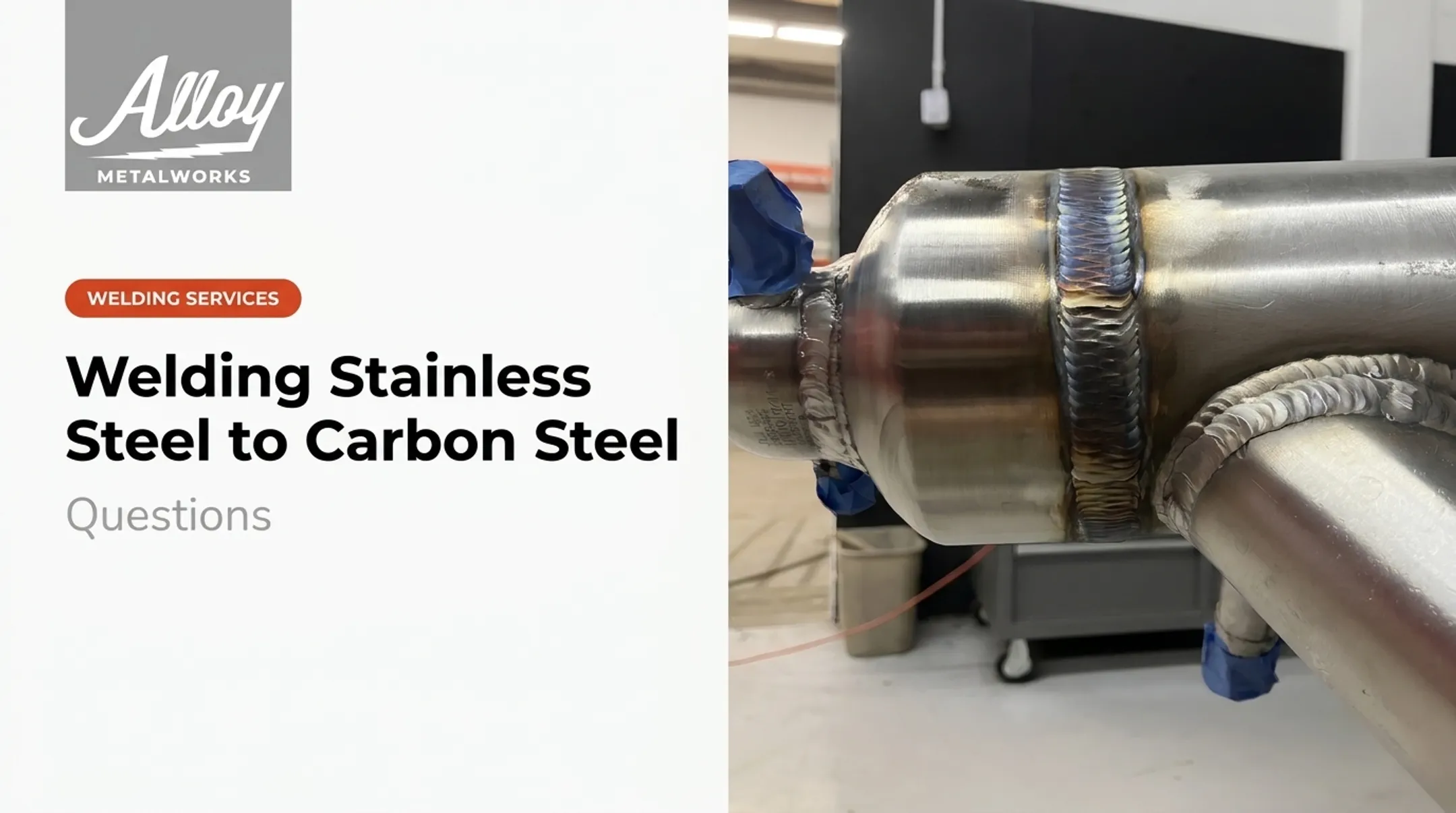
TIG (GTAW) and MIG (GMAW) work well for compatible dissimilar pairs such as stainless to carbon steel, where melting points and expansion rates are close enough that a shared weld pool doesn't create brittle phases. They struggle when the melting point gap is large or intermetallics are a known risk.
Brazing
When fusion isn't viable, brazing uses a filler metal with a melting point below both base metals, joining them without melting either one. This is the standard fallback for pairs like copper to aluminum, where fusion welding would create the brittle intermetallics ASM warns about.
Solid-State Welding (Friction, Explosion, Ultrasonic, Diffusion Bonding)
These methods skip melting entirely. Friction, explosion, ultrasonic, and diffusion welding can join pairs that fusion processes cannot, including titanium to steel. For Ti-steel joints, solid-state or transition-layer approaches are typically required to restrict brittle Ti-Fe intermetallic formation.
Laser and Electron Beam Welding
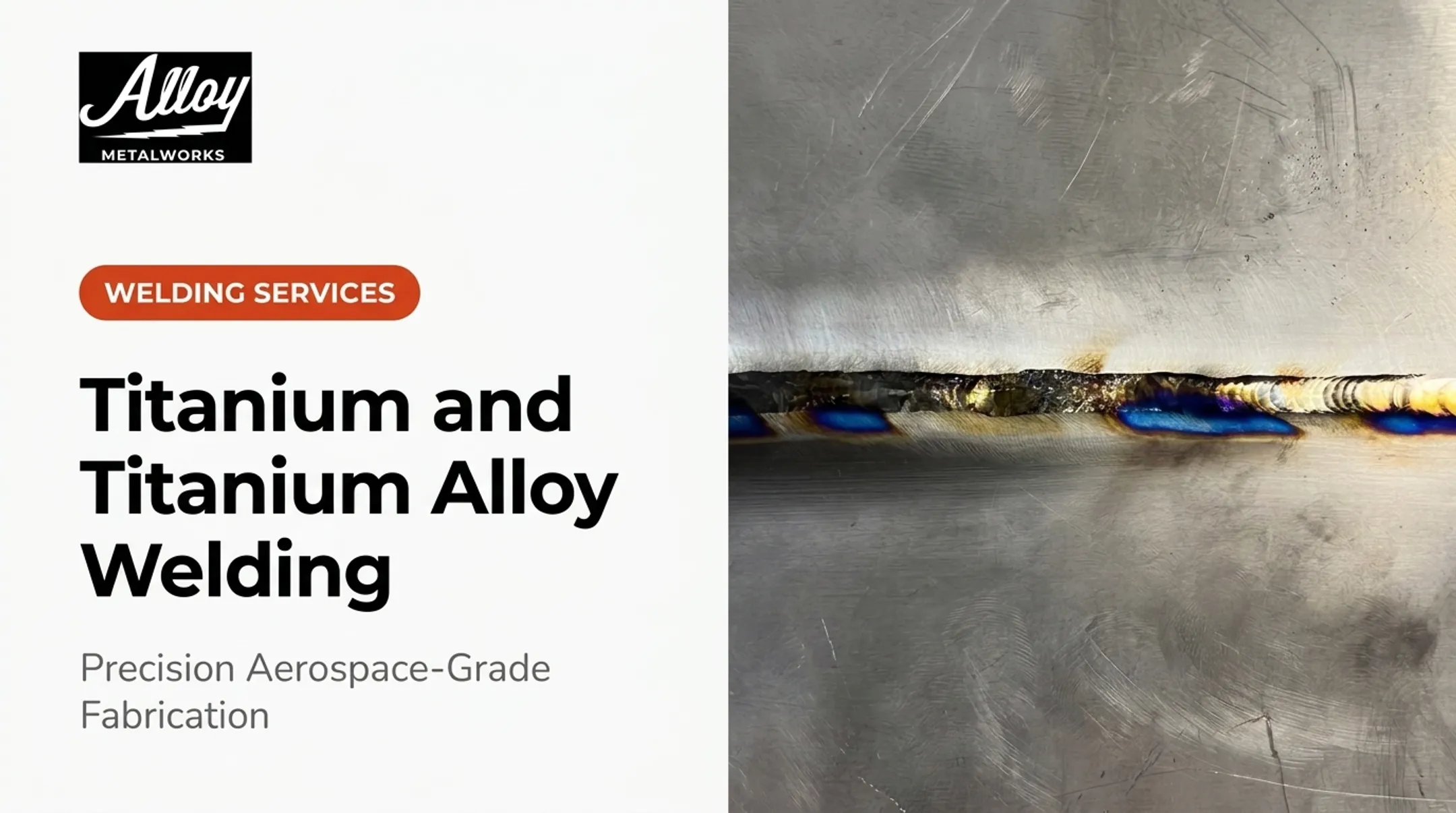
These processes deliver tightly focused, low-heat-input welds with a minimal HAZ—useful on exotic alloy pairs where heat control limits distortion and brittle phases. Electron beam welding of dissimilar stainless joints can leave little to no observable HAZ on the 316L side. Alloy Metalworks runs code-compliant laser welding for precision work on exotic alloys.

Pairs generally NOT suited to standard fusion welding:
- Aluminum to copper
- Aluminum to stainless steel (without a transition layer)
- Titanium to steel (without an intermediate metal)
Common Dissimilar Metal Combinations and Filler Metal Considerations
Here's how filler selection and technique shift depending on the pair.
Stainless Steel to Carbon Steel
This is one of the more forgiving combinations. Shops commonly use ER309/309L filler (per AWS A5.9 / ASME SFA-A5.9 specifications) with low heat input to control distortion and dilution at the fusion boundary.
Aluminum to Steel
Direct fusion is difficult due to the melting point gap and intermetallic risk. Aluminum-silicon fillers or brazing techniques are the more reliable alternatives here.
Nickel Alloys (Inconel/Hastelloy) to Stainless or Carbon Steel
Nickel-based fillers are standard for these joints, which show up constantly in aerospace, energy, and hydrogen applications. Alloy Metalworks works with Inconel 600, 601, 617, 625, 718, and Hastelloy for exactly this kind of high-temperature, high-corrosion equipment.
ESAB's 2024 guidance notes these specialized fillers are formulated to preserve the base alloy's corrosion resistance while managing crack risk. Exotic alloys are contamination-sensitive, so heat input and travel speed both need tight control.
Titanium to Steel
Direct fusion typically isn't an option. A 2025 review on titanium-steel joining confirms that an intermediate metal layer (often copper) is the standard way to prevent brittle intermetallic formation and keep the joint mechanically sound.

General rule of thumb:
- Filler metal choice follows the lower-strength/lower-alloy base metal
- Preheat strategy follows the higher-strength metal's requirements
Best Practices, Common Mistakes, and When to Bring in a Certified Partner
Do this before you strike an arc:
- Verify base metal chemistry through spark testing, material certs, or a direct call to the manufacturer
- Confirm the galvanic compatibility of your two metals before assuming a direct joint is safe
- Match your welding procedure to the specific pair, not a generic "dissimilar metal" template
Avoid this:
- Fusing electrochemically incompatible metals without a transition material or barrier layer
- Assuming a process that works for one dissimilar pair automatically works for another
- Skipping documented weld procedures on flight-critical, sanitary, or pressure-vessel work
Flight-critical hardware, sanitary systems, and pressure vessels aren't places for trial-and-error shop welding. These applications typically require documented procedures under codes like AWS D17.1 and ASME Section IX, not judgment calls made mid-project.
That's the gap a certified partner closes. Alloy Metalworks operates under ASME Section IX, AWS D17.1 Class A, AWS D18.1 Sanitary Welding, and ISO 9001. Aerospace, energy, and research clients get engineering collaboration, weld procedure development, and inspection-ready documentation for dissimilar metal fabrication.

Certification alone doesn't guarantee good welds. Paired with disciplined process control and traceability, it lowers the odds of a failed inspection or costly rework.
Frequently Asked Questions
Can welding join dissimilar metals?
Yes, with the right process, filler metal, and preparation. Some pairs, like titanium to steel or aluminum to copper, need non-fusion methods such as brazing or friction welding instead of standard arc welding.
What is the hardest combination of metals to weld together?
Titanium-to-steel and aluminum-to-copper rank among the toughest due to reactivity and thermal mismatch. Both tend to form brittle intermetallic compounds that crack under load without special techniques.
What causes cracking when welding different metals?
Excess dilution, thermal expansion mismatch, and the wrong filler metal are the primary culprits. These factors combine to create brittle zones or residual stress that fails under service conditions.
Do you need a transition material to weld dissimilar metals?
Often, yes. When two metals have very different electrochemical properties, a buffer layer or transition insert prevents direct contact that would otherwise accelerate corrosion or brittle phase formation.
Is TIG or MIG better for dissimilar metal welding?
TIG generally offers tighter heat control, which matters for precision dissimilar joints. MIG suits faster production runs where the metal pair is more forgiving and heat input control is less critical.
How do you prevent galvanic corrosion in a dissimilar metal weld?
Use compatible filler metals, apply protective coatings at the joint, and keep incompatible metal pairs isolated from moisture or electrolytes. Checking the galvanic series before finalizing your design helps flag high-risk pairs early.