
For aerospace, energy, and process industries, that's not a minor inconvenience. It's unplanned downtime, contamination risk, and in worst cases, a fire or emergency shutdown. Improper welding doesn't just cause leaks — it creates non-compliance issues that can shut down an entire facility during audit.
This guide covers how tube-to-tubesheet welds actually work, which processes and materials matter, what codes govern the work, and how to pick a fabricator who won't leave you exposed.
Key Takeaways
- Tubes get welded, expanded, or both — the right choice depends on pressure, temperature, and vibration exposure
- Orbital TIG/GTAW is the industry standard for tube-to-tubesheet joints due to precision and repeatability
- ASME Section IX and TEMA compliance isn't optional for pressure-retaining equipment
- A qualified, documentation-heavy fabricator is cheaper in the long run than rework after failed inspection
Understanding Heat Exchanger Tube-to-Tubesheet Connections
In a shell-and-tube heat exchanger, tubes pass through drilled holes in a thick metal tubesheet, with baffles supporting the tube bundle along its length and directing flow across the shell side. The tube-to-tubesheet joint is where the two fluid streams are kept apart — and where most reliability problems start.
Get this joint wrong, and you don't just get a leak. You get cross-contamination between process fluids, a scenario that's unacceptable in pharmaceutical, food-grade, or high-purity energy applications.
Welding vs. Expansion Methods
There isn't one correct way to join a tube to a tubesheet. The choice depends on service conditions:
| Joint Type | How It Works | Best For |
|---|---|---|
| Expanded only | Tube is mechanically rolled into the hole; no weld | Low-criticality service, easier retubing |
| Seal weld + expansion | Light weld adds leak protection; expansion carries the load | Moderate leak-tightness needs |
| Strength weld only | Full weld carries mechanical load and seals the joint | High-strength requirements |
| Strength weld + expansion | Combines welded strength with mechanical contact | Critical, high-vibration, high-pressure service |

Design pressure, contamination risk, thermal expansion, and future retubing needs all factor into this decision (Altex joint configuration guidance). For vibration-prone, high-integrity service, expansion plus strength welding is the preferred approach because it closes leak paths and resists mechanical loosening.
Material Considerations
The tube and tubesheet material dictates the welding approach almost as much as the joint design does:
- Carbon steel — fit-up, preheat, and alignment drive penetration; reduced preheat plus misalignment has been shown to cut weld penetration in header-box studies
- 304/316L stainless — needs inert TIG root backpurging to prevent chromium loss and protect corrosion resistance
- Copper alloys — often brazed rather than welded for tube-to-tubesheet joints
- Nickel alloys (Inconel, Hastelloy, Incoloy) — need tight heat input and dilution control to hold mechanical properties
- Titanium — requires a fully inert envelope; air exposure causes embrittlement
Alloy Metalworks welds these tube-to-tubesheet alloys daily, from Inconel and Hastelloy to Incoloy 800HT and titanium Grades 2 and 7, for energy and aerospace heat exchanger work.
Welding Processes Used for Heat Exchanger Tubes
TIG/GTAW dominates thin-wall tube welding. It gives welders precise control over heat input, produces minimal spatter and defects, and works well across exotic alloys that other processes struggle with.
Automated vs. Manual TIG
Manual TIG still has a place for low-volume runs, repairs, and restricted-access joints.
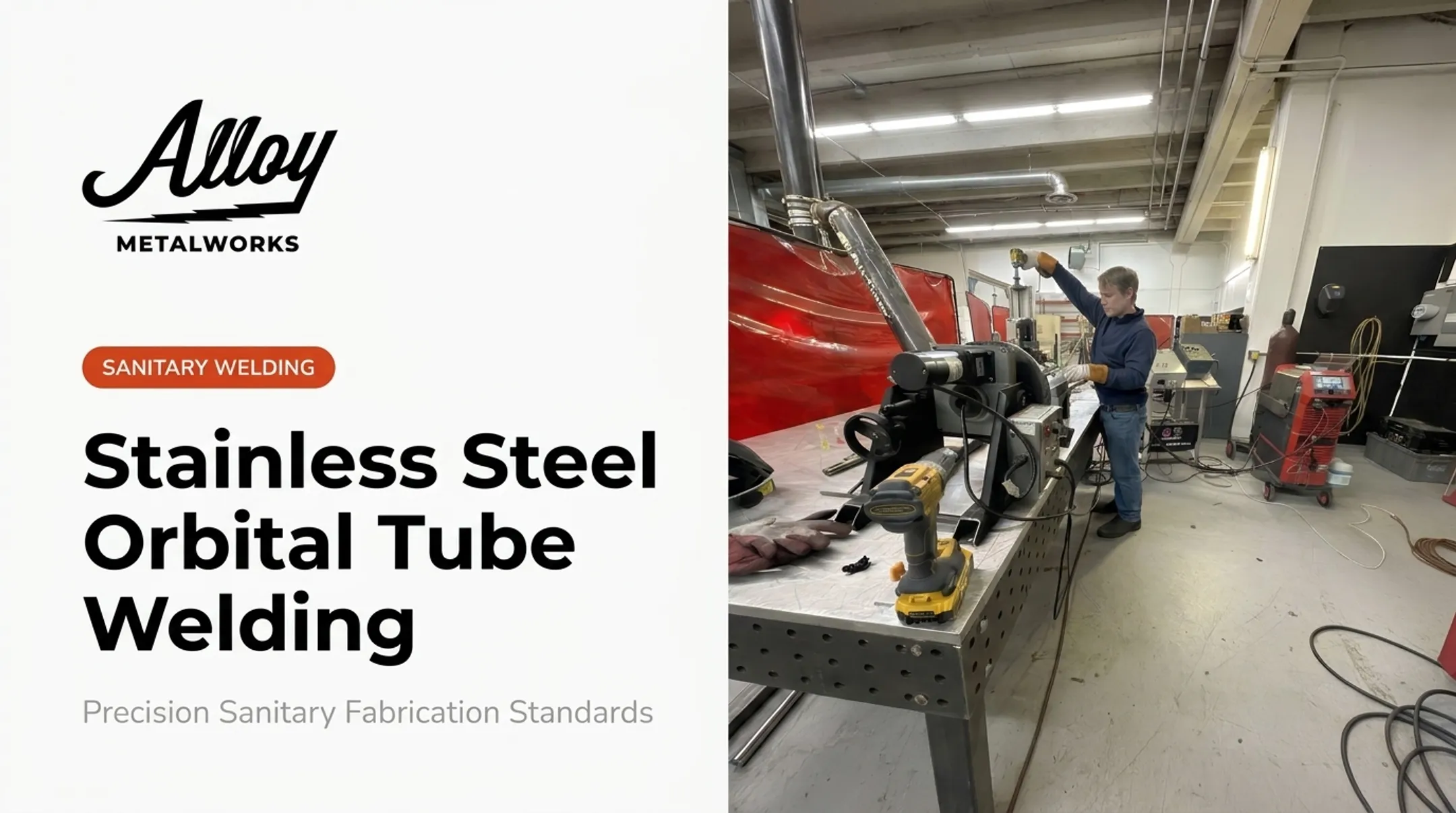
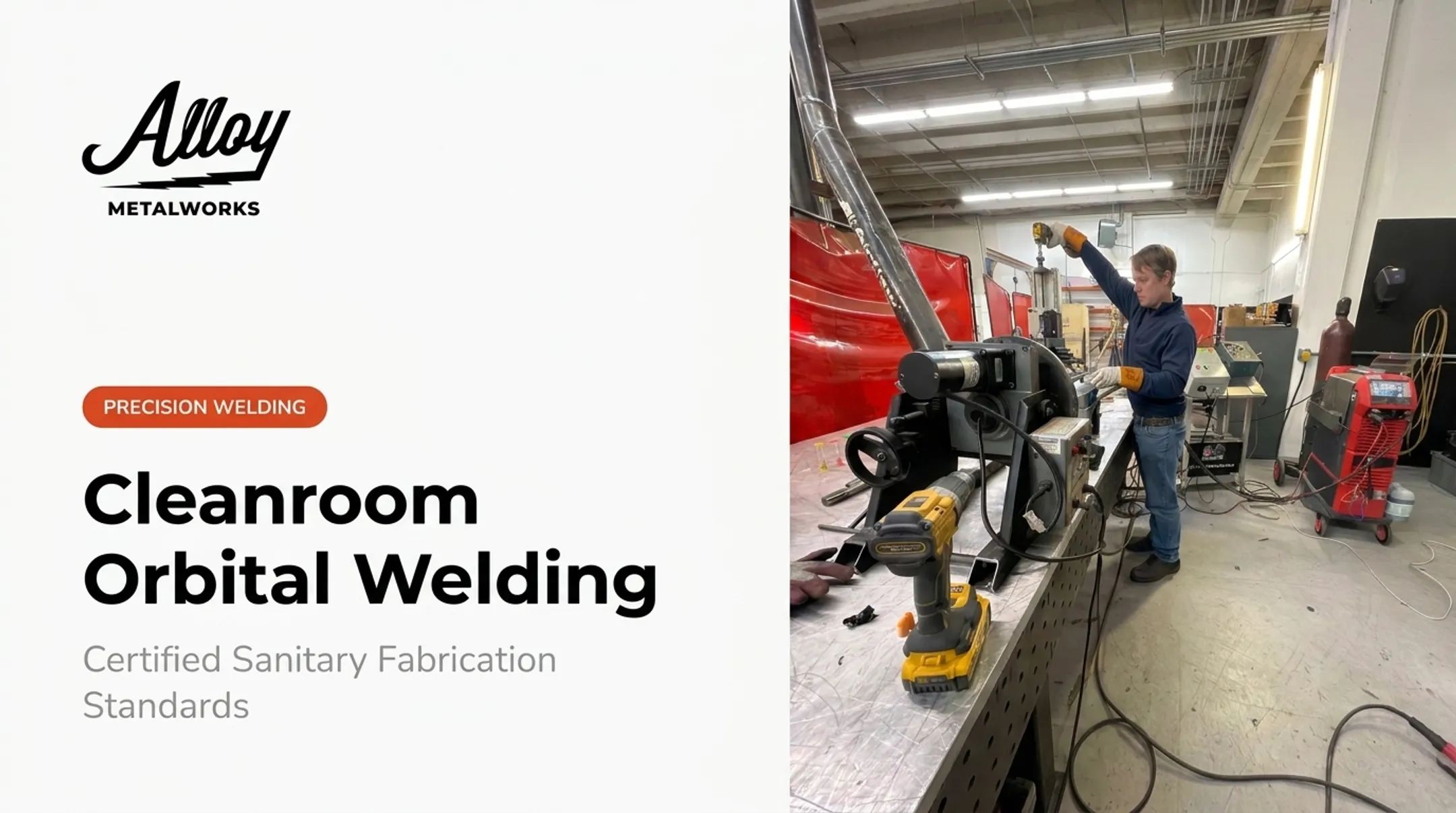
For repeat joints across a tube bundle, orbital (automated) TIG wins on consistency. Automation holds arc length, travel speed, and heat input tighter than a hand can sustain across dozens or hundreds of identical joints, which cuts variability and inspection rejection rates.
A carbon-steel header-box study found that positioning, alignment, and welding sequence were central to penetration quality — exactly the variables orbital equipment is built to control (MDPI materials study).

Other Processes: When They Fit
TIG is the default for thin-wall tube-to-tubesheet joints. Other processes fit only when geometry and thickness change the requirements:
- SMAW — field repairs and heavier structural attachments
- GMAW — thicker shell seams where deposition rate matters more than heat finesse
- SAW — long, heavy shell or structural seams in production settings
These processes are not interchangeable with TIG on thin-wall tube joints; wall thickness and joint geometry dictate the call.
Gas Purging and Heat Treatment
Inert gas backpurging isn't optional for austenitic stainless or titanium. Without it:
- Stainless loses chromium at the weld root, undermining corrosion resistance
- Titanium picks up atmospheric oxygen and nitrogen, causing embrittlement
One clear visual sign of contamination: purple or blue discoloration on a titanium weld. Under AWS D17.1 Class A visual inspection standards, that discoloration alone is grounds for rejection — it signals atmospheric exposure that's already compromised the joint. Shops that weld flight-critical or high-purity titanium hardware typically rely on controlled purge setups and qualified procedures to keep roots clean enough to pass that bar.
Preheat and post-weld heat treatment (PWHT) should be dictated by material, thickness, and code requirements — not applied as a blanket rule. Skipping preheat on carbon steel, for instance, has been directly linked to reduced weld penetration in documented studies.
Codes, Standards, and Quality Control
Heat exchanger tube welding is standard practice across US industry, but only when performed under the right code framework. The governing standards include:
- ASME Section IX: welding procedure and welder qualification
- ASME BPVC Section VIII: pressure vessel construction; 2021-edition interpretations point to Section IX QW-193/QW-200 for tube-to-tubesheet joint qualification
- TEMA: exchanger classification and joint design guidance
The 10-13 Rule, Clarified
The 10/13 rule (sometimes called the 2/3 rule) is often misunderstood. It is not about tube spacing or layout.
It is a pressure-relief screening criterion under ASME Section VIII: if the low-pressure side's design pressure is at least 10/13 of the high-pressure side's, code may allow you to skip a full tube-rupture evaluation. It governs relief-system design decisions, not weld layout planning.
NDT Methods for QC
Production-representative mock-ups are standard practice: typically a minimum of 10 tubes for procedure qualification and 5 per welder qualification. Common testing methods include:
- Visual testing (VT): surface condition and weld profile checks
- Liquid penetrant testing (PT): surface-breaking defect detection
- Radiographic testing (RT): internal discontinuity imaging
- Ultrasonic testing (UT): subsurface flaw detection
- Eddy current testing (ET): tube integrity screening
- Hydrostatic or helium leak testing: joint seal verification

Which methods apply depends on the construction code, owner specification, and accessible geometry. Not every joint needs every test.
Documentation matters as much as the weld itself. Audit-ready fabricators maintain:
- Welder qualification records
- Material traceability
- Welding procedure documentation
Alloy Metalworks runs ISO 9001 and ASME Section IX-controlled processes so that paper trail stays intact for regulated clients.
Common Welding Defects and How to Prevent Them
Four defects account for most tube weld failures:
- Cracks/fatigue: often initiated by a weld defect, then accelerated by vibration and pressure/temperature cycling
- Lack of fusion or penetration: linked to poor fit-up, tube or tubesheet misalignment, or insufficient preheat
- Porosity/oxidation: caused by inadequate shielding gas coverage, exposing the weld pool to atmosphere
- Undercut: driven by excessive current, poor travel speed, or incorrect torch angle

Prevention comes down to fundamentals:
- Clean joint surfaces before welding
- Verify shielding gas coverage before and after the weld
- Control heat input to the qualified procedure
- Use a representative mock-up before production welding begins
When a defect does show up, the fix isn't casual. Remediation means grinding out the defective area and rewelding per the qualified procedure, not a quick patch. Getting the joint right the first time costs less than fixing it twice.
Choosing a Qualified Heat Exchanger Welding Partner
Before signing off on a fabricator, verify these basics:
- ASME Section IX certification for the welding procedures and personnel actually assigned to your job
- Relevant AWS certifications — D17.1 for aerospace-grade work, D18.1 for sanitary systems
- Procedure qualification records (WPS/PQR) specific to your tube/tubesheet material combination, not a generic claim of capability
A piping system rebuilt after a previous contractor's welds failed inspection had no documentation for welds, procedures, or welder qualifications to fall back on.
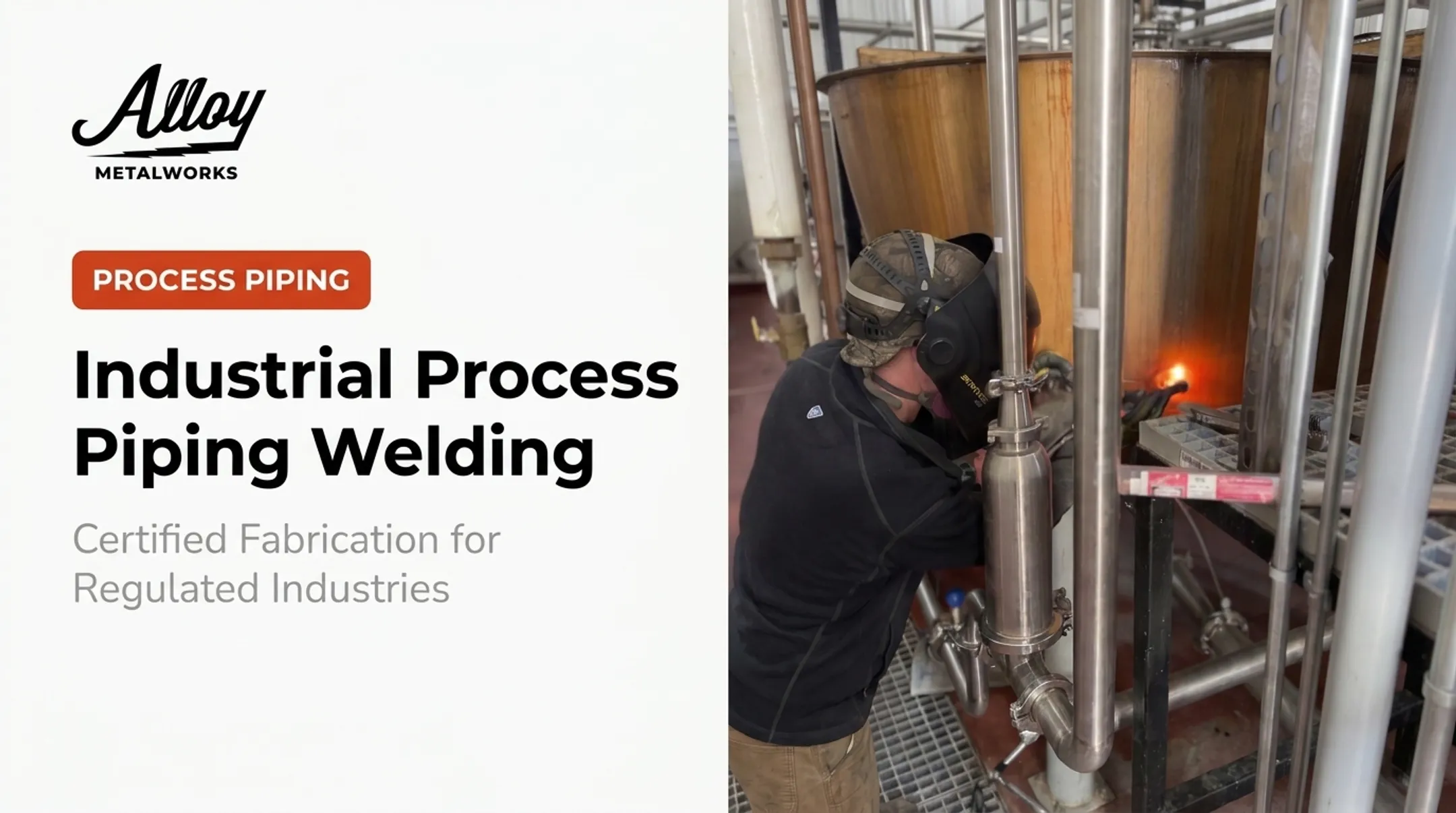
The rebuild required full inspection to ASME B31.3, with visual and magnetic particle testing by a third-party inspector, plus in-house borescope and dye penetrant testing done proactively to stay ahead of delays. That's the difference documentation makes when something goes wrong.
Beyond certifications, look for engineering collaboration: a fabricator who evaluates expanded, seal-welded, and strength-welded options against your actual service conditions instead of defaulting to whatever's cheapest or fastest.
Alloy Metalworks is a Colorado-based fabricator working under ASME Section IX and AWS D17.1 Class A within an ISO 9001-controlled shop. The team handles Inconel, Hastelloy, Incoloy, and titanium alongside stainless steel, supporting aerospace, advanced energy, and industrial process clients who need audit-ready documentation, not just a finished weld.
Frequently Asked Questions
Can a heat exchanger be welded?
Yes. Tube-to-tubesheet joints can be seal-welded, strength-welded, or combined with expansion, depending on pressure, leak-tightness, and vibration requirements. TIG (often orbital) is the standard process.
Is it legal to weld a heat exchanger?
Yes, when performed under applicable codes like ASME Section IX and TEMA guidance, using qualified welders and documented procedures. The legal issue arises from skipping qualification and documentation, not from welding itself.
What is the 10-13 rule for heat exchangers?
The 10-13 rule is a pressure-relief screening criterion under ASME Section VIII, not a tube layout rule. If the low-pressure side's design pressure is at least 10/13 of the high-pressure side's, a full tube-rupture evaluation may not be required.
What welding process is best for heat exchanger tubes?
Orbital TIG/GTAW is generally preferred for thin-wall tube joints. It delivers consistent penetration and heat control across repeat joints, reducing inspection rejections compared to manual welding.
Can a leaking heat exchanger tube be repaired by welding?
Minor leaks can sometimes be repaired, but the decision depends on the extent of damage, tube material, and code requirements. Extensive damage often calls for plugging or full retubing instead.
What materials are heat exchanger tubes commonly made from?
Common materials include carbon steel, stainless steel (304/316L), copper alloys, and nickel-based alloys like Inconel and Hastelloy. Titanium is used in more corrosion-demanding applications.