
That's why cleanroom orbital welding has become the standard for flight-critical, sanitary, and high-purity fabrication. It combines automated welding precision with controlled environments to eliminate the two biggest threats to weld integrity: particulate contamination and oxidation.
This article breaks down how the process actually works, which codes govern it, and how to vet a fabrication partner before you sign a contract.
Key Takeaways
- Automated GTAW/TIG in a cleanroom cuts particulate and oxidation risk on critical joints
- ASME Section IX, AWS D17.1, and AWS D18.1 set qualification rules for aerospace and sanitary work
- Aerospace, energy, semiconductor, and pharma use it for flight-critical and sanitary hardware
- A certified, documentation-driven partner cuts inspection failures and costly rework
What Is Cleanroom Orbital Welding?
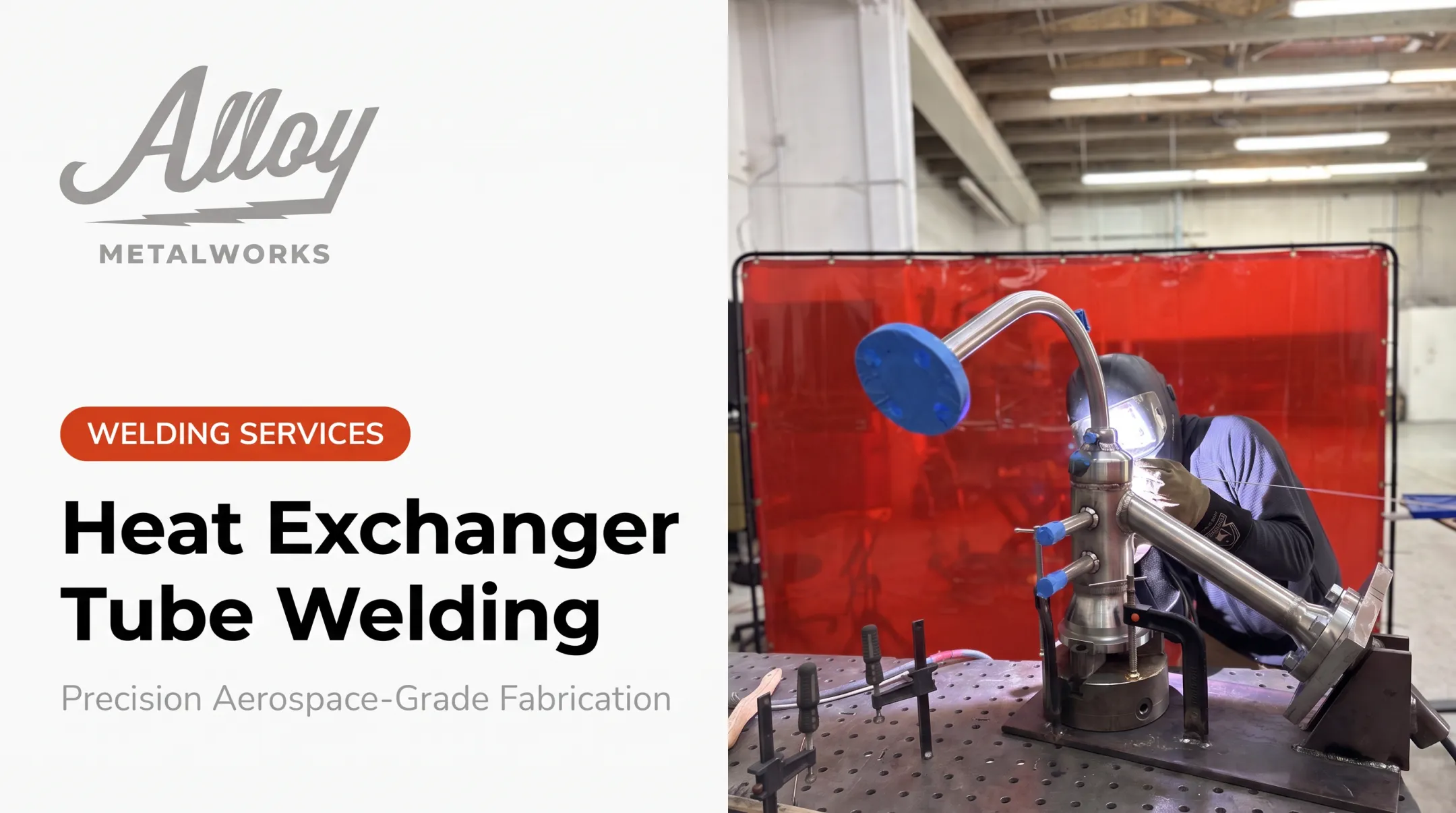
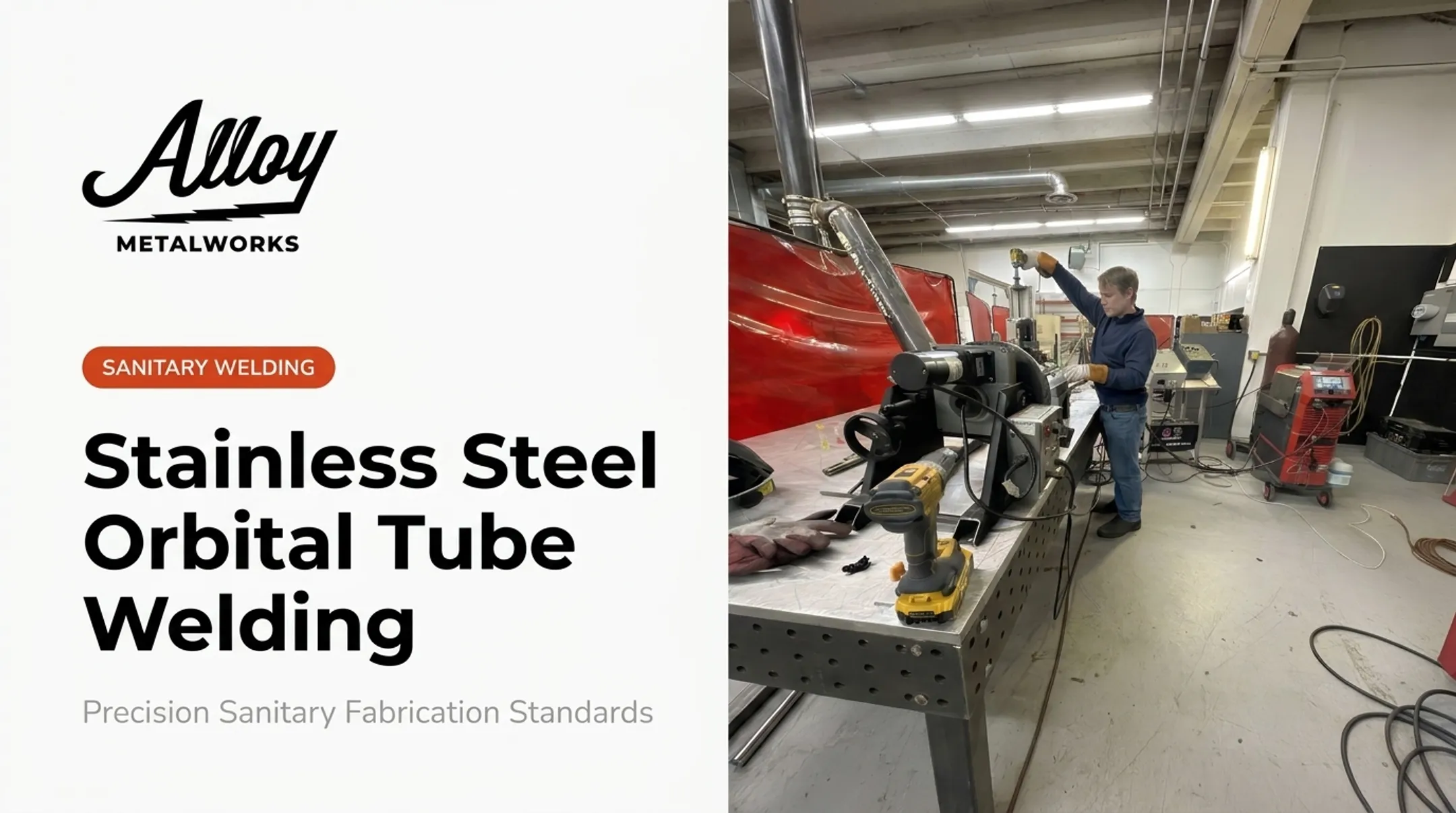
Orbital welding is an automated process where a welding head rotates the electrode around a stationary tube or pipe. Instead of a welder manually guiding a torch, mechanical guidance produces the same weld geometry every time, which is critical for tube-to-tube and tube-to-fitting joints in high-purity systems.
"Cleanroom" refers to a space with regulated particulate count, temperature, and humidity, classified under ISO 14644-1. The standard defines nine classes (ISO 1 through ISO 9) based on maximum particles per cubic meter at specific sizes, from ISO 1's limit of 10 particles at 0.1 micrometers to ISO 9's much looser thresholds.
Why Combine the Two?
Closed orbital weld heads shield the arc from outside air. A controlled room limits airborne contamination reaching the joint before, during, and after the weld. Together, they address contamination from two directions at once.

Welding can be done inside a cleanroom when closed-chamber orbital heads and proper purge gas control are used. That setup keeps air cleanliness intact. Open-arc manual TIG is a different story: it introduces far more variability and contamination risk.
People are another major contamination source. Skin cells, hair, and clothing fibers constantly generate particulates, so cleanroom garments, gloves, and controlled movement protocols matter as much as the welding equipment itself.
How the Cleanroom Orbital Welding Process Works
Pre-Weld Preparation
Before any arc is struck, teams clean tubing with deionized or low-chloride water, deburr the ends, and visually inspect for surface particulates. Skipping this step is one of the fastest ways to fail inspection later.
A subtle risk here: abrasive cross-contamination. Grinding discs, Scotch-Brite pads, or files previously used on carbon steel or aluminum can transfer embedded particles into stainless or nickel-alloy surfaces, compromising the passive oxide layer that protects the metal.
Purging and Shielding
Inert gas purging, typically argon, protects both the interior and exterior of the joint from oxidation and supports full penetration.
Argon is the standard shielding and purge gas for high-purity orbital welding. Blends are sometimes used for specific alloys or joint geometries, but pure argon remains the default for sanitary and high-purity tube work.
AWS D18.2 publishes a visual discoloration guide that ties oxygen levels in backing gas to increasing weld discoloration inside stainless tube. Excessive heat input or poor shielding can deplete the passive layer and leave oxidation that fails inspection.
Weld Execution
Once purge quality is confirmed, the orbital weld head clamps on the joint and rotates the tungsten electrode around the tube. A programmed schedule sets amperage, travel speed, and pulse for the diameter and wall thickness, holding torch distance and shielding steady through a full 360° pass.
Automation cuts operator-to-operator variability, but it does not replace skill. Parameter setup, head alignment, and schedule selection still need a qualified technician who understands the process.
Post-Weld Verification
Verification typically includes:
- Helium leak testing for leak-tight assurance
- Borescope or X-ray inspection of internal weld surfaces
- Full documentation tying each weld back to procedure, welder, and material lot
That traceability package is what makes each joint inspection-ready in a cleanroom environment.

Codes, Standards, and Weld Qualification
Different applications call for different codes, and there's no single universal "best" standard.
| Code | Application |
|---|---|
| ASME Section IX | Foundational qualification code for welding procedures and welder performance on pressure-retaining components |
| AWS D17.1 | Fusion welding for flight-critical aerospace hardware, including Class A requirements |
| AWS D18.1 | Welding of austenitic stainless tube and pipe for sanitary/hygienic applications (pharma, food processing) |
Which code applies determines how quality is measured—and how hard qualification is to pass.
What is the highest quality welding?
There isn't one universal answer. Quality depends on which code applies to your application. A flight-critical fuel line and a sanitary pharmaceutical line are both "high quality," just measured against different acceptance criteria.
What is the hardest weld test to pass?
Flight-critical orbital qualification tests are among the toughest, often requiring 100% radiographic (X-ray) acceptance with zero tolerance for defects. Under AWS D17.1 Class A, visual signs of contamination alone are enough to disqualify a weld—no exceptions.
Beyond the weld code itself, ISO 9001-controlled documentation matters just as much. Audit-ready welds depend on:
- Traceable records
- Weld procedure specifications (WPS)
- Welder qualification files

Industries That Depend on Cleanroom Orbital Welding
Several regulated industries rely on cleanroom orbital welding when contamination control and weld integrity are both mandatory:
- Aerospace and space technology: Flight-critical tubing and ground support structures demand AWS D17.1 Class A welds, where even minor discoloration can fail inspection.
- Hydrogen and clean energy systems: Leak-tight, high-purity gas and fluid lines are non-negotiable for fuel cells and hydrogen infrastructure.
- Semiconductor, biotech, and pharmaceutical manufacturing: Sanitary AWS D18.1 welding and high-purity standards govern process piping and equipment.
Across these environments, contamination rules are strict. Loose particulates, unsealed packaging materials, and open-arc welding without purge gas control rank among the biggest risks. Anything that sheds fibers or dust without containment threatens the entire controlled environment.
Choosing the Right Cleanroom Orbital Welding Partner
Certifications should be verified, not assumed. Ask for current documentation on ASME Section IX, AWS D17.1, AWS D18.1, and ISO 9001 before signing anything.
Alloy Metalworks has rebuilt piping systems on-site after a previous contractor's welds failed inspection. That contractor could not produce documentation for the welds, procedures, or welder qualifications.
The rebuild required full ASME B31.3 inspection, including magnetic particle testing by a certified third-party inspector, before the system passed.
What to request before awarding a contract:
- Current facility and welder certifications (not expired or generic)
- Weld procedure specifications (WPS) and procedure qualification records (PQR) for your alloy and joint type
- Material and filler-metal traceability records
- Documented cleaning, purge, and post-weld inspection procedures
- Past project references in a comparable cleanroom or high-purity application
Process ownership matters as much as the cert packet. Alloy Metalworks develops weld procedures and validates processes for exotic alloys, working with engineering teams from design through inspection-ready delivery instead of print-only execution.
Specialty alloy range is the other filter. Experience with Inconel 617 and 625, Hastelloy, titanium Gr2 and Gr7, and stainless grades such as 316 and Duplex—plus standard stainless—lets one partner support cleanroom orbital work for research, energy, and aerospace programs without a mid-project vendor change.

Frequently Asked Questions
Can welding be used in a cleanroom?
Yes. Closed orbital weld heads combined with controlled purge gas prevent contamination from reaching the joint or the surrounding air. This is standard practice for aerospace and sanitary tube welding.
What is not allowed in a clean room?
Loose particulates, unsealed packaging, and unpurged open-arc welding are key contamination risks. Materials and tools must be cleaned and controlled before entering the space.
How hard is orbital welding?
It requires real technical skill despite the automation. Setup, programming, and parameter selection demand precision, though automation does reduce operator-to-operator variability compared to manual TIG.
What is the highest quality welding?
There's no single universal standard. Quality depends on the application-specific code, such as ASME Section IX for pressure systems or AWS D17.1 for flight-critical aerospace hardware.
Can you weld with 100% argon?
Yes. Argon is the standard shielding and purge gas for high-purity orbital welding. Gas blends are used only for specific alloys or joint configurations.
What is the hardest weld test to pass?
Flight-critical, full-penetration orbital qualification tests are among the toughest, often requiring 100% radiographic acceptance with zero defect tolerance under codes like AWS D17.1 Class A.