
A 1986 failure at the Surry-2 power station involved an 18-inch feedwater line where a pressure increase of roughly 20% led to erosion-corrosion failure at a 90-degree elbow. That's the kind of consequence bad piping decisions can produce.
Steam systems serve wildly different applications: power generation, sanitary food and pharma processing, advanced energy infrastructure, and general industrial heating. Each comes with its own pressure and temperature demands. This guide covers material selection, sizing methodology, wall thickness, and code compliance — the fundamentals that keep steam systems running safely for decades.
Key Takeaways
- Carbon steel (A106/A53) handles most low-to-medium pressure steam; alloy steels like P91 are required for high-temperature service
- Pipe sizing depends on velocity limits and pressure drop calculations, not on copying an existing line size
- Schedule 40 works for many saturated steam lines but must be verified against actual pressure/temperature ratings
- Galvanized pipe should never carry steam — zinc coatings break down at operating temperatures
- Correct material and sizing only matter if paired with qualified welding to ASME Section IX
Common Steam Piping Materials
Carbon Steel: The Workhorse
ASTM A106 Grade B is the standard choice for most steam piping. It's strong, weldable, and cost-effective at typical service temperatures.
ASTM A53 is also common, but it is not automatically interchangeable with A106. Before you specify it, confirm:
- Grade and product form
- Weld quality and inspection class
- Allowable stress in the code table at your design temperature
Alloy Steel for High-Temperature Lines
Power generation steam lines running hot and under pressure need chromium-molybdenum alloys:
- P11 and P22 — Cr-Mo alloying improves tensile strength and creep resistance at elevated temperatures
- P91 — has largely replaced older X20-type alloys and offers better fabrication properties
A 2003 engineering comparison found P91 matched X20's allowable stress at 540°C (1,004°F) and outperformed it at higher temperatures. P91 still needs careful preheat and post-weld heat treatment — more on that below.
Stainless Steel for Sanitary Steam
Food, beverage, and pharmaceutical facilities running "clean steam" need corrosion resistance and cleanability that carbon steel can't match. That work falls under AWS D18.1 sanitary welding standards, which govern surface finish and joint integrity for hygienic process equipment.
Alloy Metalworks fabricates sanitary stainless steam piping to AWS D18.1 and USDA 3-A standards for food, beverage, pharmaceutical, and biotech clients.

Why Galvanized Pipe Fails at Steam Temperatures
Never use galvanized pipe for steam service. This is non-negotiable.
The American Galvanizers Association puts the long-term continuous exposure limit for conventional hot-dip galvanized coatings at approximately 390°F (200°C). Above that:
- The zinc coating starts peeling from the underlying steel
- Mechanical properties degrade
- Corrosion protection drops off
- Above 480°F, peeling and cracking accelerate rapidly
Most steam systems run well above 390°F, so coating breakdown contaminates condensate and can release hazardous zinc fumes. Upfront cost savings do not justify the risk.
Copper: Limited Use Only
Copper shows up mainly in low-pressure heating loops or specialty equipment. It is not a general-purpose steam piping material.
Steam Pipe Sizing Fundamentals
Sizing Based on Velocity and Pressure Drop
Pipe sizing isn't about matching what's already installed. It's governed by acceptable velocity ranges to prevent erosion and noise. Manufacturer guidance from Spirax Sarco offers useful reference ranges:
| Steam Condition | Approximate Velocity |
|---|---|
| Saturated steam (general) | 4,900–7,900 ft/min |
| Wet steam | 2,950–3,940 ft/min |
| Superheated steam | 9,800–13,800 ft/min (when pressure drop allows) |

Oversizing wastes capital and increases heat loss. Undersizing causes excessive pressure drop and raises water hammer risk. For runs longer than roughly 165 feet (50 meters), pressure drop needs checking regardless of velocity. Velocity limits alone aren't enough on long runs.
Schedule Selection and Wall Thickness
Can you use Schedule 40 for steam? Often, yes, for low-to-moderate pressure saturated steam. But it's not universal. Higher pressure or higher temperature systems require:
- Schedule 80 or 160 wall thickness
- Alloy materials rated for the higher temperature range
- Verification against the applicable ASME B31.1 pressure-design calculation for your exact conditions
Don't reproduce a generic wall-thickness formula from a blog post and call it done. The current ASME B31.1 straight-pipe equation includes design pressure, allowable stress at temperature, quality factor, and corrosion/erosion allowance. All of these must come from the current code edition and material tables, not a rule of thumb.
Condensate Lines Need Different Logic
Condensate return piping isn't sized the same way as supply lines. It's carrying two-phase flow: liquid condensate plus flash steam. DOE guidance notes that larger condensate pipe reduces pressure drop and pump load while accommodating flash steam more effectively. Sizing depends on:
- Pressure difference across the steam trap
- Flash steam velocity
- Whether the line rises or falls (rising lines typically need larger diameter to avoid flooding)
Codes, Standards, and Compliance
ASME B31.1 (Power Piping) governs most industrial steam piping, including power stations, industrial plants, institutional facilities, and district heating systems. It sets the requirements for design, materials, fabrication, and wall thickness calculations.
ASME B31.3 (Process Piping) applies instead when the facility is a process plant (chemical, pharmaceutical, or similar), even though the fluid is steam. Choosing the right code comes down to facility and piping boundary, not just what's flowing through the pipe.
Also account for:
- ASME Section IX for welding procedure and welder qualification, since weld joints are common failure points
- National Board Inspection Code for inspection, repair, and documentation expectations
- Local jurisdictions and insurance carriers for extra documentation, inspection, and traceability requirements
Freeze your governing code and jurisdiction before ordering material or writing a welding procedure. A process-plant steam line shouldn't default to B31.1 just because "it's steam."
Fabrication and Welding Considerations for Steam Piping
Perfect material selection and sizing calculations mean nothing if the welds fail. Thermal cycling puts weld joints under repeated stress, and that's where steam systems most often break down.
Section IX qualification isn't optional paperwork. It's the difference between a weld procedure that's been tested for the exact material, thickness, and position you're using, and one that's guesswork.
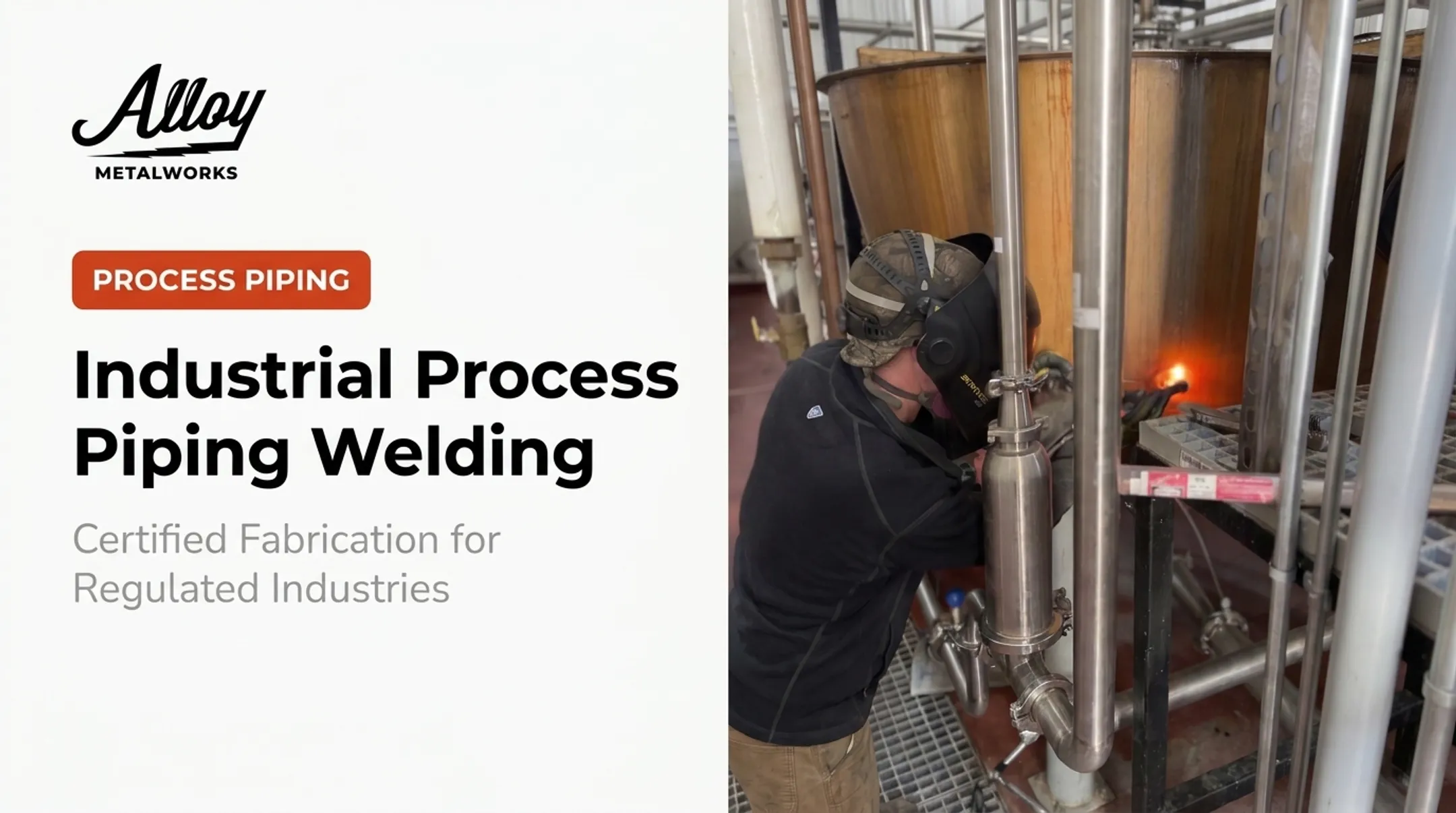
At Alloy Metalworks, ASME Section IX-certified welding is performed under ISO 9001 controls with traceable documentation for inspection-ready fabrication. That work supports energy, industrial, and sanitary process clients.
On a recent piping-system rebuild, the team inspected welds to ASME B31.3. In-house borescope and dye penetrant testing came first, then third-party visual inspection and magnetic particle testing.
For alloy steels like P91, the stakes get higher:
- Joint design must account for the material's creep-resistant properties
- Preheat prevents cracking during welding
- Post-weld heat treatment (PWHT) relieves residual stress and restores proper microstructure

Skip any of these steps on a high-temperature alloy line, and you've built a failure point into the system regardless of how correctly you specified the pipe.
Common Mistakes in Steam Piping Design
Three mistakes show up repeatedly in steam system failures:
- Rule-of-thumb sizing. Applying one standard velocity across saturated, wet, and superheated steam without pressure-drop calculations for the actual system.
- Cost-driven material selection. Choosing galvanized or undersized schedule pipe because it's cheaper upfront, ignoring actual temperature and pressure requirements.
- Ignoring condensate drainage and slope. National Board guidance identifies improper slope and inadequate trapping as primary causes of water hammer — even when the material and pipe size are otherwise correct.
Water hammer isn't a minor nuisance. It is a sudden shock wave from high-pressure steam or condensate slug collapse, and it can cause serious injury or major property damage. Verify trap placement, sizing, and operation with the same rigor you apply to material and pipe-size selection.
Frequently Asked Questions
What material is commonly used for steam boiler piping?
Carbon steel (ASTM A106 or A53) is standard for most boiler piping at typical service conditions. High-pressure, high-temperature applications call for alloy steels like P22 or P91 instead.
Can you use schedule 40 pipe for steam?
Yes, for low-to-moderate pressure saturated steam. Higher pressure or temperature systems require verification against ASME B31.1 requirements and may need Schedule 80, 160, or alloy materials.
Can you use galvanized pipe for steam?
No. Galvanized coatings degrade at approximately 390°F, well below typical steam operating temperatures. This contaminates condensate and creates hazardous zinc fumes.
How do you calculate the correct pipe size for a steam line?
Engineers size steam lines around velocity limits, flow rate, and allowable pressure drop for the specific steam condition — saturated, wet, or superheated. Rule-of-thumb sizing without these calculations risks erosion and water hammer.
What's the difference between saturated and superheated steam piping requirements?
Superheated steam requires materials rated for higher temperatures and generally allows higher velocity limits when pressure drop permits. Saturated steam lines have tighter velocity ranges due to erosion risk from moisture.
Why does welding quality matter as much as pipe material selection?
Weld joints are common failure points under thermal cycling, regardless of how correctly the material and size were specified. Certified welding procedures under ASME Section IX ensure the joint performs as designed under real operating conditions.